All Insights / How to Build a Software Product?
How to Build a Software Product?
Building a software product is more than writing code. As technology investment continues to grow - with Gartner forecasting worldwide IT spending to increase by 9.3% in 2025 - teams face pressure to deliver digital products. This guide breaks down how to build a software product, explaining each of the key steps from discovery, validation, design, development to launch, and scaling while highlighting the decisions that determine either success or failure.
Source: Gartner Research Link
Introduction to Building a Software Project
Most software products don’t fail because of bad code. They fail because the wrong thing was built. Teams often rush from idea straight into development, assuming speed will compensate for uncertainty. It doesn’t. Code doesn’t validate ideas. It only makes assumptions more expensive. Building a successful software product is about reducing risk early, making the right decisions at the right time, and learning before committing. That means understanding the problem, validating demand, and building with intent. This blog breaks down the steps to turn an idea into a product that actually works and can grow.
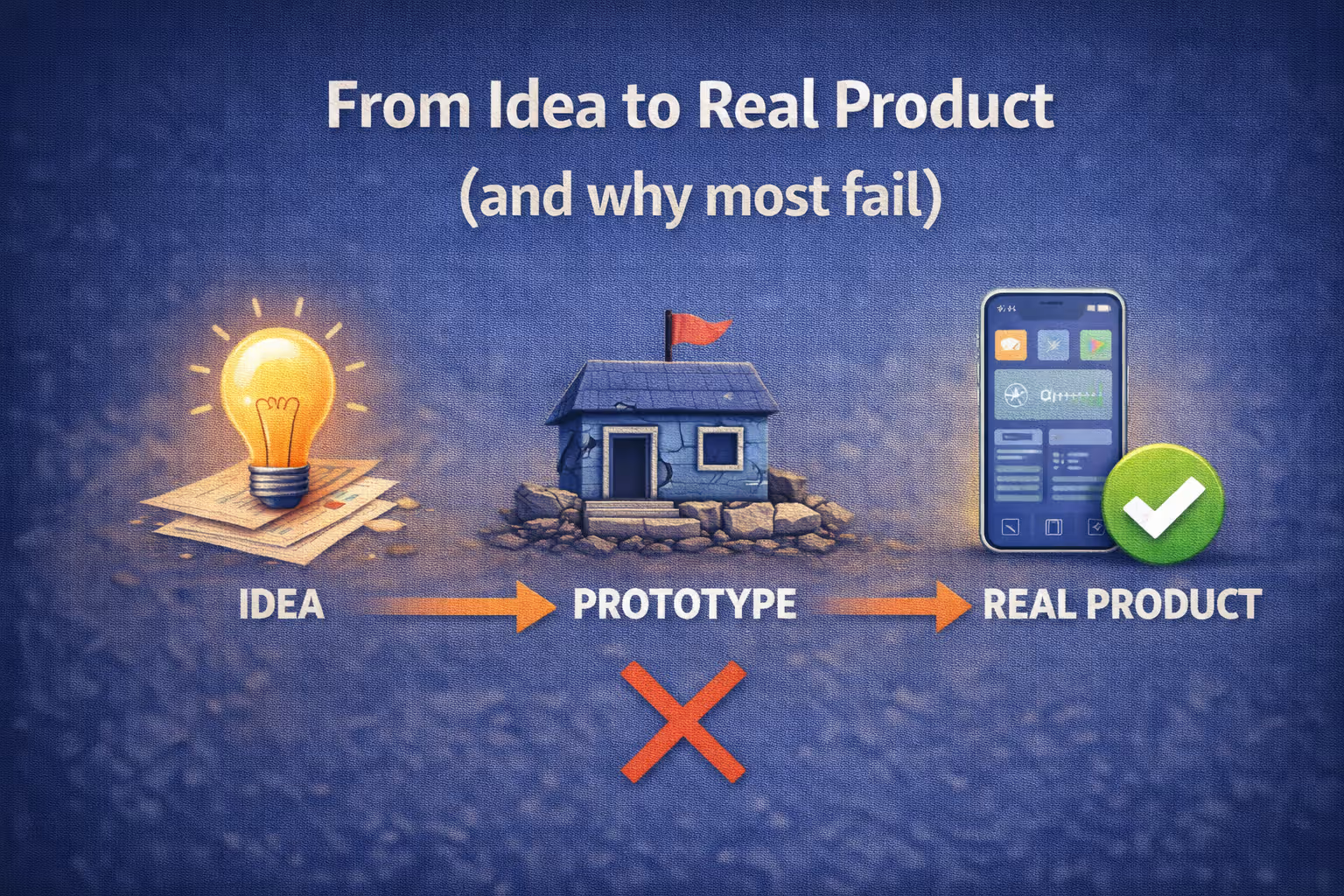
Step 1: Start With the Problem, Not the Solution
Most software products start with a solution in search of a problem. A feature idea, a technical opportunity, or something competitors already have. That’s backwards. Strong products are built by deeply understanding a specific problem, who experiences it, how often it occurs, and what it currently costs in time, money, or frustration. If the problem isn’t painful enough, no amount of good design or engineering will save the product.
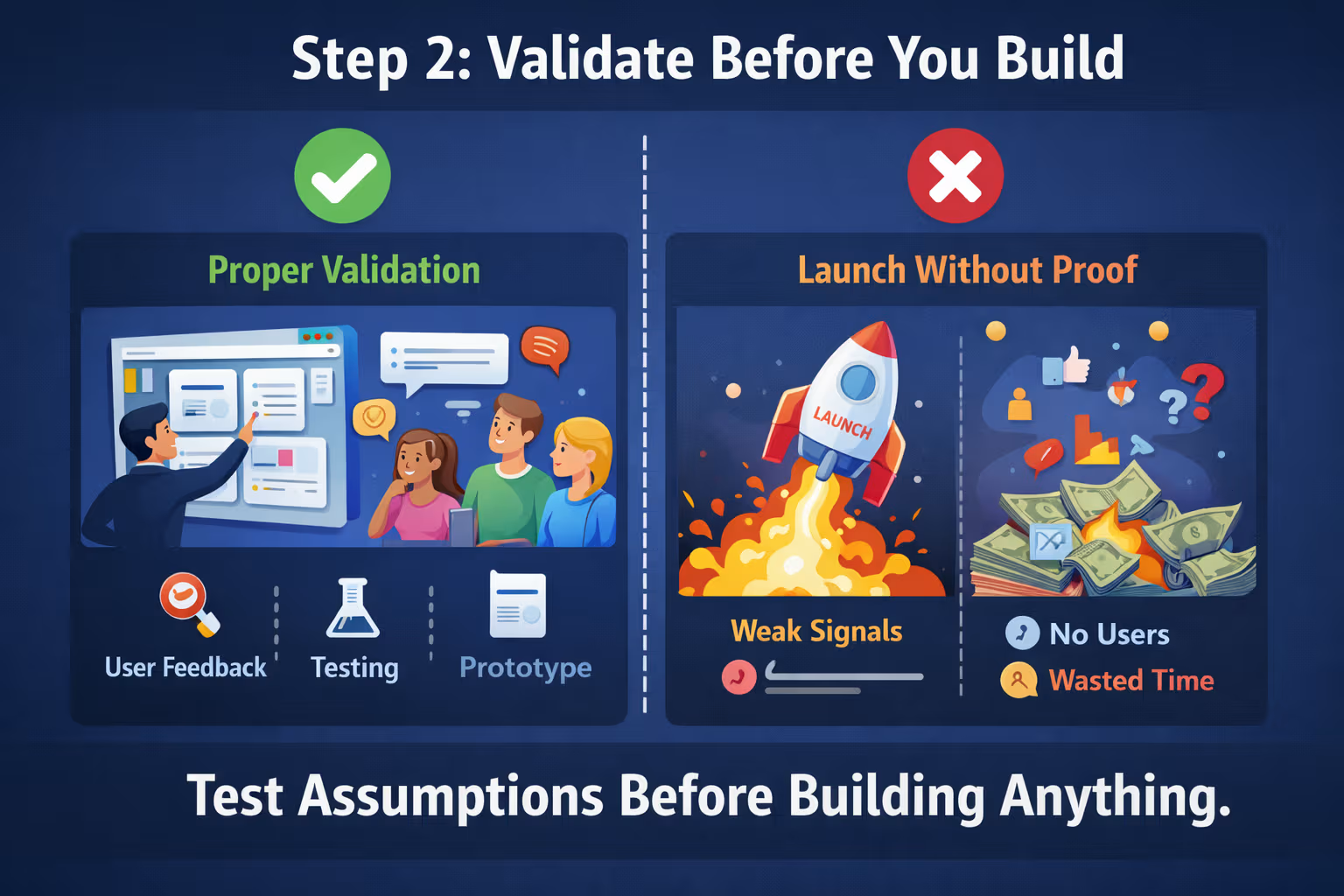
Step 2: Validate Before You Build
Validation is not about collecting opinions. It’s about testing whether a real problem exists and whether people are willing to act to solve it. Too many teams mistake positive feedback for demand and move forward on weak signals. Real validation comes from talking to users, observing their behavior, and testing assumptions with simple experiments, prototypes, or manual workflows. If users won’t invest time, attention, or money before the product exists, they likely won’t after it launches.
Step 3: Discovery Phase (The Most Underrated Step)
Discovery is where assumptions are challenged before they turn into mistakes. Skipping it doesn’t save time. A proper discovery phase aligns business goals, user needs, design decisions, and technical constraints before development starts. It surfaces risks, clarifies scope, and forces teams to make conscious trade-offs instead of accidental ones. Teams that invest in discovery don’t move slower. They move with direction, confidence, and with far fewer surprises once building begins.
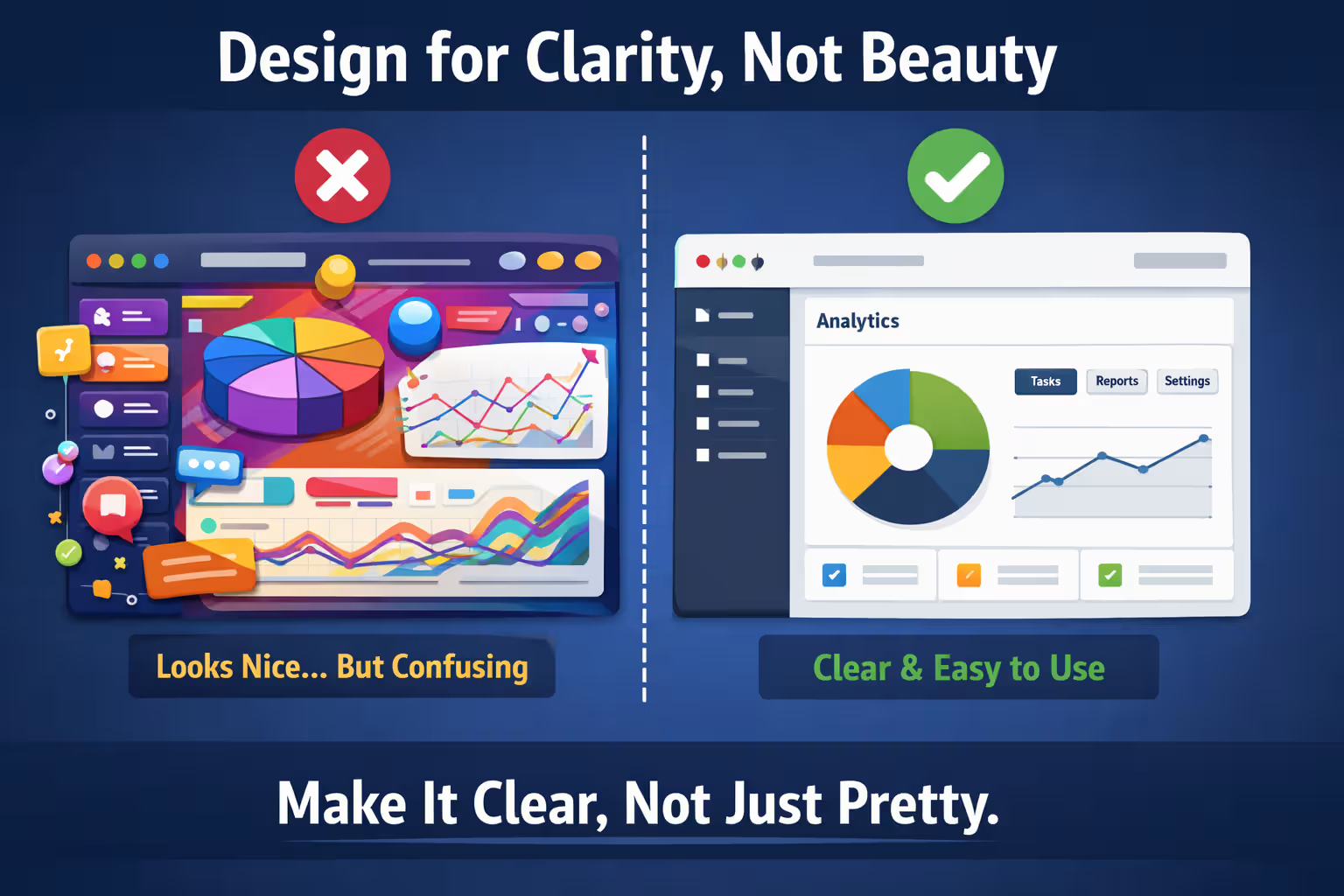
Step 4: Design for Clarity, Not Beauty
Good design is not about making things look impressive. It’s about making workflows easy to follow. Early-stage products often fail when design focuses on visuals before clarity, resulting in interfaces that look polished but confuse users. Product design prioritizes structure and user flow over decoration. It helps users understand what to do next without thinking. When design is clear, development becomes faster and the product is easier to evolve as it grows.
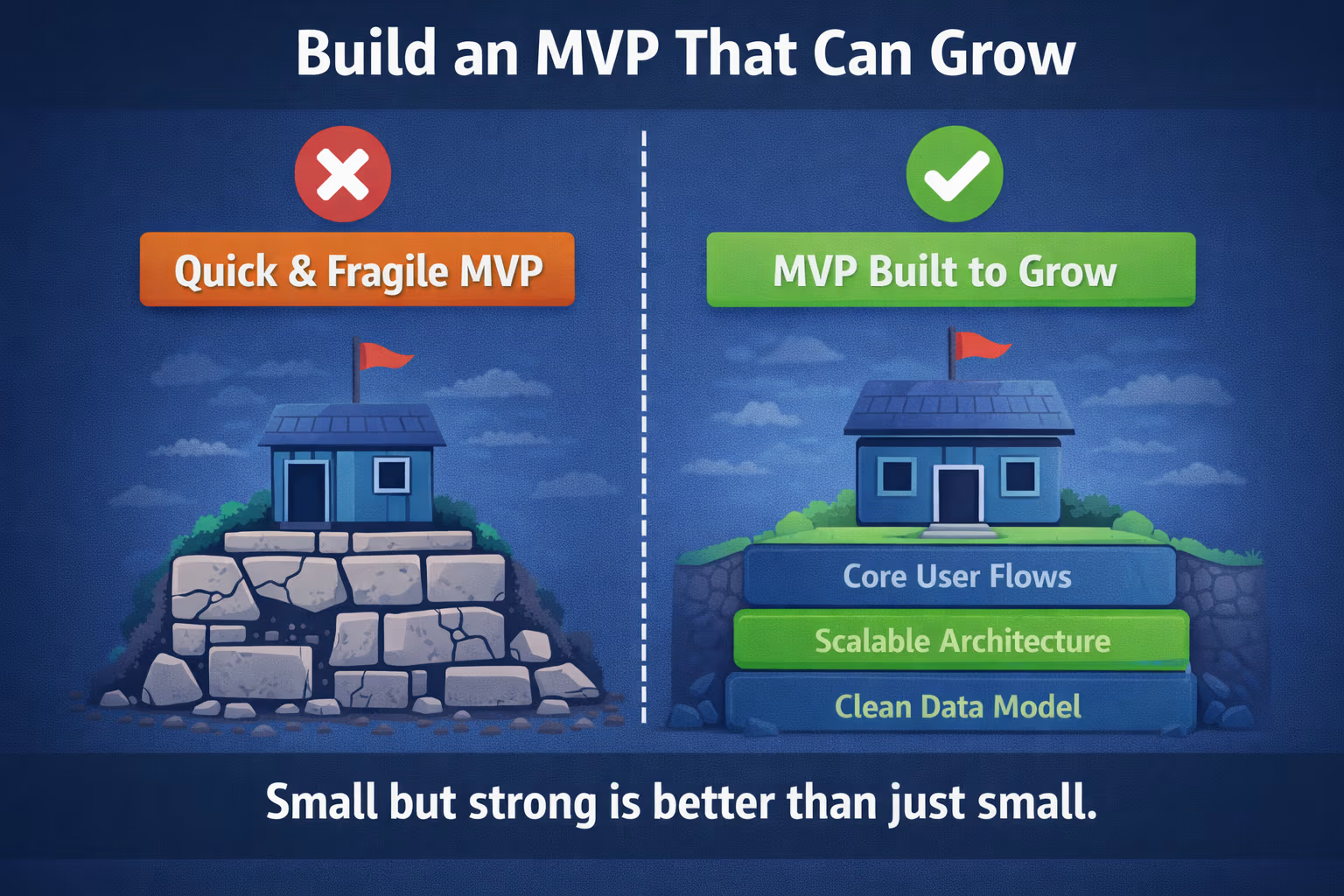
Step 5: Build an MVP That Can Grow
An MVP is not a cheap or incomplete version of the product. It is the smallest version that delivers real value and allows learning to continue. Teams often confuse MVP with cutting corners, which leads to fragile systems that can’t evolve. A good MVP is intentionally limited in scope but solid in foundation. Core user flows work end to end, and technical decisions allow the product to grow without being rebuilt from scratch.
Step 6: Launch, Learn, Iterate
Launching a product is not the finish line. Too many teams treat launch as a final milestone, only to slow down once real users arrive. Early usage reveals what works, what breaks, and what doesn’t matter at all. The goal after launch is not to add features quickly, but to listen closely, measure real behavior, and iterate with purpose. Small improvements based on real data compound faster than big assumptions.
Step 7: Scaling the Product (and the Team)
Scaling is not just about handling more users. It’s about making sure the product, the technology, and the team can grow without friction. Many products break at this stage because early shortcuts start to surface under real load. Scaling requires intentional decisions and growth exposes weaknesses quickly. Teams that scale successfully treat it as a controlled evolution, not a reaction to pressure.
Common Mistakes We See Repeatedly
The most common mistakes are rarely technical. Teams skip discovery, validate too late, and build too much too early. They confuse speed with progress and features with value. Decisions are made based on opinions instead of evidence, and launches are treated as endpoints instead of learning moments. These mistakes compound over time, making products harder to change and more expensive to maintain.
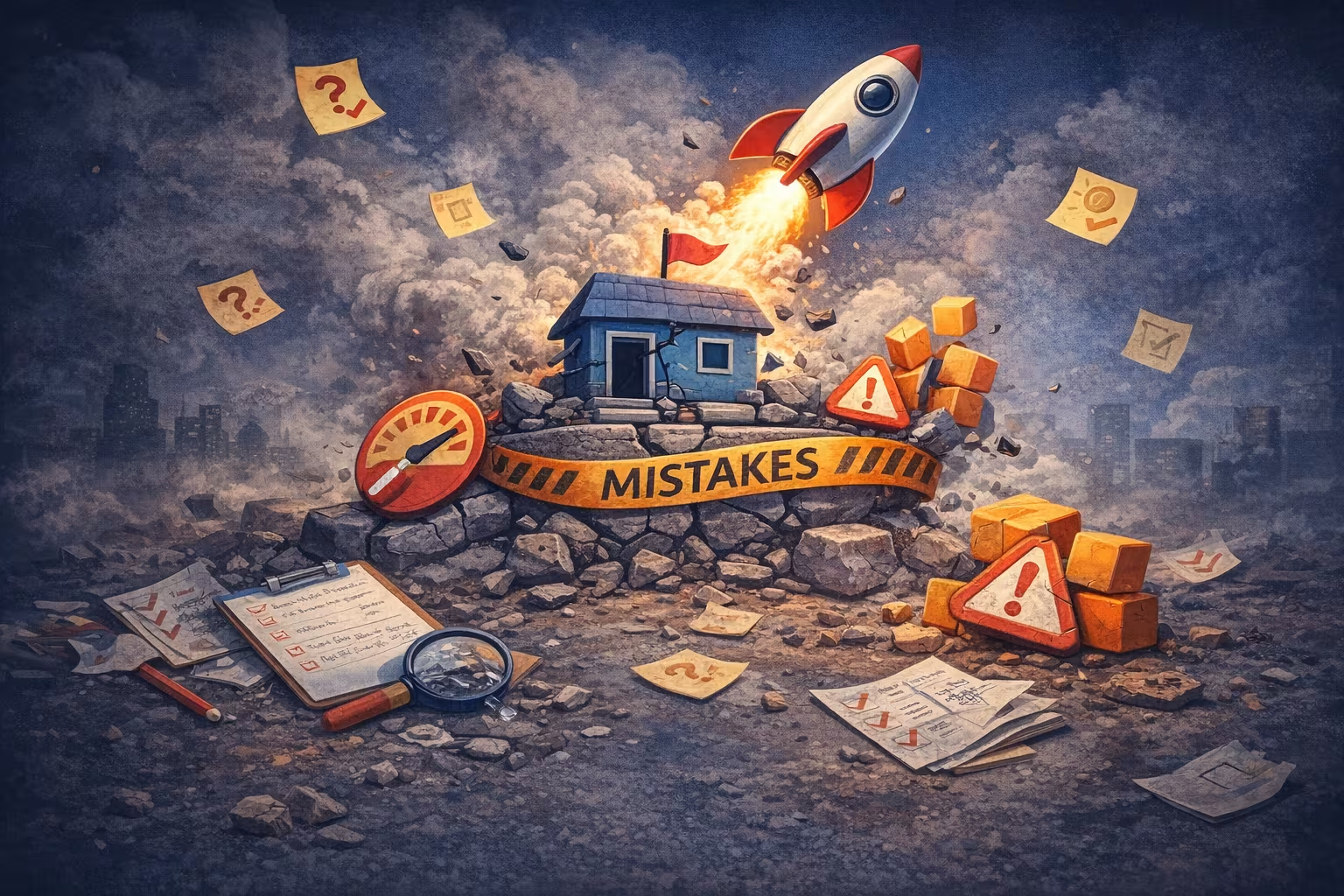
Skipping discovery and Alignment
This happens when teams move into delivery without a shared understanding of the problem, success criteria, or key assumptions. Work starts before there is clarity on what needs to be learned versus what is already known. Teams that avoid this invest early in alignment and treat discovery as a prerequisite to confident execution, not a delay.
Building too much, too early
Overbuilding often comes from trying to anticipate every future need upfront. Complexity is introduced before there is proof of demand, slowing teams down and increasing long-term cost. Teams avoid this by focusing on what needs to be true next, rather than attempting to design for every possible outcome.
Confusing output with outcomes
This mistake occurs when progress is measured by features shipped instead of value created. Teams stay busy, but impact remains unclear because success is not defined or validated. Avoiding this requires clear outcomes and feedback loops that connect delivery to real-world results.
Treating launches as endpoints
This mistake appears when teams view a launch as the finish line rather than the start of real learning. Once something is released, attention quickly shifts to the next initiative, leaving little time to observe usage, gather feedback, or address early signals. Teams that avoid this build space for measurement and iteration after launch, using real-world behaviour to guide improvements instead of assuming success at release.
Build Less. Learn Faster. Scale Smarter.
Successful software products are built by making good decisions at the right time. Teams that invest in understanding problems and building with intent avoid costly rewrites and unnecessary complexity. Learning, iterating and scaling with purpose leads to products that last. Building less does not mean moving slower. It means focusing on what matters, learning from real signals and creating systems that can grow without breaking.
Related post
Handpicked Reads to Deepen Your Understanding
- Business
- Dino Starcic
- 03/09/2025
The Right Way to Hire a Development Agency
Learn how to hire a development agency the right way. Discover best practices, outsourcing tips, and how higroup helps build digital products that last.
ReadarticleDo you have a specific idea in mind?
Share your vision, and we'll explore how we can make it happen together.