All Insights / What is the Final Step in the Product Development Process?
What is the Final Step in the Product Development Process?
The final step of product development goes beyond writing code. This article explains what happens between feature completion and production release, including quality assurance, testing, validation, and release readiness. It focuses on how teams verify stability, usability, and alignment with requirements, and why these steps are essential for reducing risk and launching with confidence.
Introduction
The final step in the product development process is often rushed. After months of building, teams are eager to ship and assume testing will catch only minor issues. In practice, this phase determines whether a product launches with confidence or with hidden risks. QA, testing, and release preparation are not about perfection. They are about validating that the product works as intended and behaves correctly. Skipping this step moves problems into production, where they are harder and more expensive to fix.
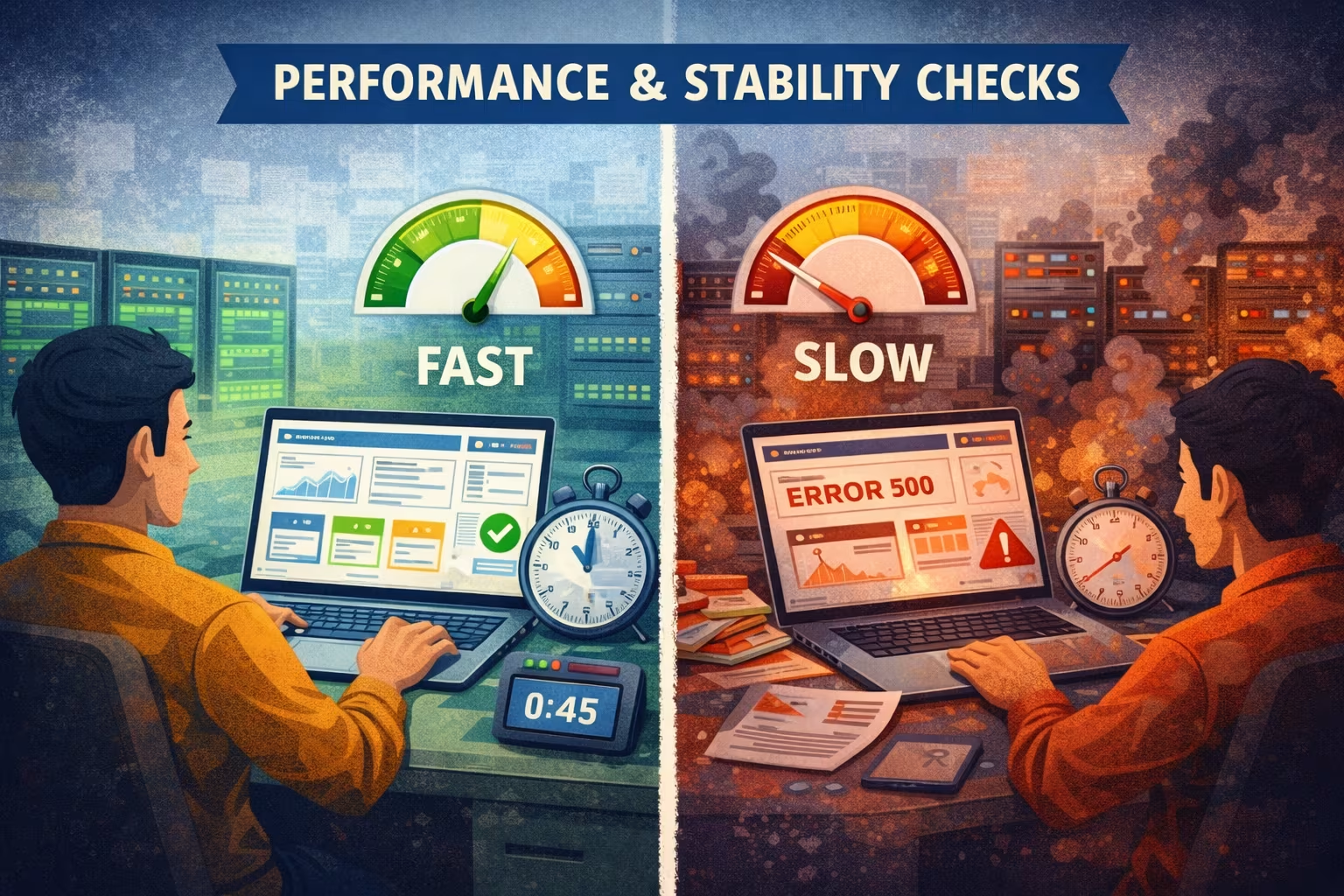
Performance & Stability Checks
Performance and stability checks ensure the product can handle usage without slowing down or breaking under pressure. Features that work correctly in isolation may fail when multiple users, background jobs, or integrations are active at the same time. This step focuses on response times and load handling. The goal is not to optimize everything to perfection, but to identify bottlenecks and failure points before users do. A product that feels slow or unstable quickly loses trust, even if everything else appears to work.
Stabilize the Scope
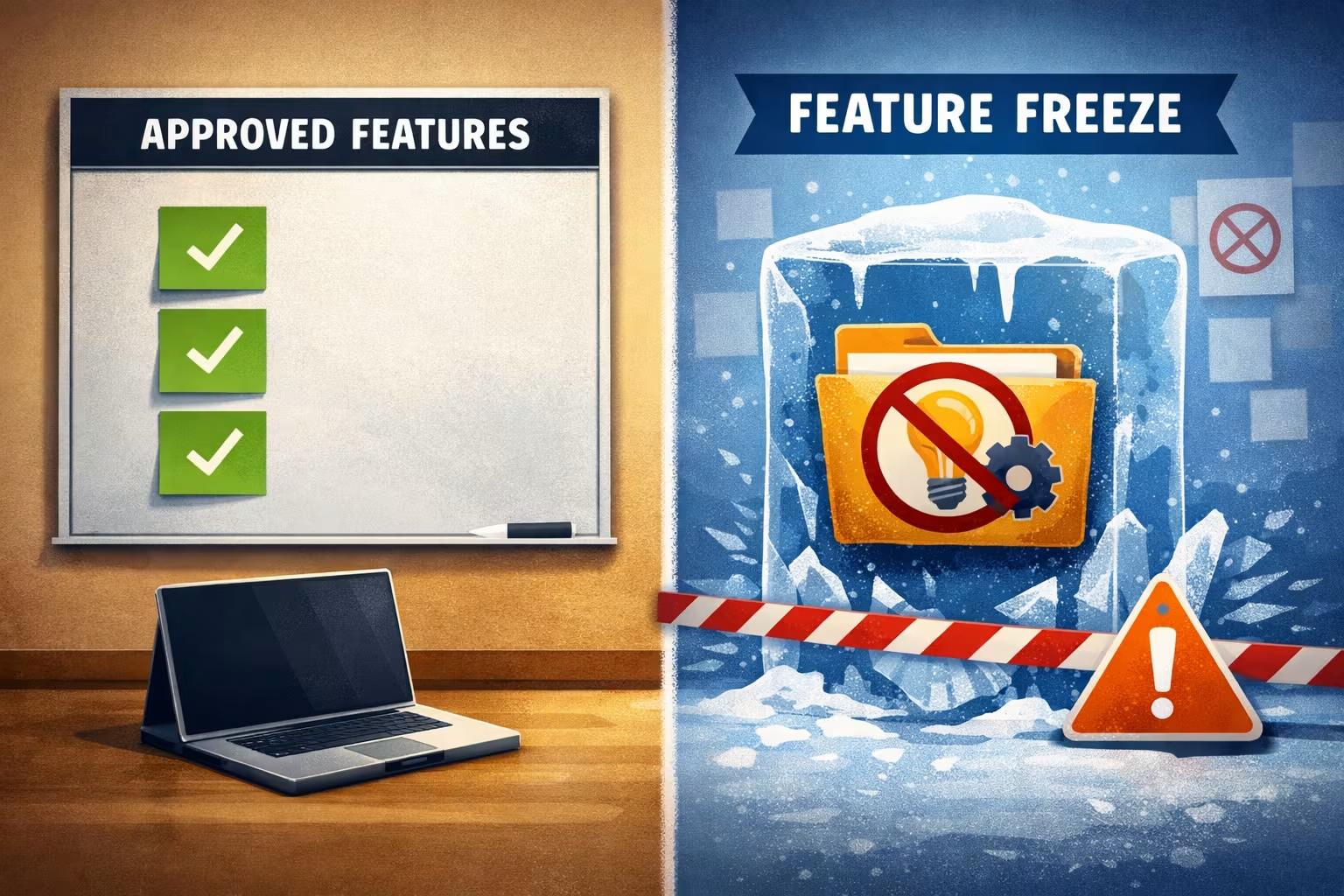
Before testing begins, the scope must stop moving. New features, last-minute ideas, and “quick improvements” introduce uncertainty and make validation unreliable. Stabilizing the scope shifts the team’s mindset from building to verifying. The goal is to confirm that what has already been built works as expected. A feature freeze creates focus for testing and prevents teams from chasing issues caused by constant change instead of real defects.
Functional QA (Does It Work?)
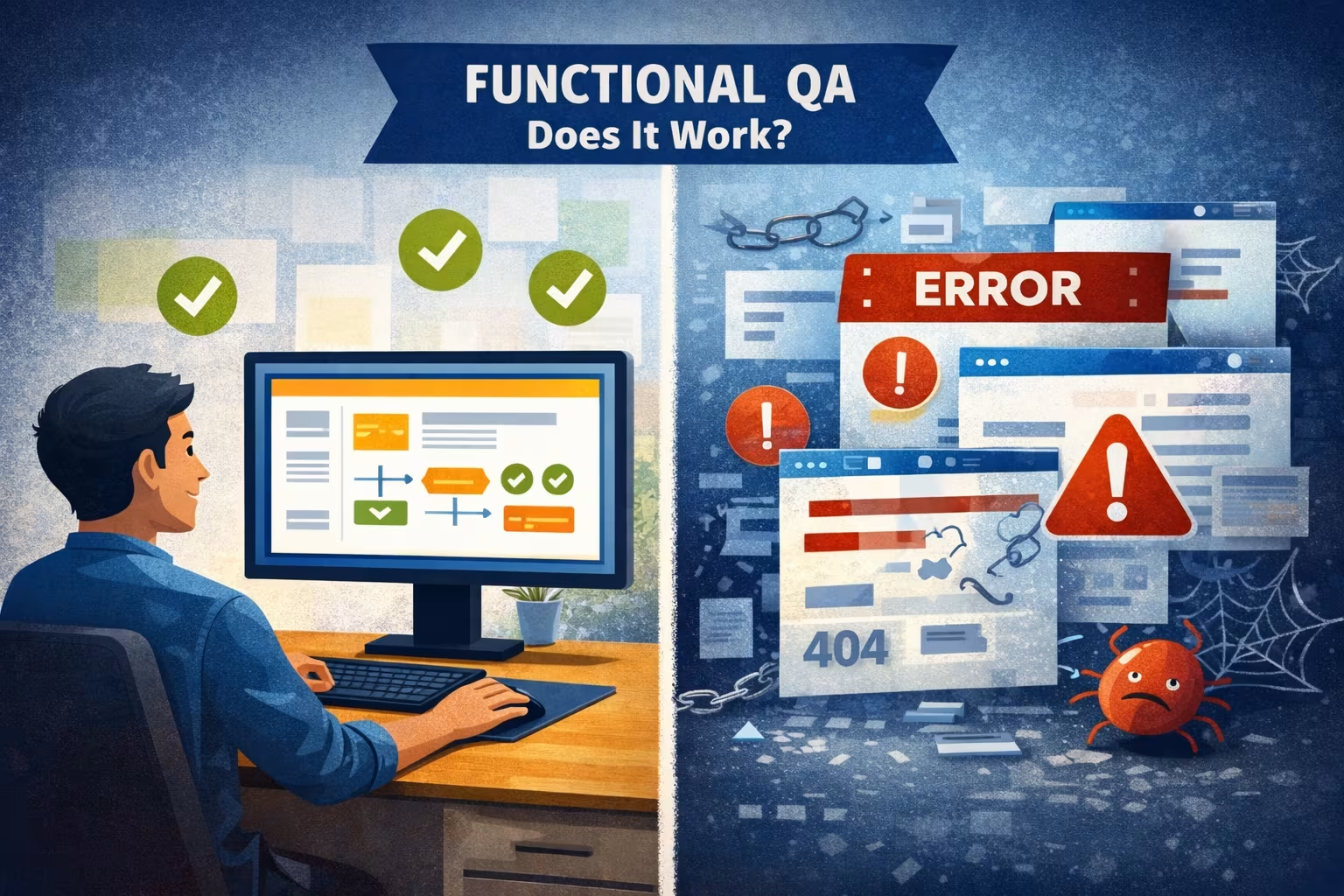
Functional QA answers the most basic question: does the product actually do what it is supposed to do?
This focuses on validating:
User Flows
Expected Behaviors
Failure Scenarios
Each feature should be tested against its original intent, not assumptions made during development. Skipping or rushing QA leads to products that technically work but fail in real usage. If core flows break or behave inconsistently, no amount of polish or performance tuning will matter.
Regression Testing (Did We Break Anything?)
Regression testing ensures that recent changes haven’t broken what previously worked. As products evolve, even small updates can have unintended side effects. This step focuses on rechecking existing functionality, integrations, and critical paths to catch issues introduced during development or bug fixes.
Without regression testing, teams risk shipping new improvements at the cost of old stability.
Data & Logic Validation
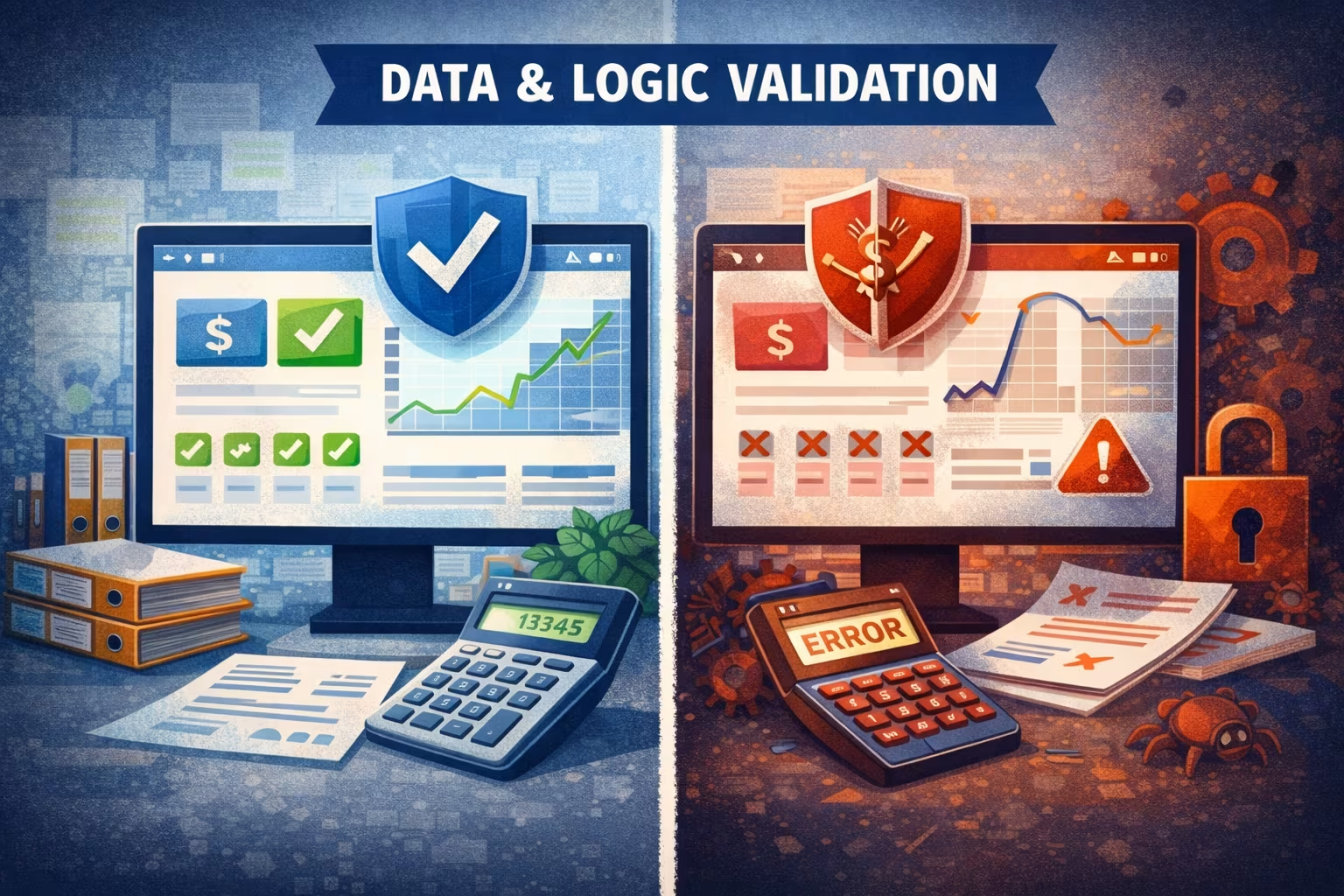
Data and logic validation focuses on what users don’t immediately see but depend on. Calculations, business rules, permissions, and data consistency must behave correctly under real conditions. Errors here are often subtle and can go unnoticed until they cause serious issues. This step verifies that the system’s underlying logic aligns with business expectations and that data flows are accurate and reliable.
Acceptance Testing (Go / No-Go)
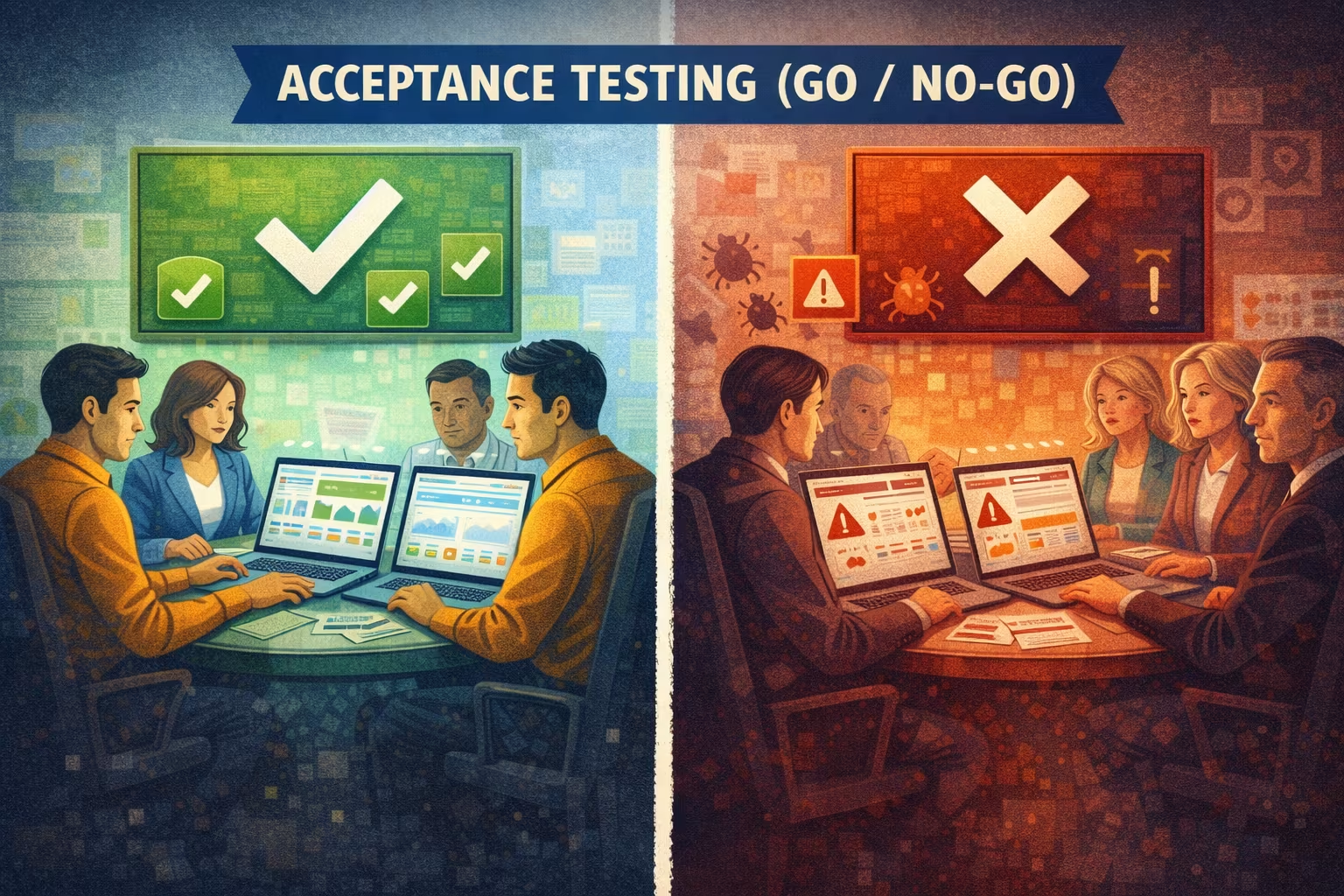
Acceptance testing is the final confirmation that the product meets business expectations and is ready to be released. This step brings together product, engineering, and client stakeholders to validate that requirements are fulfilled and no issues remain.
It is not about finding every minor flaw, but about making a clear go or no-go decision. A deliberate acceptance phase creates shared ownership of the release and ensures that both client and contractor agree on what is being shipped.
A Go Decision
A Go decision is appropriate when the product delivers its core value and remaining risks are understood and acceptable. Critical functionality works as expected, key assumptions have been validated, and there is shared confidence in the release. Open issues may still exist, but they are known, documented, and unlikely to undermine trust or usability. Saying Go reflects a conscious acceptance of trade-offs rather than a belief that everything is finished.
A No-Go Decision
A No-Go decision is necessary when unresolved risks threaten product value, user trust, or business outcomes. This may include gaps in core functionality, unclear acceptance criteria, or open questions that could lead to costly rework after release. Choosing no-go signals that the team prioritises long-term stability and clarity over short-term momentum. It creates space to resolve critical uncertainty before exposing the product to real-world use.
Release Readiness
Release readiness is about preparing for a controlled and predictable launch. This step ensures deployment processes are defined, environments are ready, and rollback plans exist if something goes wrong. Monitoring, logging, and alerts should be in place before users arrive, not after issues appear.
Go Live Is a Transition, Not an Endpoint
Going live is not the finish line, but the moment responsibility shifts. Once a product reaches real users, assumptions are tested, feedback becomes real, and new priorities emerge. Teams that treat going live as a transition are prepared to observe, learn, and improve.
The final step in product development is not about shipping faster, but about shipping with confidence and taking ownership of what comes next.
Related post
Handpicked Reads to Deepen Your Understanding
- Product Engineering
- Luka Skerjanc
- 04/01/2026
How to Build a Software Product?
This blog explains how to build a software product end to end. It covers discovery, validation, design, development, launch, and scaling. It shows how early decisions shape long-term outcomes. It highlights where teams most often fail and how to avoid those mistakes. The focus is on building products deliberately, not just delivering features.
Readarticle- Business
- Dino Starcic
- 03/09/2025
The Right Way to Hire a Development Agency
Learn how to hire a development agency the right way. Discover best practices, outsourcing tips, and how higroup helps build digital products that last.
Readarticle- Project Management
- Masa Pogorevc
- 09/04/2025
The Importance of Post-Mortems in IT Projects
Conducting thorough post-mortems for IT projects and products is crucial for continuous improvement. Let's explore why these reviews are essential and how they can drive success for your projects.
ReadarticleDo you have a specific idea in mind?
Share your vision, and we'll explore how we can make it happen together.