All Technologies / Python for Production Systems
Python for Production Systems That Scale Reliably
Python is a versatile development language used to build reliable backend systems, APIs, data platforms, and automation tools.
1st-Ranked Software Development Agency in Slovenia by 
001 What is Python?
Python Development Language
Python is a high-level programming language used to build backend systems, APIs, data platforms, and automation tools. It’s widely adopted for production environments thanks to its readability, flexibility, and strong ecosystem, making it suitable for long-term, evolving software systems.
- 001Proven in large systems
- 002Backed by global community
- 003Built for real-world systems
- 004Easy to evolve over time
- 005Favors clarity over cleverness
Python provides a reliable foundation for building and maintaining complex systems where clarity, adaptability, and long-term ownership matter.
002 Why choose Python?
Why choose Python?
Python is chosen for its ability to balance development speed with long-term maintainability. Its clear syntax, mature ecosystem, and flexibility make it a strong fit for building systems that need to evolve, integrate with other platforms, and remain understandable as teams and requirements grow.
- 001Fast development and iteration
- 002High code readability
- 003Mature production ecosystem
- 004Strong data and AI support
Python is a strong choice when teams need to move quickly without sacrificing clarity, stability, or the ability to scale and maintain systems over time.
003 Who is Python for?
Who is Python for?
Python works well for both startups and established organizations. Startups benefit from fast development and easy iteration, while larger companies value Python for its readability, mature ecosystem, and ability to support long-lived, production systems across teams and use cases.
- 001Startups validating and scaling products
- 002Corporations building internal platforms
- 003Data-driven and AI-focused teams
- 004Products with evolving requirements
- 005Systems requiring long-term ownership
Python is suited for organizations that need to move quickly early on and still maintain clarity, stability, and scalability as systems and teams grow.
004 Our approach
Our approach to working with Python
Our approach to building products with Python starts with understanding the product’s lifecycle, not just its first release. Python allows us to validate ideas quickly, but we’re deliberate about architecture, boundaries, and dependencies early on to avoid issues as the system grows. We use Python where its strengths bring real value and we address its limitations through clear design and infrastructure choices.
We use Python intentionally, balancing speed and flexibility with architectural discipline to ensure products remain maintainable and production-ready as they evolve.
005 How we start Python projects
How we typically start Python projects
- 001Clarify product scope, lifespan, and growth expectations
- 002Decide early if Python is core or supporting
- 003Define clear boundaries between services
- 004Choose frameworks based on complexity, not trends
- 005Design for change, not just launch
006 What we like about Python
What we like about Python
- 001Very fast iteration in early stages
- 002Clear, readable code across teams
- 003Strong ecosystem for APIs, data, automation
- 004Easy onboarding for new developers
- 005Flexible enough for evolving products
007 What we’re careful about
What we’re careful about
- 001Avoiding unstructured growth and “script sprawl”
- 002Managing performance through architecture
- 003Being explicit about async and concurrency
- 004Keeping dependencies under control
- 005Planning scaling beyond a single service
008 When to choose Python?
When to choose Python?
Python is the right choice when development speed, readability, and flexibility are more important than low-level performance. It works best for products that need to evolve over time, integrate with other systems, and remain maintainable as teams and requirements grow.
- 001Rapid prototyping and MVP development
- 002Backend systems and APIs
- 003Data-heavy or AI-driven products
- 004Automation and integration-heavy systems
- 005Long-lived products with evolving scope
Python is a good fit when flexibility, clarity, and long-term evolution matter more than raw performance.
Related work
See this service in practice
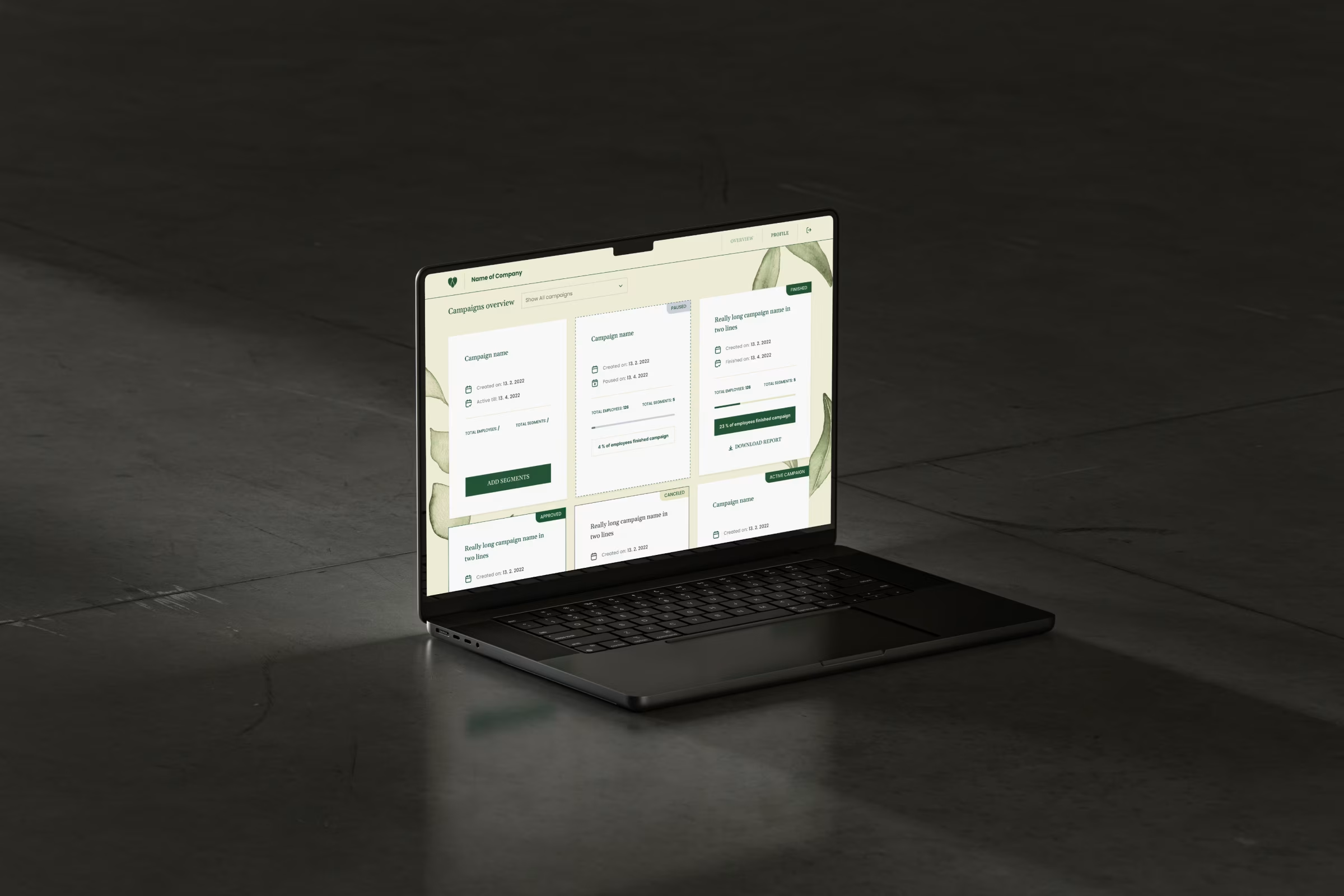
Design & Discovery, Product Engineering
LWGH - Social Sustainability Platform
Frequently asked questions
Do you have a specific idea in mind?
Share your vision, and we'll explore how we can make it happen together.