All Insights / How Much Does It Cost to Build an MVP in 2026?
How Much Does It Cost to Build an MVP in 2026?
An in-depth look at MVP development costs in 2026, covering expected investment, key pricing factors, budget examples, and smarter ways to control scope.
MVP cost in 2026
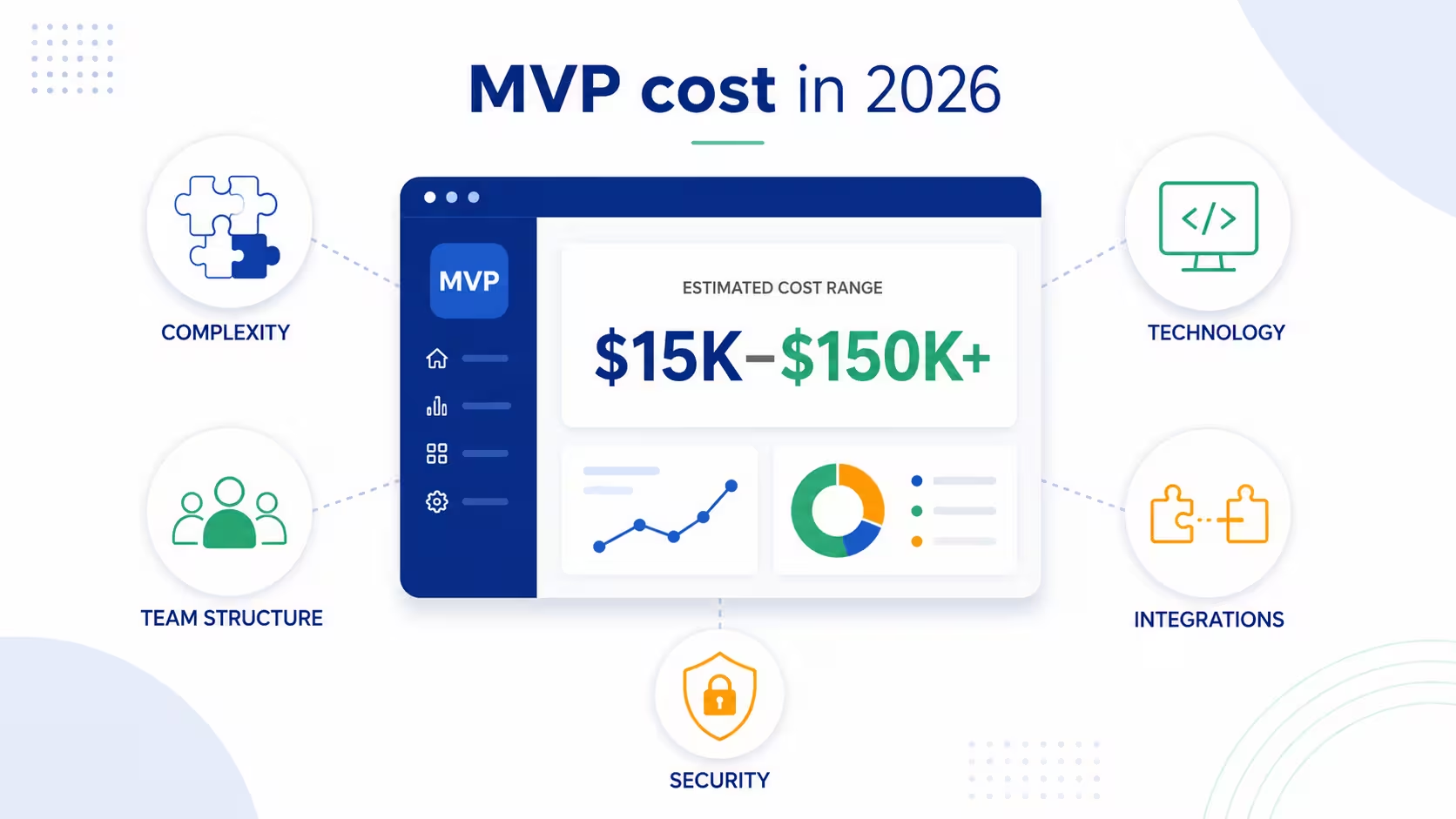
The cost to build an MVP in 2026 typically ranges from $15,000 to $150,000+, depending on factors such as product complexity, team structure, technology choices, integrations, and security requirements. While a simple MVP can often be launched within a few months on a limited budget, more sophisticated products may require significantly larger investments.
This guide breaks down realistic MVP development costs in 2026, explores the hidden expenses many founders overlook, and explains how to choose the right development approach based on your product goals and growth plans.
What Is the Average Cost to Build an MVP in 2026?
One of the first questions founders ask is simple: how much does it cost to build an MVP?
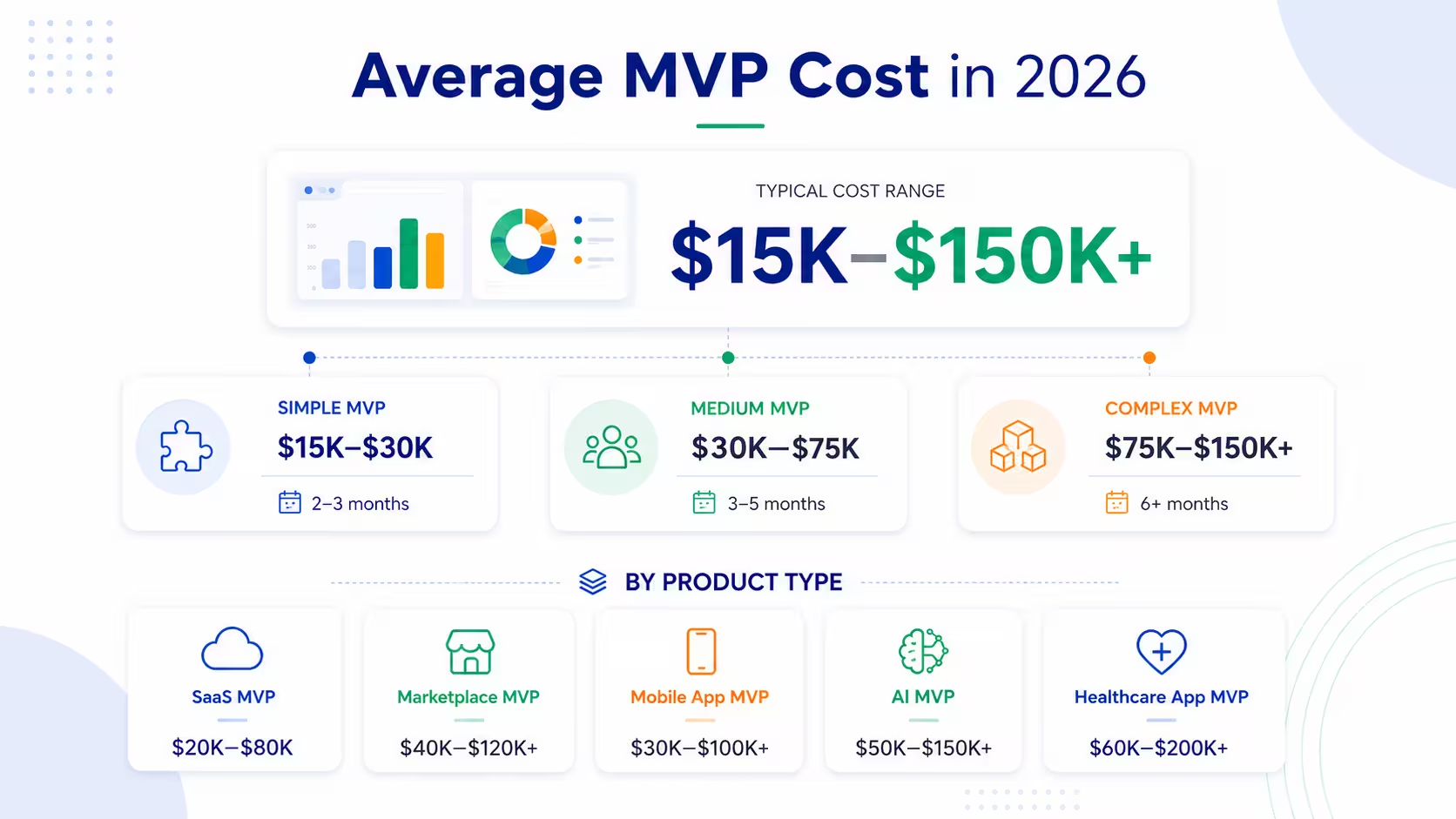
The short answer is that MVP development costs in 2026 typically range from $15,000 to more than $150,000, depending on the product's complexity, the development approach, and the team involved.
A simple MVP designed to validate a business idea can often be launched within a few months on a relatively modest budget. More sophisticated products that require custom integrations, advanced security measures, AI capabilities, or complex user workflows naturally demand a larger investment.
It's important to remember that an MVP is not simply a "cheap version" of a product. A well-built MVP should deliver enough value to early users, collect meaningful feedback, and provide a strong foundation for future iterations. Cutting costs too aggressively can lead to technical debt, poor user experiences, and expensive rework later.
The table below provides realistic MVP cost ranges based on project complexity.
MVP Cost Ranges by Complexity
Complexity | Typical Cost (USD) | Timeline |
|---|---|---|
Simple MVP | $15,000 - $30,000 | 2-3 months |
Medium MVP | $30,000 - $75,000 | 3-5 months |
Complex MVP | $75,000 - $150,000+ | 6+ months |
Simple MVPs typically include core functionality, user authentication, basic dashboards, and limited integrations. Examples include appointment booking apps, internal business tools, or niche SaaS products with a single primary use case.
Medium-complexity MVPs often support multiple user roles, payment processing, third-party integrations, analytics, or more advanced workflows. Marketplaces, B2B SaaS platforms, and subscription-based applications often fall into this category.
Complex MVPs usually involve sophisticated business logic, extensive integrations, AI functionality, real-time features, advanced security requirements, or regulatory compliance. Healthcare platforms, fintech applications, and AI-powered products frequently require this level of investment.
MVP Cost by Product Type
While complexity remains the biggest cost driver, the type of product you're building also significantly influences your budget expectations.
Product Type | Estimated Cost |
|---|---|
SaaS MVP | $20,000 - $80,000 |
Marketplace MVP | $40,000 - $120,000+ |
Mobile App MVP | $30,000 - $100,000+ |
AI MVP | $50,000 - $150,000+ |
Healthcare App MVP | $60,000 - $200,000+ |
For example, an AI-powered product often requires additional investment in model integration, evaluation, infrastructure, and security. Similarly, healthcare applications typically involve strict compliance requirements, data privacy safeguards, and enhanced security measures that increase development costs.
At higroup, we often see founders focus primarily on feature lists when estimating MVP budgets. In practice, factors such as integrations, compliance requirements, scalability expectations, and future growth plans frequently have an even greater impact on the final cost than the number of features alone.
For organizations exploring AI products, our AI Prototype to MVP service helps transform early concepts into scalable, production-ready applications. Businesses planning mobile-first products may also benefit from reviewing our Mobile Development services when evaluating development costs and technology choices.
Quick MVP Cost Estimator
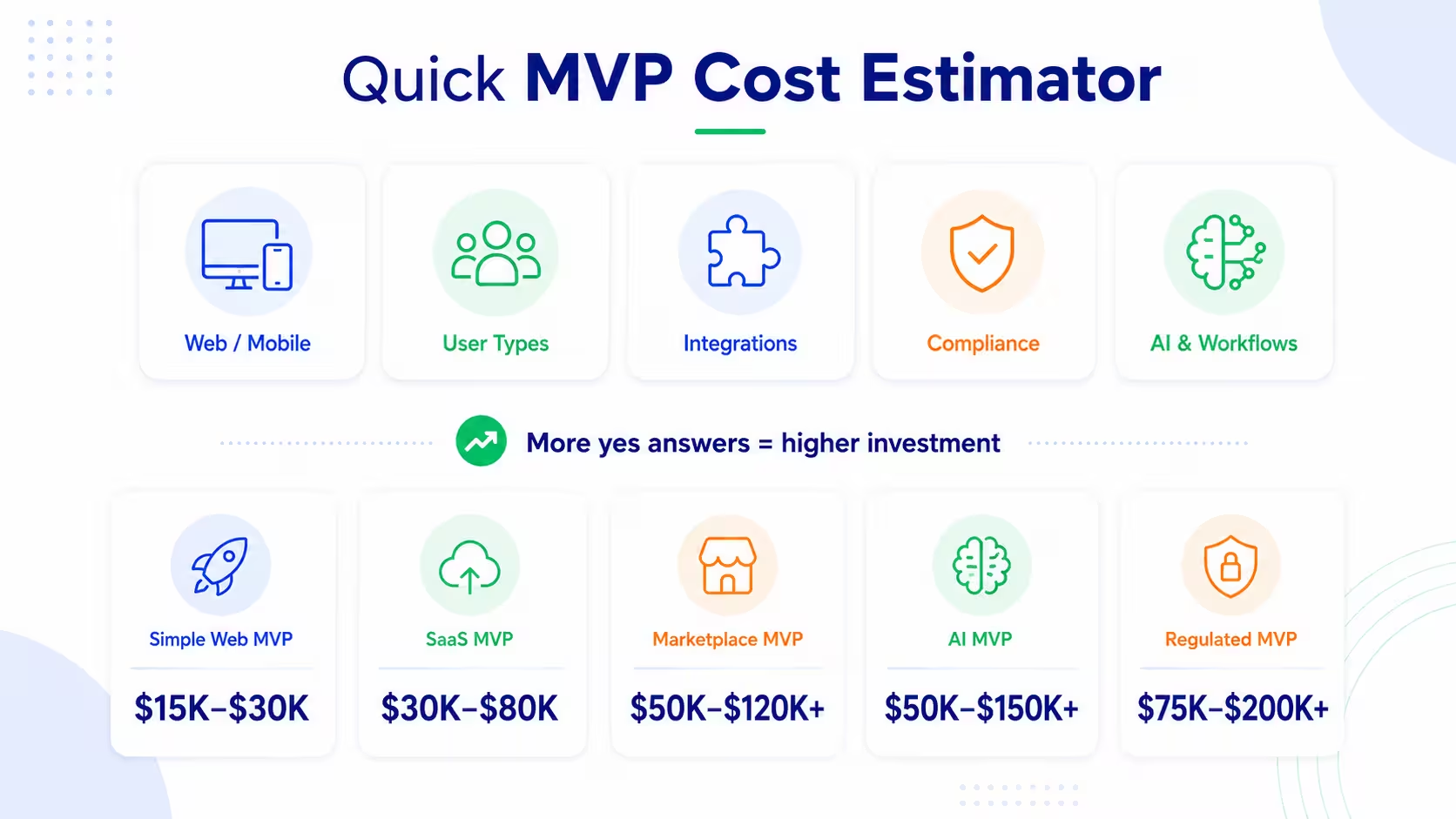
While every product is unique, founders can usually estimate their MVP budget by answering a few key questions.
Consider the following factors:
Are you building a web application, a mobile app, or both?
How many different user types will the product support?
Will you need third-party integrations such as Stripe, Salesforce, or OpenAI?
Does your product need to comply with regulations such as HIPAA or SOC 2?
Will AI capabilities or advanced workflows be part of the MVP?
The more "yes" answers you have, the higher your expected investment is likely to be.
Project Profile | Typical MVP Cost |
|---|---|
Simple web MVP | $15,000 - $30,000 |
SaaS MVP | $30,000 - $80,000 |
Marketplace MVP | $50,000 - $120,000+ |
AI MVP | $50,000 - $150,000+ |
Regulated healthcare or fintech MVP | $75,000 - $200,000+ |
These estimates should be treated as directional benchmarks rather than fixed prices. The final cost will ultimately depend on your specific business requirements, technical architecture, and long-term growth objectives.
What Factors Influence MVP Development Cost?
No two MVPs cost exactly the same.
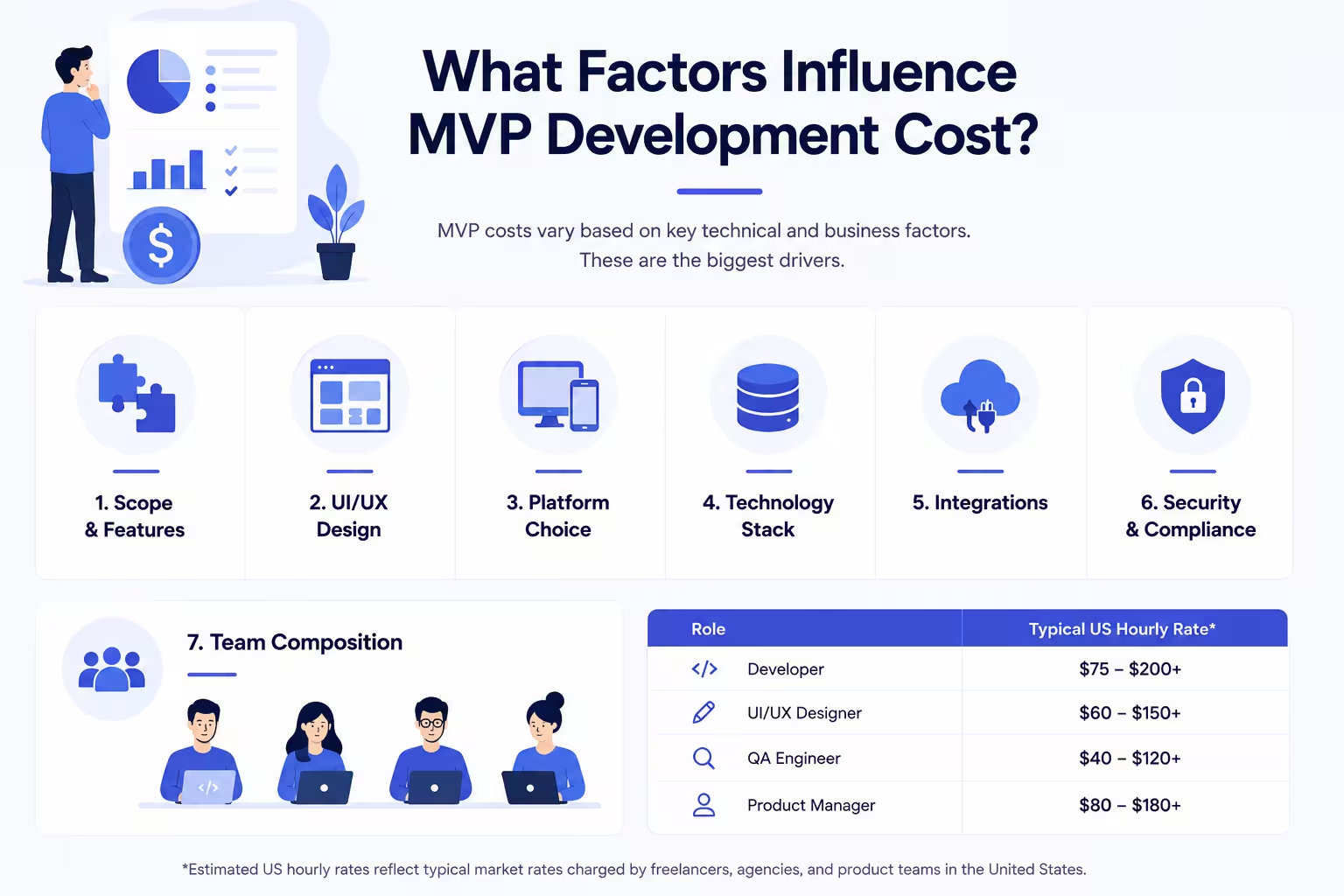
A founder building a simple scheduling application will face a very different budget than a company launching an AI-powered healthcare platform. While cost estimates often focus on broad ranges, the final investment depends on a combination of technical, business, and operational factors.
Understanding these variables early helps founders make smarter decisions, prioritize investments, and avoid unpleasant surprises during development.
Project Scope and Features
The single biggest factor influencing MVP development cost is scope.
Simply put, the more functionality you include, the more time and resources the project will require.
An MVP should focus on solving one core problem exceptionally well rather than attempting to deliver every possible feature from day one. However, many startups fall into the trap of trying to build a "Version 1.0" product instead of a true MVP.
Features such as user authentication, dashboards, payment processing, notifications, or basic analytics are relatively common and predictable in terms of effort. Costs begin to rise significantly when products require:
multiple user roles and permissions;
real-time collaboration features;
advanced search and filtering;
recommendation engines;
AI functionality;
custom reporting;
sophisticated workflows or approval systems.
For example, a marketplace connecting freelancers with clients typically requires user profiles, messaging, payment processing, review systems, and matching logic. These features substantially increase complexity compared to a simple SaaS application with a single user type.
One of the most common reasons MVP budgets exceed expectations is scope creep. New ideas emerge, additional features are requested, and what started as a focused validation exercise gradually evolves into a much larger product.
Successful MVPs are rarely built by asking, "What can we add?" Instead, they are built by continuously asking, "What can we remove while still validating the idea?"
UI/UX Design Requirements
Design has a significant impact on both development costs and product success.
Some founders assume that design can be simplified during the MVP stage. In reality, poor user experiences often lead to misleading validation results because users may reject the experience rather than the underlying idea itself.
A basic MVP may rely on templates, existing design systems, or low-fidelity interfaces to reduce costs. More ambitious products often require:
user research;
wireframing;
interactive prototypes;
custom UI design;
design systems;
usability testing.
For consumer-facing products in particular, investing in UX early can significantly improve adoption and feedback quality.
Platform Choice (Web, Mobile, Cross-Platform)
The platforms you choose to support will directly influence your budget.
A web application is typically the least expensive option because only one platform needs to be developed and maintained.
Mobile applications increase costs because additional interfaces, testing requirements, and platform-specific considerations must be addressed.
Businesses usually have three primary options:
Web application only.
Native mobile applications (iOS and Android separately).
Cross-platform mobile development.
Native development using Swift for iOS and Kotlin for Android generally delivers maximum performance and platform optimization. However, maintaining separate codebases often increases both development and maintenance costs.
Cross-platform technologies such as Flutter and React Native allow organizations to build applications for both platforms using a shared codebase, often reducing development costs and accelerating time-to-market.
For startups launching their first mobile product, cross-platform development is frequently the most cost-effective option. Organizations evaluating mobile-first MVPs can explore higroup's mobile development services to better understand the trade-offs between native and cross-platform approaches.
Technology Stack
Technology choices can significantly affect MVP pricing.
Modern development frameworks and cloud-native architectures often accelerate delivery by reducing the amount of custom infrastructure that needs to be built.
For example, using managed services for authentication, databases, payments, and cloud hosting can shorten development timelines considerably.
On the other hand, products requiring highly customized architectures, specialized infrastructure, or legacy system compatibility may require substantially larger investments.
Common factors affecting cost include:
frontend and backend frameworks;
cloud providers;
database architecture;
scalability requirements;
AI model integration;
performance expectations.
A startup expecting a few hundred users during validation will require a very different architecture than a business planning for enterprise customers from day one.
Choosing the right technology stack is often a balancing act between speed, flexibility, scalability, and future growth.
Third-Party Integrations
Few modern products operate in isolation.
Most MVPs need to connect with external services, APIs, or business systems. While these integrations can accelerate product development, they also introduce additional complexity and cost.
Common integrations include:
Stripe for payments;
HubSpot or Salesforce for CRM;
Twilio for messaging;
Google Maps for geolocation;
OpenAI or Anthropic APIs for AI functionality;
authentication providers such as Auth0 or Clerk.
Pre-built integrations may require relatively little effort. However, connecting with proprietary systems, legacy software, or enterprise platforms often requires significant engineering work.
Integration complexity is frequently underestimated during early budgeting exercises, making it one of the most common sources of unexpected MVP costs.
Security and Compliance Requirements
Security requirements vary considerably across industries.
For many early-stage startups, standard security best practices may be sufficient during the MVP phase. However, organizations operating in regulated industries often face much stricter requirements.
Products handling healthcare information, financial transactions, or sensitive customer data may need to comply with frameworks such as:
HIPAA;
SOC 2;
GDPR;
PCI DSS.
These requirements can increase costs through:
security architecture design;
encryption implementation;
audit logging;
access control systems;
penetration testing;
compliance assessments.
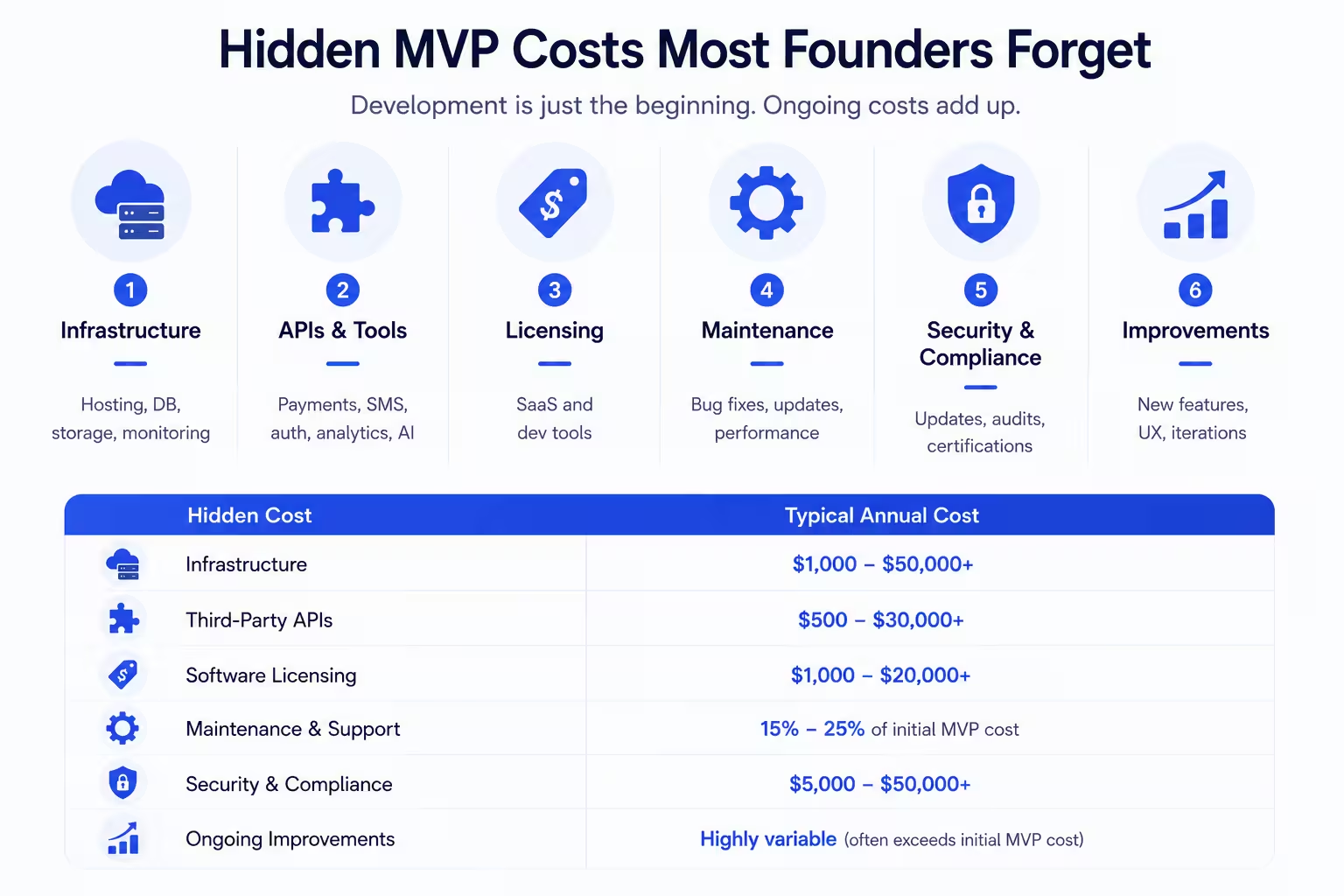
The financial impact of inadequate security can be significant. According to IBM's Cost of a Data Breach Report 2025, the average global cost of a data breach reached USD 4.4 million, highlighting why security considerations should not be postponed until after launch.
Industry frameworks and security guidance published by organizations such as the NIST Cybersecurity Framework and the OWASP Top 10 increasingly influence software architecture decisions, even during the MVP stage.
For businesses operating in regulated environments, security should not be treated as an afterthought. Building security into the product from the beginning is often far less expensive than retrofitting it later.
Team Composition
Finally, the team responsible for building the MVP plays a major role in determining cost.
Rates vary significantly depending on geography, experience level, and engagement model.
The following table provides approximate US market hourly rates:
Role | Typical US Hourly Rate |
|---|---|
Software Developer | $75 - $200+ |
UI/UX Designer | $60 - $150+ |
QA Engineer | $40 - $120+ |
Product Manager | $80 - $180+ |
*Estimated US hourly rates reflect typical market rates charged by freelancers, agencies, and product teams in the United States. These estimates are based on U.S. labor market benchmarks, including data from the U.S. Bureau of Labor Statistics (BLS) and broader industry salary trends. Actual rates vary depending on experience, specialization, location, and engagement model.
While hiring less expensive talent may appear attractive initially, experience often has a direct impact on delivery speed, product quality, and long-term costs.
A highly experienced team may command higher hourly rates, but it can frequently deliver an MVP faster, reduce technical debt, and avoid expensive mistakes that less experienced teams might introduce.
This is one of the reasons many startups choose to work with experienced product teams rather than optimizing solely for the lowest hourly cost.
MVP Development Cost by Team Type
One of the biggest factors influencing the cost to build an MVP is the team responsible for developing it. Founders typically choose between three options: hiring freelancers, building an in-house team, or partnering with a software development agency.
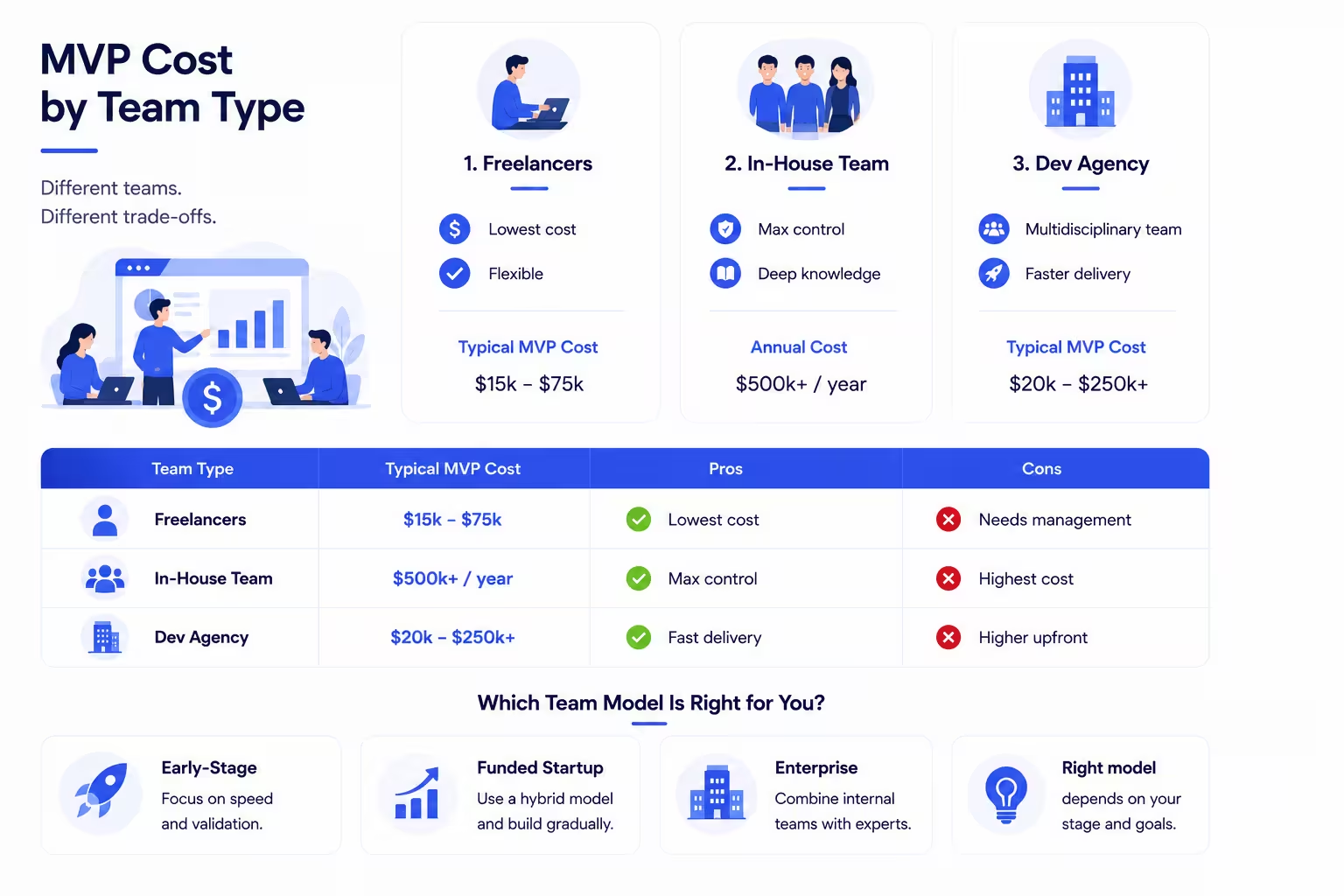
Each model offers different trade-offs in terms of cost, speed, expertise, and long-term scalability.
Hiring Freelancers
Hiring freelancers is often the most affordable option, particularly for early-stage startups with limited budgets.
Freelance developers, designers, and product specialists usually charge on an hourly or project basis, allowing founders to assemble a team without committing to long-term employment costs.
Typical US MVP cost:
Simple MVP: $15,000 - $40,000
Medium complexity MVP: $30,000 - $75,000
Freelancers can be an excellent choice when:
The scope is clearly defined.
The product is relatively simple.
The founder already has product management experience.
Budget constraints are significant.
However, coordinating multiple freelancers can quickly become challenging. Founders often need to manage communication, timelines, quality assurance, architecture decisions, and delivery themselves.
Without strong technical leadership, projects may suffer from delays, inconsistent quality, or technical debt.
Building an In-House Team
Some startups choose to hire their own internal team from the beginning.
An in-house team provides maximum control over product decisions, company culture, and long-term product ownership. Team members work exclusively on the product and accumulate valuable domain knowledge over time.
Typical annual US hiring costs can include:
Software Developer: $130,000+
Product Designer: $100,000+
Product Manager: $120,000+
QA Engineer: $100,000+
Once benefits, recruitment, onboarding, taxes, and operational expenses are included, building a complete internal team can easily exceed $500,000 annually.
For this reason, in-house teams are usually most suitable for:
Funded startups.
Established companies.
Organizations with long-term product roadmaps.
Businesses where software is a core competitive advantage.
While this model provides maximum control, hiring often takes months and significantly increases upfront costs.
Working with a Development Agency
Partnering with a software development agency offers a balance between speed, expertise, and delivery reliability.
Agencies typically provide multidisciplinary teams that include product managers, designers, developers, QA engineers, and DevOps specialists. This allows startups to move from idea to launch without building an internal team from scratch.
Typical MVP cost ranges:
Simple MVP: $20,000 - $50,000
Medium complexity MVP: $50,000 - $100,000
Complex MVP: $100,000 - $250,000+
Agencies are often the preferred option when:
Time-to-market is critical.
Technical expertise is limited internally.
Product requirements are still evolving.
Founders want a strategic technology partner.
At higroup, for example, projects often begin with a discovery phase that validates requirements, prioritizes features, and reduces development risk before engineering starts. This approach helps prevent costly scope changes later in the project.
For many startups, working with an experienced product team accelerates delivery while reducing technical and operational risks.
MVP Development Team Comparison: Cost, Pros, and Cons
Team Type | Typical MVP Cost | Pros | Cons |
|---|---|---|---|
Freelancers | $15k - $75k | Lowest upfront cost, flexible | Requires strong management, quality may vary |
In-House Team | $500k+ annually | Maximum control, long-term ownership | Highest cost, slower hiring |
Development Agency | $20k - $250k+ | Fast delivery, multidisciplinary expertise | Higher upfront investment |
Which Team Model Is Right for You?
There is no universally best team structure. The right model depends largely on your company's stage, funding situation, and internal capabilities.
Early-stage startup
If you're validating an idea or launching your first MVP, freelancers or an experienced development agency are often the most cost-effective options. The goal at this stage is speed, learning, and minimizing risk.
Funded startup
Once funding has been secured and product-market fit begins to emerge, many startups adopt a hybrid model: partnering with an agency while gradually building internal capabilities.
Enterprise organization
Enterprises frequently combine internal product teams with external specialists to accelerate delivery, access niche expertise, and scale faster when needed.
For organizations building strategic digital products, partnering with an experienced product engineering team can significantly reduce time-to-market while ensuring long-term scalability.
When Should You NOT Build an MVP?
Building an MVP is often presented as the default first step for every startup. In reality, launching an MVP too early can lead to wasted budget, unnecessary complexity, and misleading conclusions.
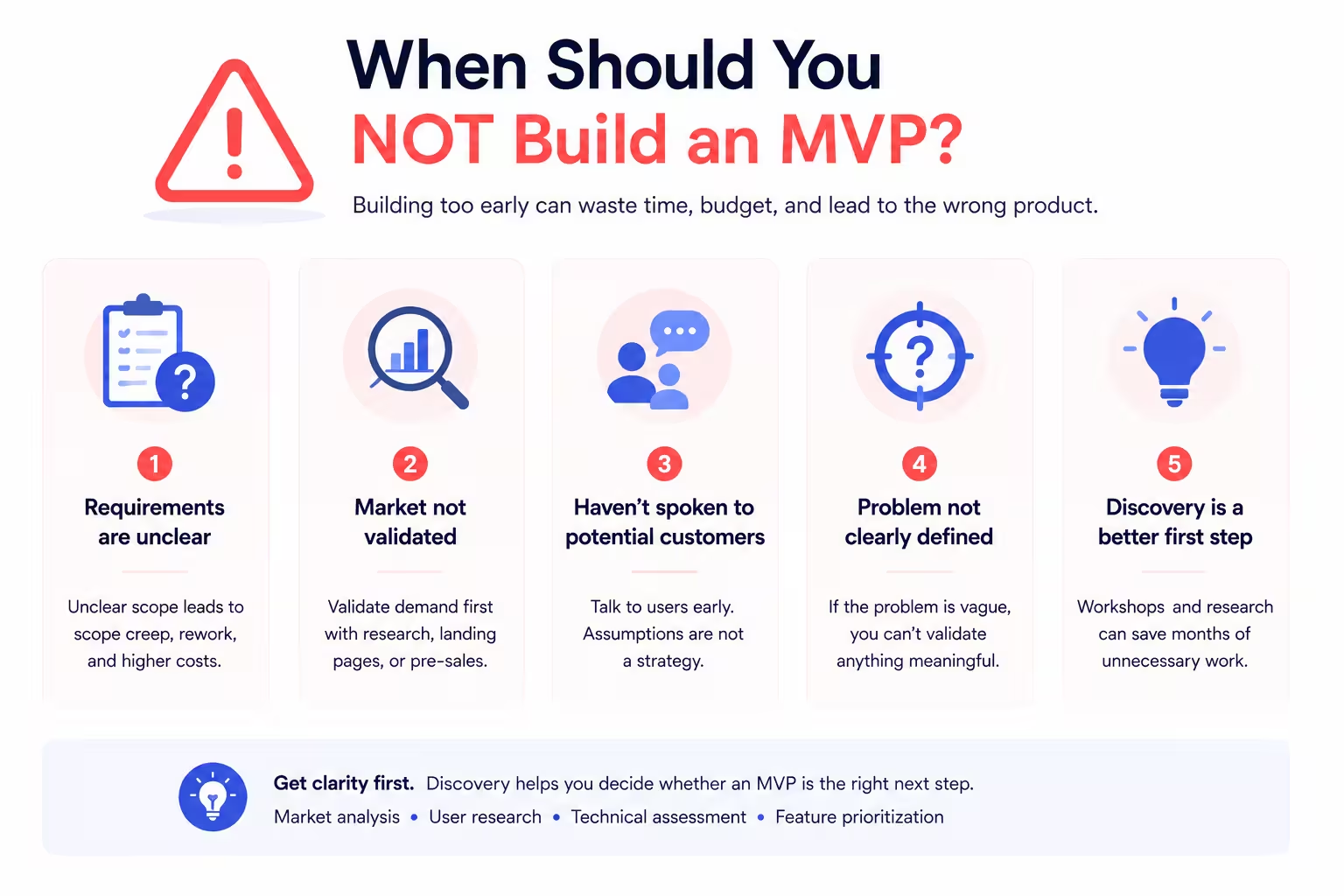
Before investing in product development, founders should ensure that several fundamental questions have already been answered.
Your Requirements Are Still Unclear
If you cannot clearly explain what your product should do, who it is for, and which core problem it solves, development should probably wait.
Unclear requirements almost always lead to scope changes, rework, delays, and higher development costs.
Instead of immediately writing code, it is often more valuable to invest time in workshops, stakeholder discussions, and product discovery activities that help define priorities and align expectations.
You Haven't Validated the Market Yet
Building a product without validating market demand is one of the biggest risks early-stage startups face.
Just because an idea sounds promising does not automatically mean customers are willing to pay for it.
Before developing an MVP, founders should attempt to validate market demand through competitor research, landing pages, surveys, waitlists, or pre-sales whenever possible.
Even limited validation can provide valuable insights and significantly reduce product risk.
You Haven't Spoken to Potential Customers
Many founders build products based primarily on assumptions.
However, assumptions are rarely a substitute for direct customer conversations.
User interviews help uncover real pain points, existing alternatives, buying motivations, and feature expectations. These conversations frequently reveal that customers need something very different from what founders initially imagined.
Speaking with potential users before development begins can save months of unnecessary work and thousands of dollars in development costs.
You Cannot Clearly Define the Problem
An MVP should validate a specific hypothesis.
If the underlying problem is vague, poorly understood, or affects too broad an audience, the product will struggle to deliver meaningful insights after launch.
Founders should be able to clearly answer questions such as:
What exact problem are we solving?
Who experiences this problem?
How are they solving it today?
Why is the current solution insufficient?
If these questions remain unanswered, a discovery phase is often a better investment than immediate development.
At higroup, this is precisely where design & discovery workshops provide value. Through market analysis, user research, technical assessment, and feature prioritization, teams gain the clarity needed to determine whether building an MVP is the right next step—or whether additional validation is required first.
How to Reduce MVP Development Costs Without Sacrificing Quality
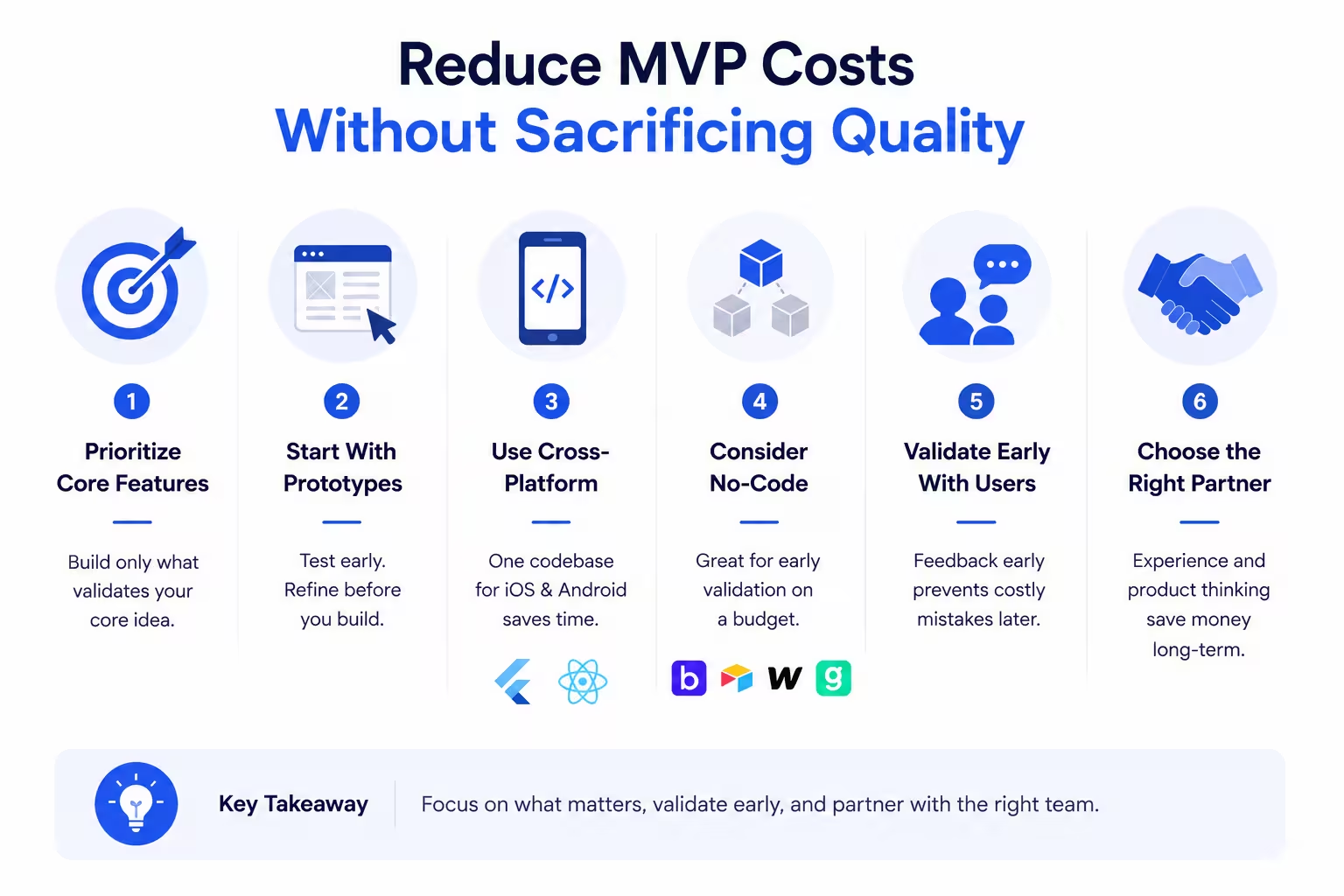
Reducing MVP costs does not necessarily mean cutting corners. In many cases, startups exceed their budgets not because development is inherently expensive, but because they make avoidable decisions early in the process. By focusing on the right priorities from the outset, founders can control costs, validate ideas faster, and build high-quality products without unnecessary complexity. The following strategies can help reduce MVP development costs while maximizing learning and long-term value.
Prioritize Core Features
One of the most effective ways to reduce MVP costs is to focus exclusively on core functionality.
Advanced dashboards, multiple integrations, sophisticated reporting, or complex user roles can all seem valuable, but they often delay launch without helping validate the core business idea. Every additional feature increases development time, testing effort, maintenance costs, and overall project complexity.
Before development begins, teams should identify the single most important problem their product solves and build only the features required to validate that assumption.
A useful exercise is to categorize features into:
Must-have features
Nice-to-have features
Future enhancements
Everything that does not directly contribute to validating the product idea can typically be postponed until after launch.
Start With Prototypes
Not every idea should immediately move into full development.
Interactive prototypes allow founders to visualize user journeys, test concepts with potential customers, gather stakeholder feedback, and refine requirements before writing production code.
Prototyping is significantly less expensive than building and modifying a live product. It also reduces the risk of investing in features that users may never need.
Skipping discovery is one of the most common ways startups create unnecessary costs. Without clearly defining user needs, business goals, and feature priorities, development often leads to scope changes, misunderstandings, and expensive rework. Combining discovery workshops with early prototyping helps teams validate assumptions before committing to full-scale development.
Use Cross-Platform Development
For mobile products, developing separate native applications for iOS and Android can substantially increase costs.
Cross-platform technologies such as Flutter and React Native allow teams to build applications for both platforms using a single codebase. This approach often reduces development time, simplifies maintenance, and accelerates time to market.
While native development remains the best choice for some highly specialized applications, cross-platform development is often the most cost-effective option for early-stage MVPs.
At higroup, many startups choose mobile development services built around Flutter or React Native to reduce costs while maintaining a high-quality user experience.
Can No-Code Reduce MVP Development Costs?
For early-stage startups with limited budgets, no-code platforms can significantly reduce the initial cost of building an MVP.
Tools such as Bubble, Webflow, Glide, and Softr allow founders to validate ideas, launch basic products, and gather user feedback without investing heavily in custom software development.
In some cases, a no-code MVP can be launched for only a few thousand dollars—or even less if founders build it themselves.
However, no-code solutions also come with limitations. Startups expecting rapid growth, complex business logic, advanced integrations, strict security requirements, or highly customized user experiences may eventually outgrow these platforms and require custom development.
At higroup, we often advise founders to choose the approach that best matches their current stage. For idea validation and early testing, no-code can be an excellent option. Once traction, funding, or more sophisticated requirements emerge, transitioning to a scalable custom architecture often becomes the next logical step.
Validate Early With Users
Many startups spend months building features based on assumptions rather than validated customer needs. Early interviews, usability testing, and prototype feedback reduce the risk of investing in functionality that users ultimately don't value.
The earlier these insights are gathered, the less expensive changes become. Small adjustments made during the validation stage can prevent costly redesigns, feature rework, or unnecessary development later in the project.
Choose the Right Development Partner
Selecting a development partner based solely on the lowest hourly rate can be costly in the long run.
Experienced product teams often identify risks earlier, make better architectural decisions, and avoid technical debt that may require expensive rework later.
The right partner should contribute not only engineering expertise but also product thinking, strategic guidance, and a clear understanding of business objectives.
When evaluating potential partners, founders should consider factors such as previous MVP experience, communication processes, product strategy capabilities, technical expertise, and post-launch support.
Ultimately, reducing MVP costs is less about spending as little as possible and more about investing wisely in the activities that maximize learning, reduce risk, and accelerate growth.
Typical MVP Development Timeline
The timeline for building an MVP depends largely on product complexity, feature scope, team size, and decision-making speed. While some simple products can be launched in just a few weeks, more sophisticated platforms often require several months of development.
Most MVP projects follow a similar sequence of stages, starting with discovery and ending with launch and ongoing iteration.
Stage | Typical Duration | Main Activities |
|---|---|---|
Discovery | 2–4 weeks | Requirements gathering, workshops, competitor analysis, technical assessment |
Design | 2–4 weeks | UX/UI design, wireframing, prototyping, user flows |
Development | 4–12+ weeks | Frontend and backend development, integrations, core feature implementation |
Testing | 1–3 weeks | Quality assurance, bug fixing, performance and security testing |
Launch & Iteration | Ongoing | Deployment, user feedback collection, product improvements |
The discovery phase is often the most underestimated stage, yet it can significantly reduce development risks and prevent costly scope changes later in the project. This is why many successful companies invest in product discovery workshops before writing production code.
After launch, MVP development rarely stops. The first release is primarily intended to validate assumptions, gather user feedback, and identify which features should be prioritized next. In practice, launch marks the beginning of a continuous improvement cycle rather than the end of the development process.
How higroup Approaches MVP Development
Building an MVP is not simply about launching quickly. It is about validating the right assumptions, minimizing unnecessary costs, and creating a solid foundation for future growth.
At higroup, every MVP engagement begins with a structured discovery phase designed to align business goals, user needs, and technical requirements before development starts. By validating assumptions early, we help reduce uncertainty and avoid costly changes later in the project.
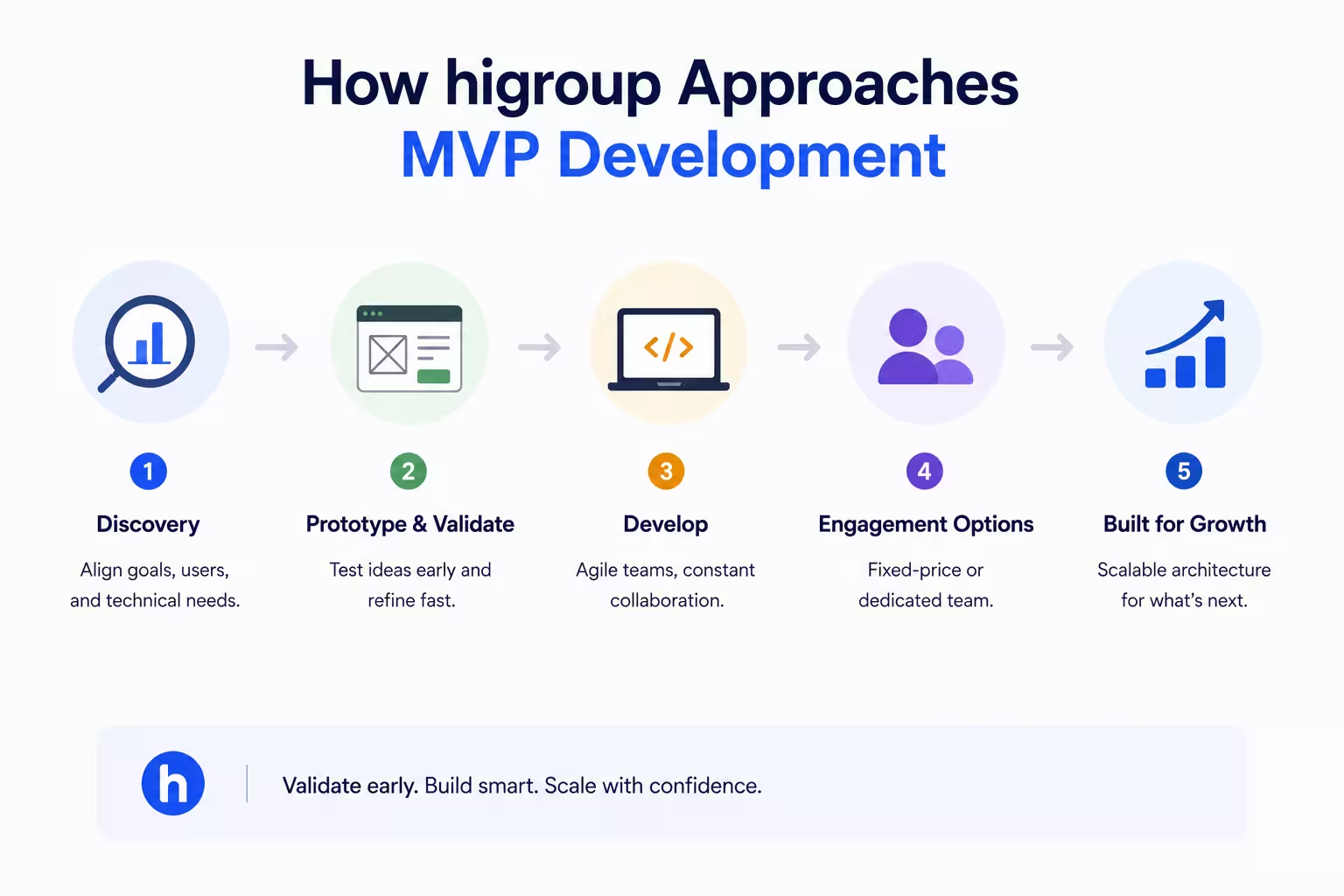
Once the scope has been defined, we move into rapid prototyping and iterative product development, allowing founders and stakeholders to validate concepts early and keep the project focused on delivering the smallest product capable of generating meaningful market feedback.
Development is then carried out by our multidisciplinary product engineering teams using agile delivery practices and continuous collaboration. Depending on the project's needs, clients can choose between fixed-price engagements or dedicated development teams.
Every MVP is built with future growth in mind, combining rapid delivery with scalable architecture that allows products to evolve without unnecessary rebuilds as requirements and user adoption increase.
Final Thoughts: Building the Right MVP Starts With the Right Decisions
There is no universal price tag for building an MVP.
The cost to build an MVP in 2026 can range from $15,000 to well over $150,000, depending on the complexity of the product, the technology stack, security requirements, integrations, and the team responsible for delivery. What matters most is not minimizing costs at all costs, but making smart investment decisions that support both short-term validation and long-term growth.
The most successful startups rarely begin by building everything. Instead, they focus on validating assumptions, prioritizing the features that matter most, and gathering real user feedback as early as possible. A well-planned MVP reduces risk, accelerates learning, and provides a stronger foundation for future product development.
Before committing to development, it's worth taking the time to clarify your goals, define your core value proposition, and evaluate the technical approach that best fits your business objectives and budget.
At higroup, we help startups and enterprises transform ideas into scalable digital products through discovery workshops, rapid prototyping, and agile product development. Whether you're exploring a new idea, planning your first MVP, or refining an existing prototype, our team can help you validate assumptions and build with confidence.
Ready to explore your MVP idea? Whether you're estimating development costs or defining the right technical approach, contact us to discuss your project and identify the best path forward.
Related post
Handpicked Reads to Deepen Your Understanding
- Business
- Dino Starcic
- 15/06/2026
Software Development Cost and Budgeting Guide in 2026
A practical guide to software development costs in 2026, explaining the key factors that influence project budgets, typical pricing models, hidden expenses, and how businesses can plan their investment more accurately.
Readarticle- Product Engineering
- David Grabnar
- 04/02/2026
What is the Timeline for developing a New Product?
Developing a new product takes time, but the timeline is rarely straightforward. This blog breaks down the typical timeline for product development, from idea validation and design to development, launch, and ongoing support. It explains what influences timelines, where delays usually happen, and how teams can plan realistically to deliver products efficiently without compromising quality.
ReadarticleDo you have a specific idea in mind?
Share your vision, and we'll explore how we can make it happen together.