All Insights / Software Development Cost and Budgeting Guide in 2026
Software Development Cost and Budgeting Guide in 2026
A practical guide to software development costs in 2026, explaining the key factors that influence project budgets, typical pricing models, hidden expenses, and how businesses can plan their investment more accurately.
“How much will it cost to build our software?”
It’s usually the first question founders, CTOs, and product leaders ask when planning a new digital product. Unfortunately, it’s also one of the hardest questions to answer.
In 2026, software development costs can range from $20,000 for a simple MVP to several hundred thousand dollars, or even millions, for large-scale enterprise platforms. The challenge is that software costs are influenced by dozens of variables, including product complexity, team structure, technology choices, security requirements, integrations, and long-term maintenance needs.
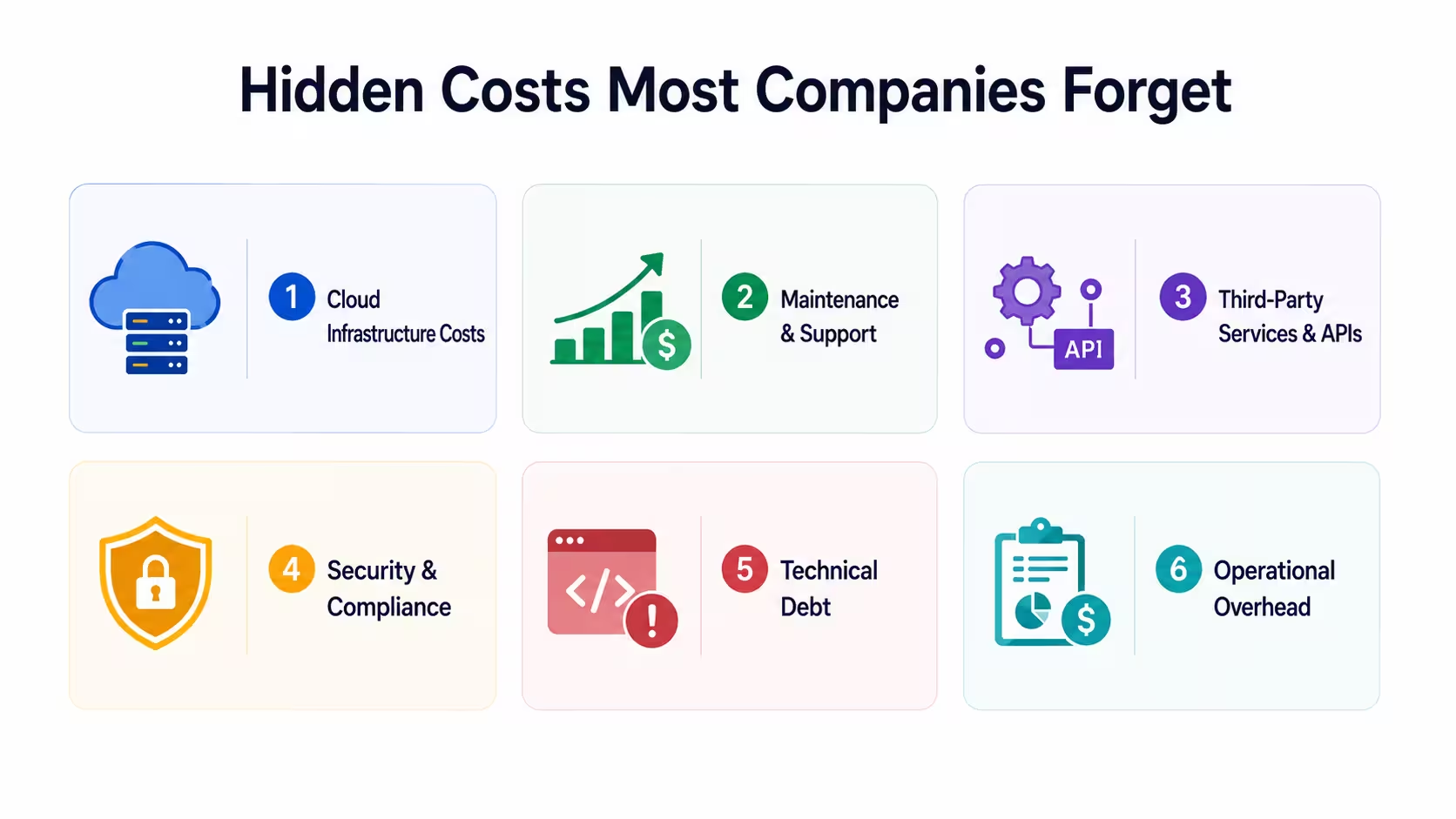
What makes budgeting even more difficult is that development costs are only part of the equation. Infrastructure, third-party services, compliance requirements, ongoing support, and future enhancements can significantly increase the total investment required to build and operate a successful software product.
The consequences of poor budgeting can be substantial. According to McKinsey research, large IT projects exceed their budgets by 45% on average. In many cases, the problem is not poor execution, it is unrealistic planning from the outset.
This guide goes beyond simple pricing estimates. We’ll break down the key factors that influence software development costs in 2026, explore realistic budget ranges for different project types, uncover hidden expenses that companies often overlook, and provide practical frameworks for building a software budget that aligns with both business goals and technical realities.
Whether you're planning a startup MVP, a custom internal platform, or a large-scale SaaS product, this guide will help you make more informed investment decisions and avoid the budgeting mistakes that derail software projects.
Software Development Cost in 2026: Quick Benchmarks
One of the biggest challenges in software budgeting is that there is no universal price tag. Two projects that appear similar on the surface can have vastly different costs depending on their complexity, integrations, security requirements, and scalability goals.
That said, most software projects fall into a few common categories. The table below provides realistic budget ranges based on current market conditions and the pricing structures commonly used by development agencies and software consulting firms in 2026.
Project Type | Typical Budget Range | Typical Timeline |
|---|---|---|
MVP / Proof of Concept | $25,000 – $75,000 | 2–4 months |
SaaS Product | $75,000 – $250,000 | 4–9 months |
Marketplace Platform | $150,000 – $500,000+ | 6–12 months |
Enterprise Software | $250,000 – $1M+ | 9–18+ months |
AI-Powered Application | $75,000 – $500,000+ | 3–12 months |
These figures should be viewed as planning benchmarks rather than fixed prices. A simple SaaS application with a limited feature set may sit at the lower end of the range, while a highly customized platform with complex workflows, third-party integrations, and enterprise-grade security requirements can quickly move toward the upper end.
Why Cost Estimates Vary So Much
A scheduling application and a healthcare platform may both be described as "software projects," yet their budgets can differ by hundreds of thousands of dollars.
The reason is simple: software costs are driven by far more than the number of screens or features. Security and compliance requirements, integration complexity, user volume, data processing needs, infrastructure architecture, and long-term scalability all influence the final investment.
This is why experienced development teams rarely provide accurate estimates after a short conversation. Reliable budgeting requires a clear understanding of business objectives, technical requirements, and the level of complexity involved before meaningful cost projections can be made.
What Actually Drives Software Development Costs?
Software costs are rarely determined by a single factor. Two projects with similar goals can end up with dramatically different budgets depending on their complexity, technical requirements, and long-term business objectives.
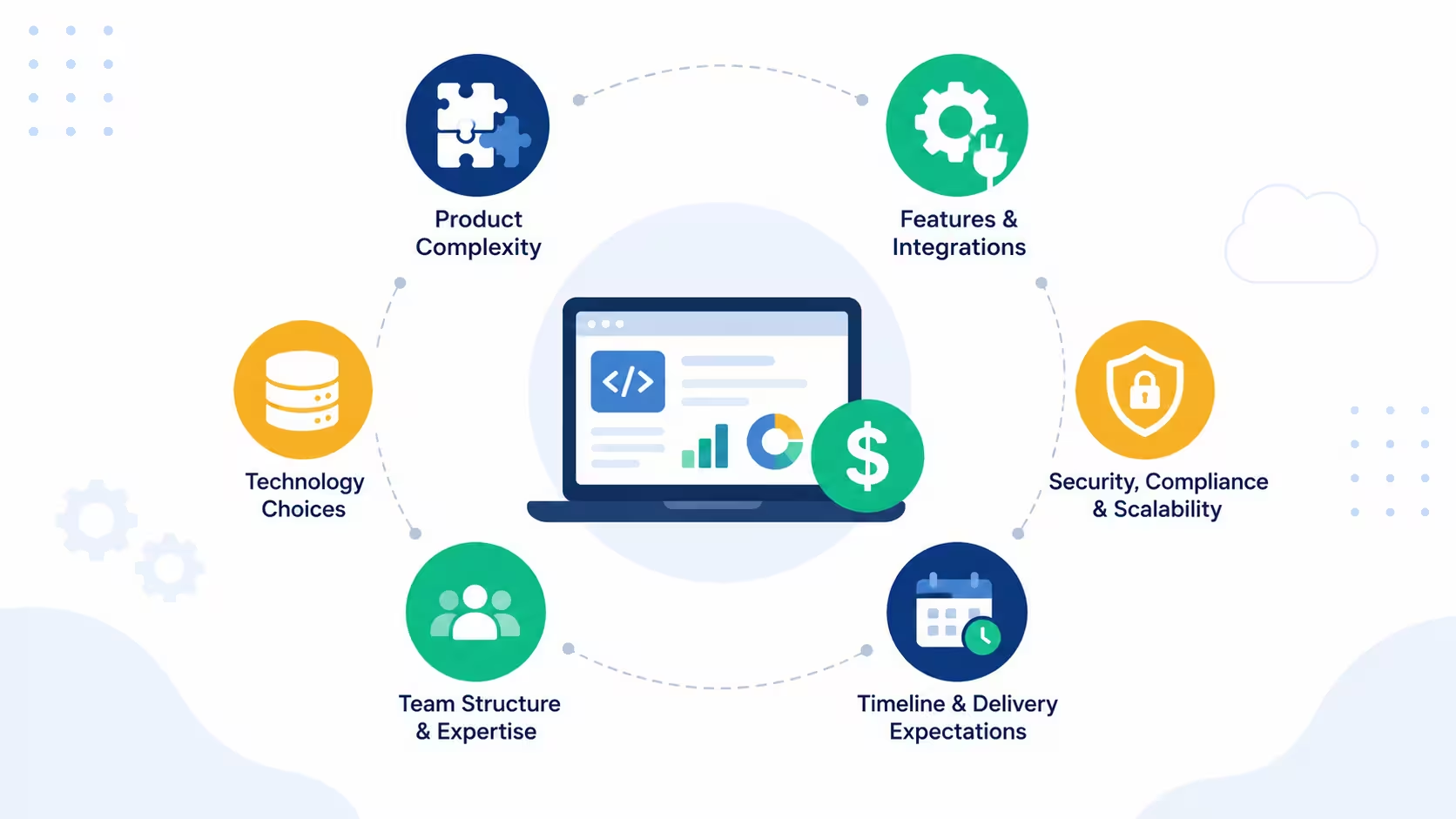
Understanding the factors behind software pricing helps businesses make smarter budgeting decisions and avoid unpleasant surprises later in the development process.
Product Complexity
Complexity is often the single biggest driver of software development costs.
A simple internal dashboard used by a small team requires far less effort than a multi-tenant SaaS platform serving thousands of users. Features such as real-time collaboration, advanced reporting, role-based permissions, large data volumes, or complex workflows significantly increase development time.
The difference isn't just the amount of code being written. More complexity means more architecture decisions, more testing scenarios, more edge cases, and greater long-term maintenance requirements.
Features and Integrations
Not all features carry the same cost.
Basic user authentication, profile management, and content management are relatively common requirements that most development teams can implement efficiently. More advanced functionality such as payment processing, AI-powered recommendations, geolocation services, video streaming, or custom reporting engines requires additional expertise and development effort.
We've seen projects where integrations consumed more effort than the core product itself. Connecting software to CRMs, ERP systems, payment gateways, marketing platforms, or legacy databases often introduces technical challenges that are difficult to estimate without proper discovery and planning.
A project with ten external integrations may require substantially more effort than a project with twice as many screens but no third-party dependencies.
Technology Choices
The technology stack influences both development costs and long-term maintenance expenses.
Popular technologies such as React, Node.js, Python, and PostgreSQL typically offer access to larger talent pools, mature ecosystems, and proven development frameworks. This often translates into lower development risk and more predictable costs.
Specialized or emerging technologies may provide certain advantages, but they can also increase costs due to limited talent availability, higher developer rates, and reduced community support.
The goal is not necessarily to choose the cheapest technology, but to select a stack that aligns with business requirements while remaining sustainable over time.
Team Structure and Expertise
Who builds the software matters just as much as what is being built.
A senior engineer may cost twice as much as a junior developer, but can often prevent architectural mistakes that become six-figure problems later. Similarly, a well-balanced team that includes architects, designers, QA specialists, and DevOps engineers may deliver better long-term value than relying exclusively on developers.
Businesses also need to consider whether an in-house team, freelancers, an outsourced partner, or a dedicated development team is the best fit for their goals. Each model comes with different cost structures, levels of flexibility, and management requirements.
Security, Compliance, and Scalability
Many companies underestimate the cost of building software that is secure, compliant, and capable of growing with the business.
Requirements such as GDPR compliance, audit logging, role-based access control, encryption, penetration testing, or industry-specific regulations can add significant effort to a project. The same applies to scalability requirements. Building a platform for a few hundred users is very different from building one that may eventually support hundreds of thousands.
Investing in these areas early often costs less than attempting to retrofit them after launch.
Timeline and Delivery Expectations
Project timelines have a direct impact on cost.
When businesses want to accelerate delivery, development teams often need additional resources, parallel workstreams, more frequent coordination, and increased testing efforts. While faster delivery can create business value, it usually comes at a premium.
In many cases, the most cost-effective approach is not to build faster, but to build smarter by prioritizing the right features, defining a realistic MVP, and delivering value in phases.
The important takeaway is that software development costs are not driven by a single number or hourly rate. They are the result of dozens of decisions made throughout the planning process. The more clearly those decisions are defined upfront, the more accurate and predictable the final budget will be.
How to Build a Realistic Software Budget
Understanding the factors that influence software costs is only the first step. The real challenge is turning those variables into a realistic budget that aligns business goals, technical requirements, and financial constraints.
One of the biggest mistakes companies make is treating software budgeting as a simple pricing exercise. Successful projects are rarely the result of finding the lowest quote. They are the result of careful planning, clear priorities, and realistic expectations from the outset.
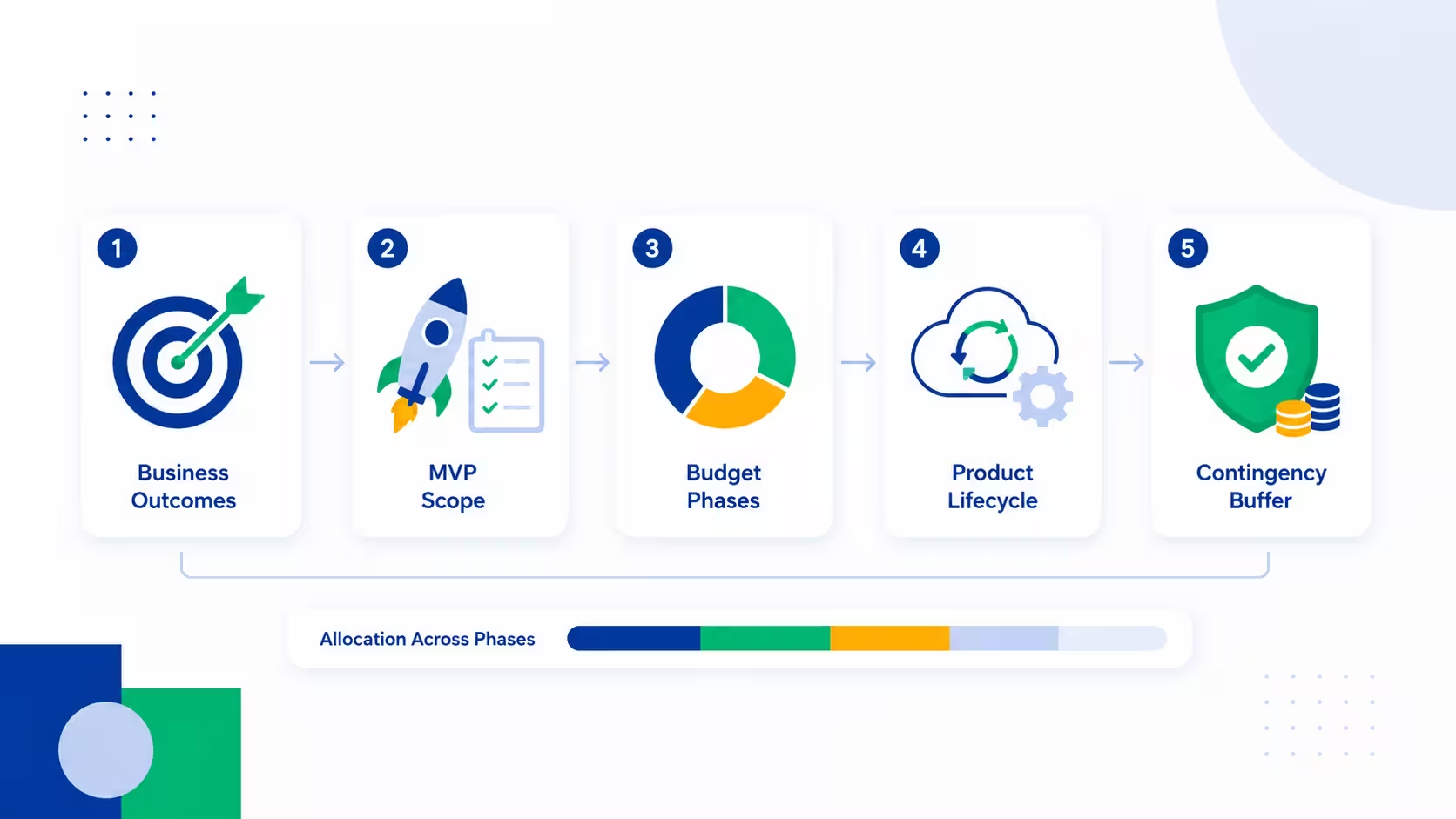
Start With Business Outcomes, Not Features
Before discussing features, technologies, or development teams, define the business objective behind the project.
Are you trying to generate new revenue? Reduce operational costs? Automate manual processes? Improve customer experience? Enter a new market?
The answer should drive every budgeting decision that follows.
Many projects become unnecessarily expensive because teams focus on building features rather than solving business problems. When budgets are tied to measurable outcomes, it becomes much easier to prioritize investments and avoid spending resources on functionality that delivers little value.
Define Your MVP Before Estimating Costs
A realistic budget starts with a realistic scope.
Rather than attempting to build every desired feature at once, successful teams define a Minimum Viable Product (MVP) that focuses on the core functionality needed to deliver value to users.
A useful approach is to categorize requirements into three groups:
Must-have features that are essential for launch
Nice-to-have features that improve the experience but can wait
Future enhancements that can be added after validation
This approach helps control costs while reducing risk. More importantly, it allows businesses to gather real user feedback before investing heavily in secondary features that may never be used.
Allocate Budget Across Development Phases
Software budgets should cover the entire delivery process, not just coding.
While every project is different, the following allocation provides a useful starting point for most custom software initiatives:
Phase | Typical Budget Allocation |
|---|---|
Discovery & Planning | 10–15% |
Design & Architecture | 10–15% |
Development | 40–50% |
QA & Testing | 15–20% |
Deployment & Launch | 5–10% |
Contingency Reserve | 10–15% |
Many organizations underestimate the importance of discovery, architecture, and testing. Yet these phases often determine whether a project stays on budget or becomes increasingly expensive as development progresses.
Budget for the Entire Product Lifecycle
The initial build is only part of the total investment.
Once software is launched, ongoing costs begin to appear. Infrastructure, hosting, monitoring, support, security updates, bug fixes, and future enhancements all require resources over time.
At higroup, we've found that teams who focus only on initial development costs often underestimate the true cost of ownership. The most successful software budgets account for infrastructure, maintenance, support, and future growth from the start.
When planning a software budget, it is often helpful to think in terms of a three-year investment horizon rather than a launch date.
Build in a Contingency Buffer
Even well-planned projects encounter unexpected challenges.
Requirements evolve, integrations prove more complex than expected, regulations change, and new opportunities emerge during development. These situations are normal and should be anticipated rather than treated as exceptions.
For relatively straightforward projects, a contingency reserve of 10–15% is often sufficient. For complex platforms, enterprise systems, or products involving multiple integrations and stakeholders, a reserve closer to 15–25% may be more appropriate.
This buffer should not be viewed as wasted budget. It is an investment in flexibility that helps teams adapt without compromising quality or delaying delivery.
Ultimately, the most successful software budgets are not necessarily the largest. They are the ones built around clear priorities, realistic assumptions, and enough flexibility to adapt as the project evolves.
Practical tip: If your first budget estimate doesn't include a contingency reserve, it probably isn't a realistic software budget.
A Sample Software Budget Breakdown
Budget planning becomes much easier when you move beyond broad cost ranges and look at how real software projects are typically structured.
While every project is unique, the examples below illustrate how development budgets are often allocated across different types of products. The exact figures will vary depending on requirements, team structure, and technical complexity, but the overall distribution is representative of what many organizations encounter in practice.
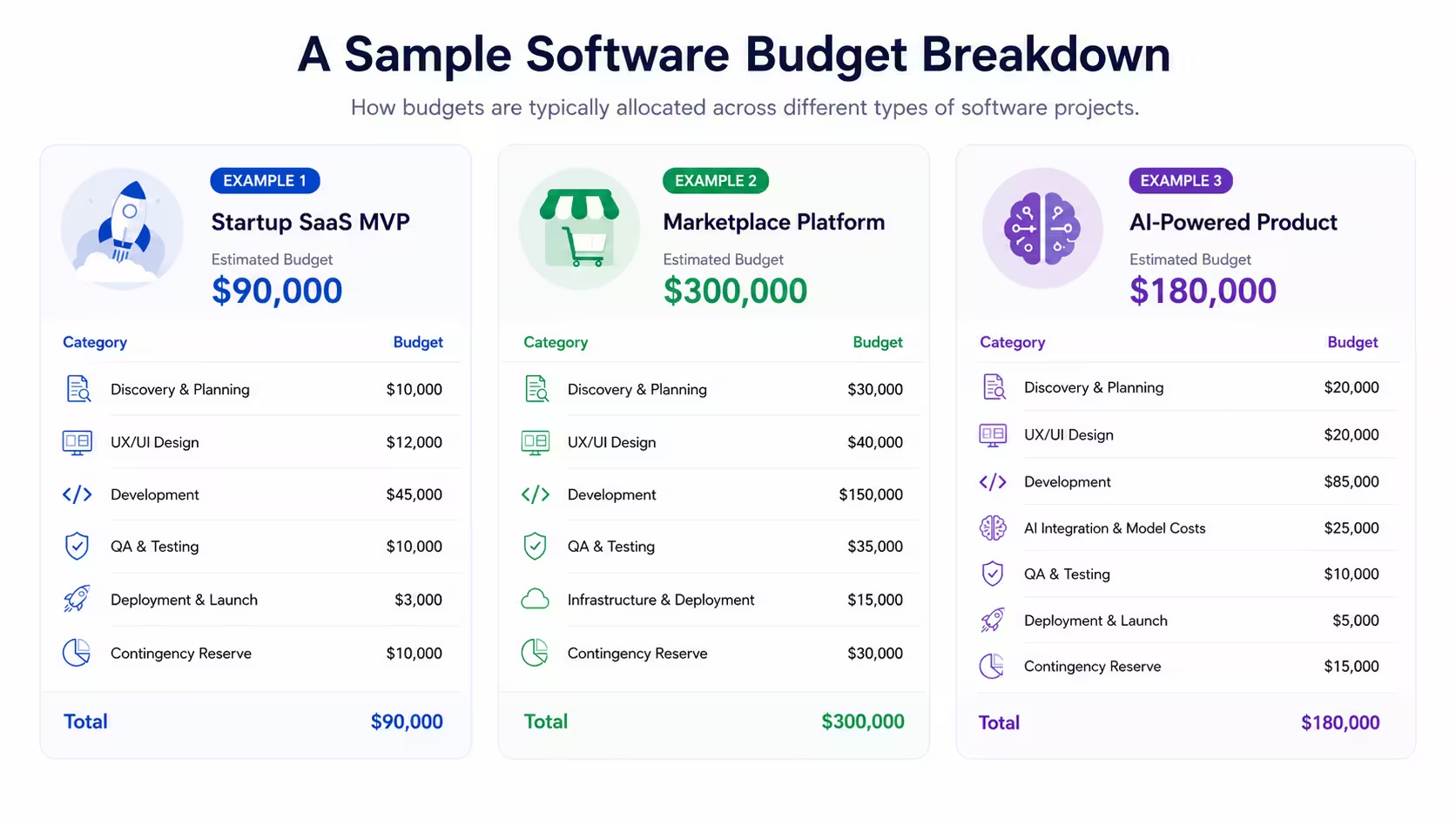
Example 1: Startup SaaS MVP
A startup launching a SaaS product often focuses on validating the market as quickly as possible while keeping risk under control.
Estimated Budget: $90,000
Category | Budget |
|---|---|
Discovery & Planning | $10,000 |
UX/UI Design | $12,000 |
Development | $45,000 |
QA & Testing | $10,000 |
Deployment & Launch | $3,000 |
Contingency Reserve | $10,000 |
Total | $90,000 |
At this stage, the objective is not to build every feature on the roadmap. The goal is to launch a focused product, gather user feedback, and validate assumptions before making larger investments.
Example 2: Marketplace Platform
Marketplaces introduce additional complexity because they typically require multiple user roles, payment processing, notifications, moderation tools, and third-party integrations.
Estimated Budget: $300,000
Category | Budget |
|---|---|
Discovery & Planning | $30,000 |
UX/UI Design | $40,000 |
Development | $150,000 |
QA & Testing | $35,000 |
Infrastructure & Deployment | $15,000 |
Contingency Reserve | $30,000 |
Total | $300,000 |
Projects in this category often require more extensive architecture planning to ensure scalability, security, and long-term maintainability as transaction volumes increase.
Example 3: AI-Powered Product
AI applications introduce an additional layer of complexity beyond traditional software development. In addition to building the product itself, teams must account for model selection, prompt engineering, data preparation, evaluation, and ongoing AI-related operational costs.
Estimated Budget: $180,000
Category | Budget |
|---|---|
Discovery & Planning | $20,000 |
UX/UI Design | $20,000 |
Development | $85,000 |
AI Integration & Model Costs | $25,000 |
QA & Testing | $10,000 |
Deployment & Launch | $5,000 |
Contingency Reserve | $15,000 |
Total | $180,000 |
*These examples are not templates to copy directly. Their purpose is to illustrate how software budgets are typically distributed. The right allocation depends on your product, risk profile, and business goals.
For AI-driven products, budgeting should extend beyond launch. Model usage fees, infrastructure consumption, monitoring, and future model upgrades can become significant operational expenses over time.
These examples highlight an important reality: software budgets are rarely dominated by development alone. Planning, testing, deployment, and risk management all play a meaningful role in determining the total investment required to deliver a successful product.
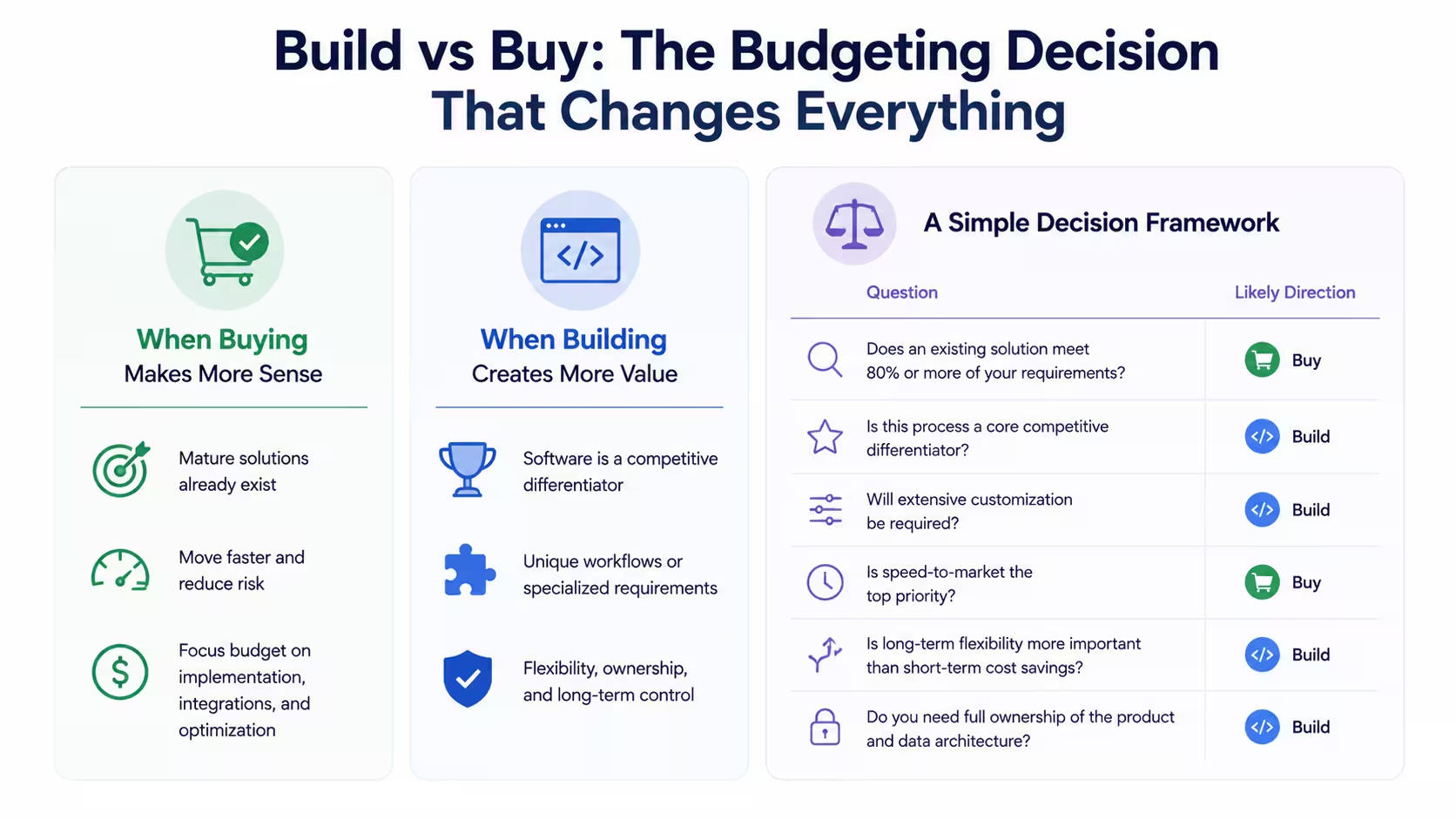
Build vs Buy: The Budgeting Decision That Changes Everything
One of the most expensive software decisions isn't how you build a solution, it's deciding whether you should build one at all.
Many organizations automatically assume that custom development is the best path forward. In reality, some of the most successful technology investments begin by evaluating whether an existing solution can solve the problem effectively enough.
Before allocating budget to custom software development, it is worth asking a simple question: is this something that truly needs to be built from scratch?
When Buying Makes More Sense
For many business functions, mature software solutions already exist.
CRM platforms such as Salesforce, marketing automation tools like HubSpot, and e-commerce platforms such as Shopify have spent years refining their products and ecosystems. Replicating their functionality internally would require significant investment, ongoing maintenance, and dedicated resources.
Rule of thumb: if an existing solution satisfies more than 80% of your requirements, buying is usually the better financial decision. It allows teams to move faster, reduce development risk, and focus resources on areas that create greater business value.
In these situations, software budgets are often better spent on implementation, integrations, training, and process optimization rather than rebuilding functionality that already exists in the market.
When Custom Development Creates More Value
Custom software becomes far more attractive when the software itself is part of your competitive advantage.
This is often the case when organizations have unique workflows, proprietary business processes, specialized operational requirements, or products that differentiate them from competitors.
For example, a logistics company with a highly specialized routing process, a healthcare provider with unique patient workflows, or a SaaS company building its core product may struggle to find off-the-shelf solutions that truly meet their needs.
In these scenarios, custom development provides flexibility, ownership, and long-term control that packaged software often cannot deliver.
A Simple Decision Framework
The following questions can help guide the decision:
Question | Likely Direction |
|---|---|
Does an existing solution meet 80% or more of your requirements? | Buy |
Is this process a core competitive differentiator? | Build |
Will extensive customization be required? | Build |
Is speed-to-market the top priority? | Buy |
Is long-term flexibility more important than short-term cost savings? | Build |
Do you need full ownership of the product and data architecture? | Build |
While no framework can replace detailed analysis, these questions help organizations evaluate software investments from both a technical and financial perspective.
Ultimately, the cheapest software project is often the one you never have to build. The most successful organizations focus their development budgets on areas that create unique business value while leveraging existing platforms wherever possible.
How AI Is Changing Software Development Costs in 2026
Artificial intelligence is reshaping how software is built, tested, and maintained. As AI-powered development tools become more widely adopted, businesses naturally expect software costs to decrease.
The reality is more nuanced.
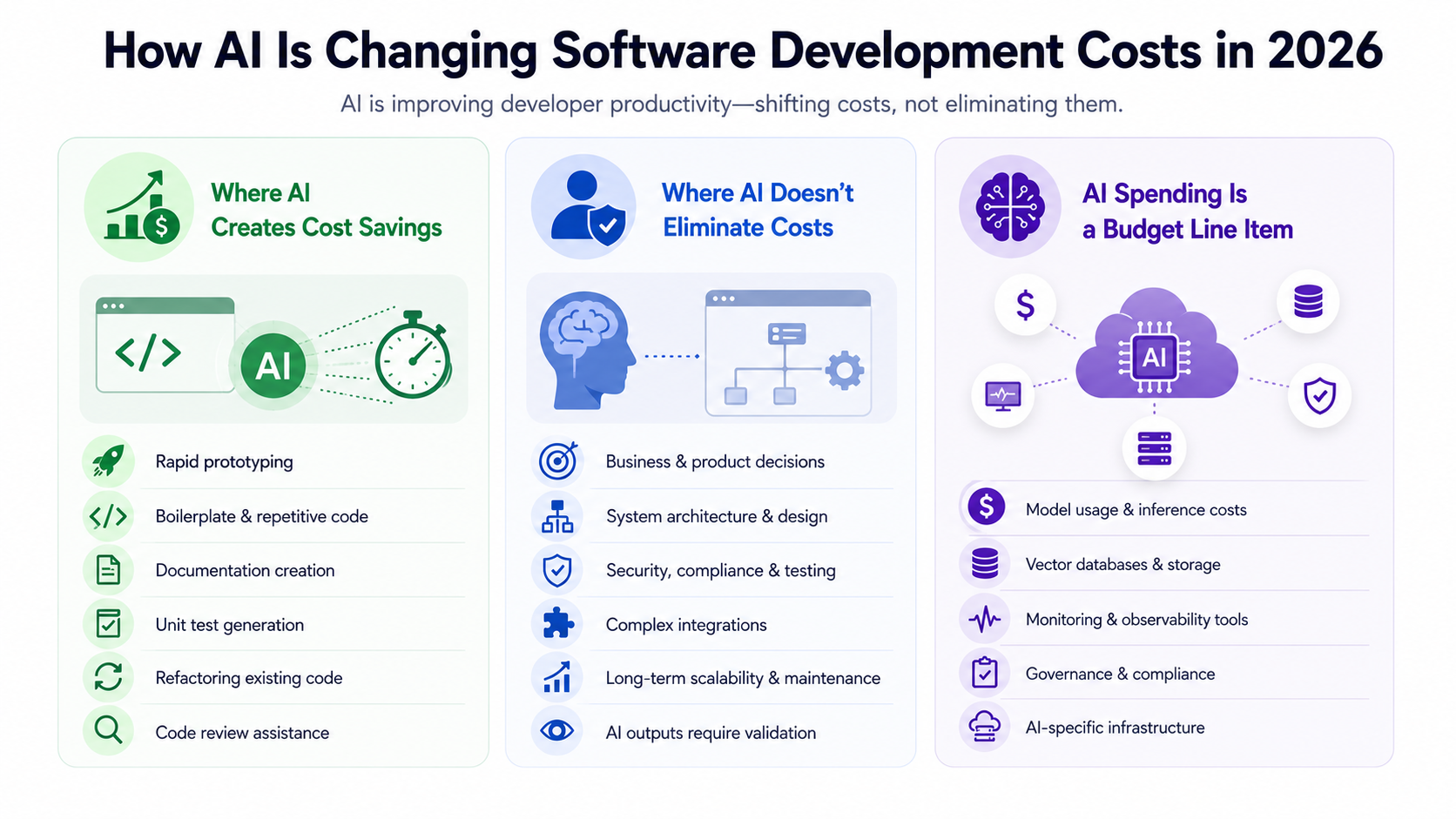
AI is helping development teams work more efficiently in certain areas, but it is not eliminating the need for experienced engineers, architects, designers, or product leaders. In many cases, AI shifts where costs occur rather than removing them altogether.
Understanding both sides of the equation is essential when planning software budgets in 2026.
Where AI Creates Cost Savings
AI development tools can significantly improve productivity by reducing the time required for repetitive tasks.
Developers increasingly use AI assistants to generate boilerplate code, accelerate prototyping, draft documentation, create test cases, and assist with debugging. These capabilities allow teams to spend less time on routine implementation work and more time on solving business problems.
This productivity impact is already measurable. According to a GitHub Copilot study, developers using GitHub Copilot completed certain tasks 55.8% faster than those working without AI assistance.
For businesses, this can translate into faster MVP development, shorter iteration cycles, and reduced effort for specific development activities.
AI can be particularly effective for:
Rapid prototyping and proof-of-concept development
Boilerplate and repetitive code generation
Documentation creation
Unit test generation
Refactoring existing code
Code review assistance
These improvements help teams move faster, but they do not remove the need for technical oversight and quality control.
Where AI Doesn't Eliminate Costs
Despite its capabilities, AI is not a substitute for software engineering expertise.
Business requirements still need to be defined. Product decisions still need to be made. Systems still need to be architected, secured, tested, and maintained. Complex integrations, compliance requirements, infrastructure design, and long-term scalability remain fundamentally human-led challenges.
AI-generated code also requires validation. Poorly reviewed outputs can introduce bugs, security vulnerabilities, or technical debt that ultimately increase costs rather than reduce them.
For most organizations, the biggest value of AI is not replacing development teams, it is helping experienced teams become more productive.
AI Spending Is Becoming a Budget Line Item
While AI may reduce effort in some areas, it is also creating new categories of operational spending.
Organizations now need to budget for AI model usage, inference costs, vector databases, monitoring tools, governance processes, and AI-specific infrastructure. As AI becomes embedded in products and workflows, these expenses become part of the overall software budget.
This trend is becoming increasingly visible across the industry. According to the latest State of FinOps report, 98% of organizations now actively manage AI-related spending.
For technology leaders, this creates a new budgeting challenge. The question is no longer simply how much software development costs, but also how AI consumption will impact long-term operating expenses.
The organizations that benefit most from AI are not necessarily the ones that use it everywhere. They are the ones that understand where AI creates genuine efficiency gains, where human expertise remains essential, and how to budget effectively for both.
7 Costly Budgeting Mistakes to Avoid
Building a realistic software budget is only half the challenge. The other half is avoiding the mistakes that cause projects to exceed expectations, consume unnecessary resources, and deliver less value than anticipated.
As highlighted by McKinsey research, budget overruns are rarely caused by a single factor. They usually result from a combination of unclear requirements, underestimated complexity, and poor governance.
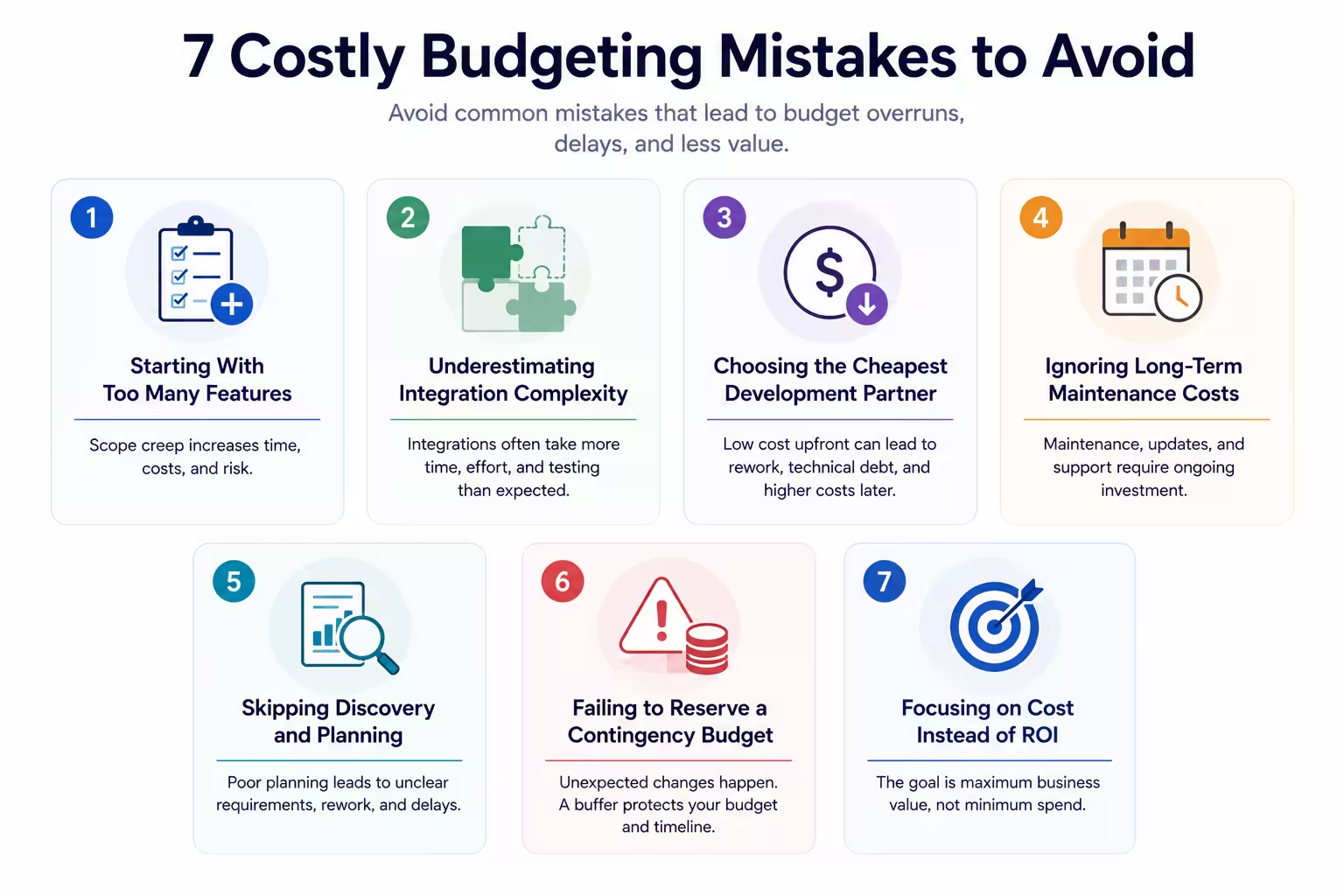
Here are seven of the most common mistakes organizations make when planning software investments.
1. Starting With Too Many Features
One of the fastest ways to inflate a budget is attempting to build everything at once.
Many teams enter development with an extensive wish list of features, integrations, and future enhancements. While the ambition is understandable, it often leads to longer timelines, higher costs, and delayed market validation.
The most successful products typically start with a focused MVP that solves a specific problem exceptionally well.
2. Underestimating Integration Complexity
Integrations often appear straightforward on paper but become significantly more complex during implementation.
Connecting with payment providers, CRMs, ERP systems, analytics platforms, identity providers, or legacy systems introduces dependencies that can affect timelines, testing requirements, and maintenance costs.
Projects frequently underestimate the effort required to make multiple systems work together reliably.
3. Choosing the Cheapest Development Partner
The lowest quote is not always the lowest-cost option.
Inexperienced teams may require more supervision, produce lower-quality code, create technical debt, or struggle to deliver on schedule. These issues often generate additional expenses later through rework, maintenance, and missed business opportunities.
A better approach is to evaluate development partners based on expertise, delivery track record, communication, and long-term value rather than price alone.
4. Ignoring Long-Term Maintenance Costs
Many budgets focus entirely on getting software to launch.
However, launching a product is only the beginning. Ongoing maintenance, infrastructure, monitoring, support, security updates, and feature enhancements all require continued investment.
Organizations that fail to plan for these expenses often face difficult budget decisions shortly after launch.
5. Skipping Discovery and Planning
Some teams attempt to accelerate projects by reducing planning activities.
In reality, insufficient discovery often creates more delays and expenses later. Unclear requirements lead to misunderstandings, scope changes, rework, and inefficient development cycles.
Investing in planning early is usually one of the most effective ways to reduce overall project risk.
6. Failing to Reserve a Contingency Budget
Unexpected challenges are a normal part of software development.
New requirements emerge, integrations take longer than expected, regulatory requirements evolve, and business priorities shift. Without a contingency reserve, even relatively minor changes can place significant pressure on the project budget.
A realistic contingency allocation provides flexibility without compromising delivery quality.
7. Focusing on Cost Instead of ROI
Perhaps the most expensive mistake is evaluating software investments solely through the lens of cost.
The true objective is not to spend as little as possible. It is to generate the greatest possible business value from the investment.
A project that costs $200,000 but creates operational efficiencies, revenue growth, or competitive advantages may ultimately be far more valuable than a project that costs $50,000 but fails to achieve meaningful outcomes.
The best software budgets are not designed to minimize spending. They are designed to maximize return on investment while maintaining realistic expectations about cost, risk, and long-term value.
Software Development Cost Planning Checklist
Before approving a software budget, take a step back and make sure the fundamentals are in place. A few hours spent validating assumptions at this stage can save weeks of delays and significant budget overruns later.
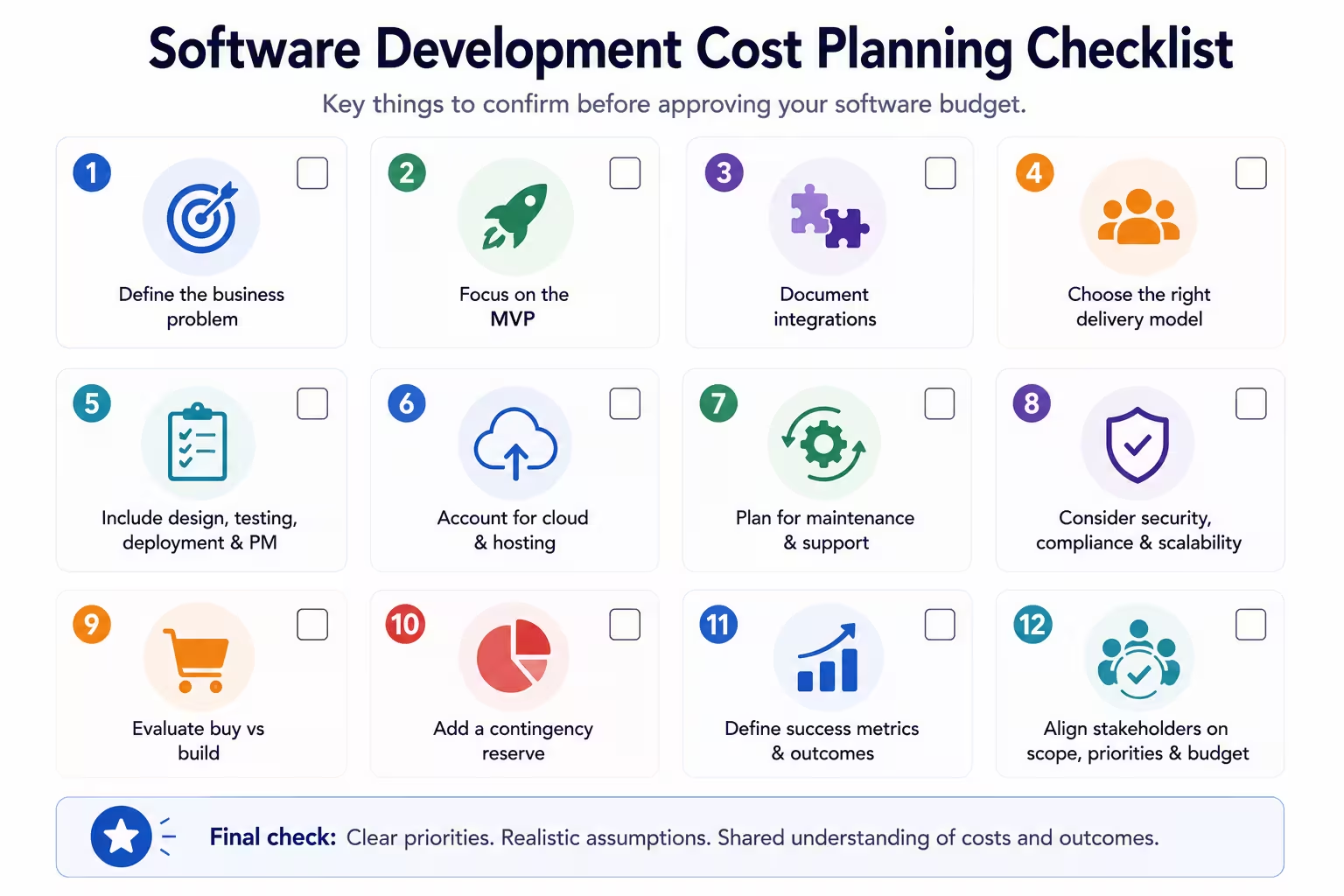
Use the checklist below as a final review before committing resources to a software project.
Software Budget Planning Checklist
Have you clearly defined the business problem the software will solve?
Have you identified the minimum viable product (MVP) rather than budgeting for every possible feature?
Have you documented all required integrations and external dependencies?
Have you selected the most appropriate delivery model (in-house, freelance, agency, or dedicated team)?
Have you accounted for design, testing, deployment, and project management activities?
Have you included cloud infrastructure and hosting costs?
Have you estimated ongoing maintenance and support requirements?
Have you considered security, compliance, and scalability needs?
Have you evaluated whether buying an existing solution is more cost-effective than building one?
Have you allocated a contingency reserve for unexpected changes?
Have you defined measurable success metrics and expected business outcomes?
If several of these questions remain unanswered, the budget may not yet be ready for approval. The strongest software projects are built on clear priorities, realistic assumptions, and a shared understanding of both costs and expected outcomes.
Budget for Value, Not Just Development Costs
There is no universal answer to the question of how much software development costs in 2026.
A simple MVP may require a relatively modest investment, while a complex enterprise platform can demand hundreds of thousands, or even millions, of dollars. The difference ultimately comes down to factors such as complexity, integrations, security requirements, scalability goals, and long-term business objectives.
What separates successful software projects from unsuccessful ones is rarely the initial development cost alone. More often, it is the quality of the planning behind the budget. Organizations that clearly define their priorities, understand their total cost of ownership, account for hidden expenses, and make deliberate build-versus-buy decisions are far more likely to stay on track and achieve meaningful business outcomes.
As AI continues to reshape development workflows and cloud infrastructure becomes an increasingly important operational expense, software budgeting is evolving from a one-time planning exercise into an ongoing strategic discipline.
The goal is not to build software as cheaply as possible. The goal is to invest wisely, allocate resources effectively, and create solutions that generate lasting business value.
The most successful software budgets are not built around the lowest number. They are built around the right priorities.
And while industry benchmarks can provide a useful starting point, the most accurate software budgets are built around the realities of a specific product, team, and business strategy. That's why experienced software teams typically invest time in discovery, planning, and technical validation long before development begins.
Related post
Handpicked Reads to Deepen Your Understanding
- Product Engineering
- Dino Starcic
- 01/06/2026
Strategy for Agile Adoption in Business
Adopting Agile is often seen as a quick fix for faster delivery, but in practice, it requires much more than new tools or processes. It’s a shift in how teams work, collaborate, and make decisions. In this blog, we look at what Agile adoption means in a business context, the most common pitfalls, and how to approach it step by step.
Readarticle- Product Engineering
- David Grabnar
- 04/02/2026
What is the Timeline for developing a New Product?
Developing a new product takes time, but the timeline is rarely straightforward. This blog breaks down the typical timeline for product development, from idea validation and design to development, launch, and ongoing support. It explains what influences timelines, where delays usually happen, and how teams can plan realistically to deliver products efficiently without compromising quality.
ReadarticleDo you have a specific idea in mind?
Share your vision, and we'll explore how we can make it happen together.