All Insights / What is the Timeline for developing a New Product?
What is the Timeline for developing a New Product?
Developing a new product takes time, but the timeline is rarely straightforward. This blog breaks down the typical timeline for product development, from idea validation and design to development, launch, and ongoing support. It explains what influences timelines, where delays usually happen, and how teams can plan realistically to deliver products efficiently without compromising quality.
Introduction
Estimating how long it takes to develop a new product is one of the most common and most misunderstood questions in software development. While teams often expect a fixed timeline, the reality is shaped by uncertainty and hidden complexity that emerges during the process.
As pressure to deliver faster increases, timelines are often set before the scope is fully understood.
Why Product Timelines Are Hard to Predict
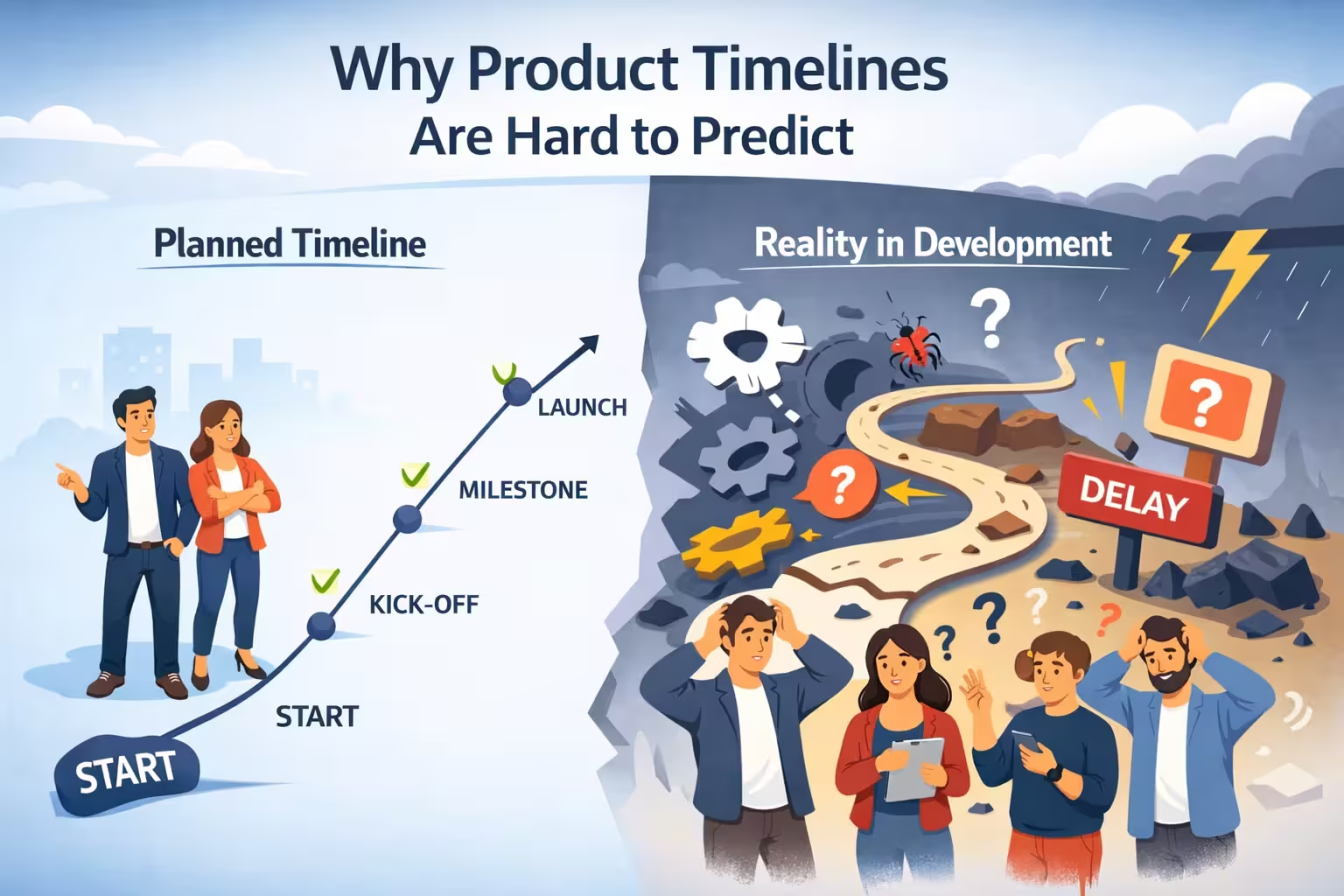
Product development timelines are difficult to predict because they are built on assumptions rather than certainty. At the start of a project, not everything is known - requirements evolve, technical challenges emerge, and dependencies surface only once work begins.
Unlike repetitive processes, building a new product involves solving problems that haven’t been fully defined yet. What seems simple at a high level can become complex during implementation, especially when integrations or performance requirements come into play.
The biggest issue is that timelines are often treated as fixed commitments.
Estimating Each Phase of Development
Estimating a product timeline becomes more reliable when broken into clear phases such as discovery, design, development, testing, and launch. Each stage carries a different level of uncertainty, with early phases being harder to predict and later stages becoming more structured as the product evolves.
Effective estimation goes beyond listing tasks. It requires accounting for hidden factors like integrations. The most practical approach is to treat timelines as ranges, allowing flexibility while still maintaining realistic expectations.
Common Timeline Pitfalls
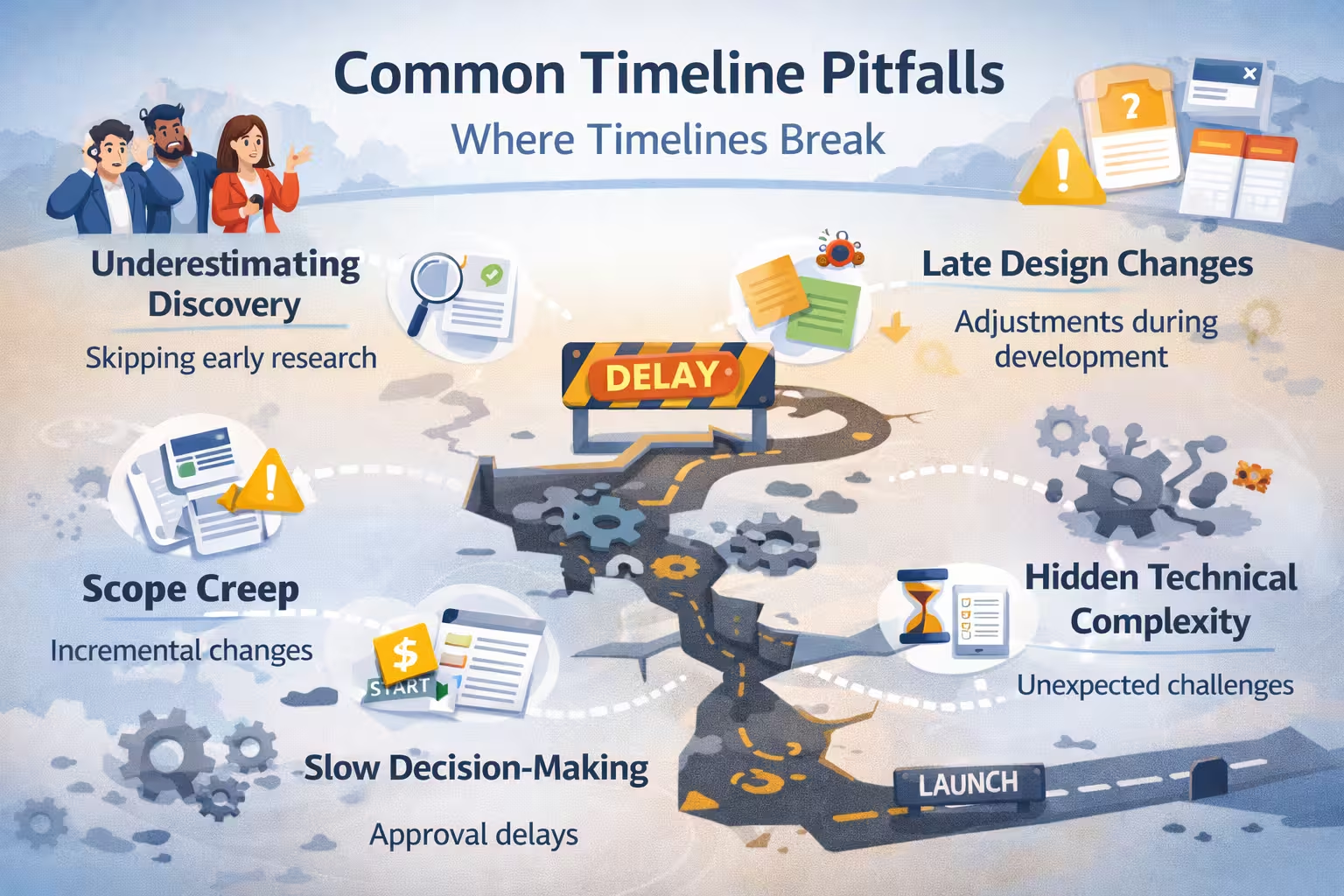
Even well-planned timelines fail when key risks are overlooked. Most delays don’t come from poor execution, but from assumptions made too early in the process that don’t hold once development begins.
Common pitfalls include:
Underestimating discovery
Skipping or rushing discovery often creates more problems than it solves. Without proper alignment on requirements and technical constraints, teams are forced to make assumptions that later need to be revisited. This leads to rework, shifting priorities, and delays that could have been avoided with a stronger foundation.
Scope creep
Scope rarely expands in one big decision, it grows through incremental changes. New ideas, stakeholder requests, and “quick additions” gradually increase the workload without adjusting the timeline. This creates pressure on the team and makes the original plan unrealistic.
Late design changes
Design decisions made during development can have a significant impact on timelines. Even small changes to user flows or UI elements can require adjustments in structure and implementation. When these changes happen late, they disrupt progress.
Hidden technical complexity
Not all challenges are visible at the start. Integrations and legacy constraints often reveal themselves only during development. These hidden complexities can quickly expand the scope of work and introduce delays that were not accounted for in initial estimates.
Slow decision-making
One of the most underestimated causes of delay is waiting. When feedback or key decisions take too long, progress stalls. Over time, these small pauses accumulate and significantly impact the overall timeline.
When these factors combine, timelines compound. What starts as a minor delay can cascade across phases, making recovery increasingly difficult without adjusting scope or resources.
How to Stay on Track
Staying on track is less about rigid planning and more about actively managing change. The most effective teams treat timelines as living systems, continuously adjusting based on feedback, progress, and new information rather than sticking blindly to the original plan.
To maintain control, teams should focus on:
Clear scope definition early on
A well-defined scope is the foundation of any reliable timeline. Investing time in discovery and clearly outlining what is in and out of scope reduces ambiguity later. Without this clarity, teams find themselves revisiting decisions mid-development, leading to delays and rework.
Prioritization over completeness
Trying to build everything at once is one of the fastest ways to lose control of a timeline. Strong teams focus on delivering the most valuable features first, ensuring that progress is meaningful even if adjustments are needed later. This approach creates momentum and allows flexibility without compromising core outcomes.
Regular check-ins and feedback loops
Frequent alignment between stakeholders and delivery teams helps surface issues early. Instead of waiting until the end of a phase, continuous feedback ensures that small problems don’t evolve into major blockers. It also keeps everyone aligned on priorities, reducing the risk of late surprises.
Fast and decisive communication
Timelines are often delayed by waiting for decisions. When questions remain unanswered or approvals take too long, progress stalls. Teams that maintain fast communication channels are able to move forward with confidence and avoid unnecessary bottlenecks.
Buffering for uncertainty
No matter how well a project is planned, uncertainty is always present. Adding realistic buffers into the timeline allows teams to absorb unexpected complexity. This means acknowledging that not everything can be predicted upfront.
What a Realistic Product Timeline Looks Like
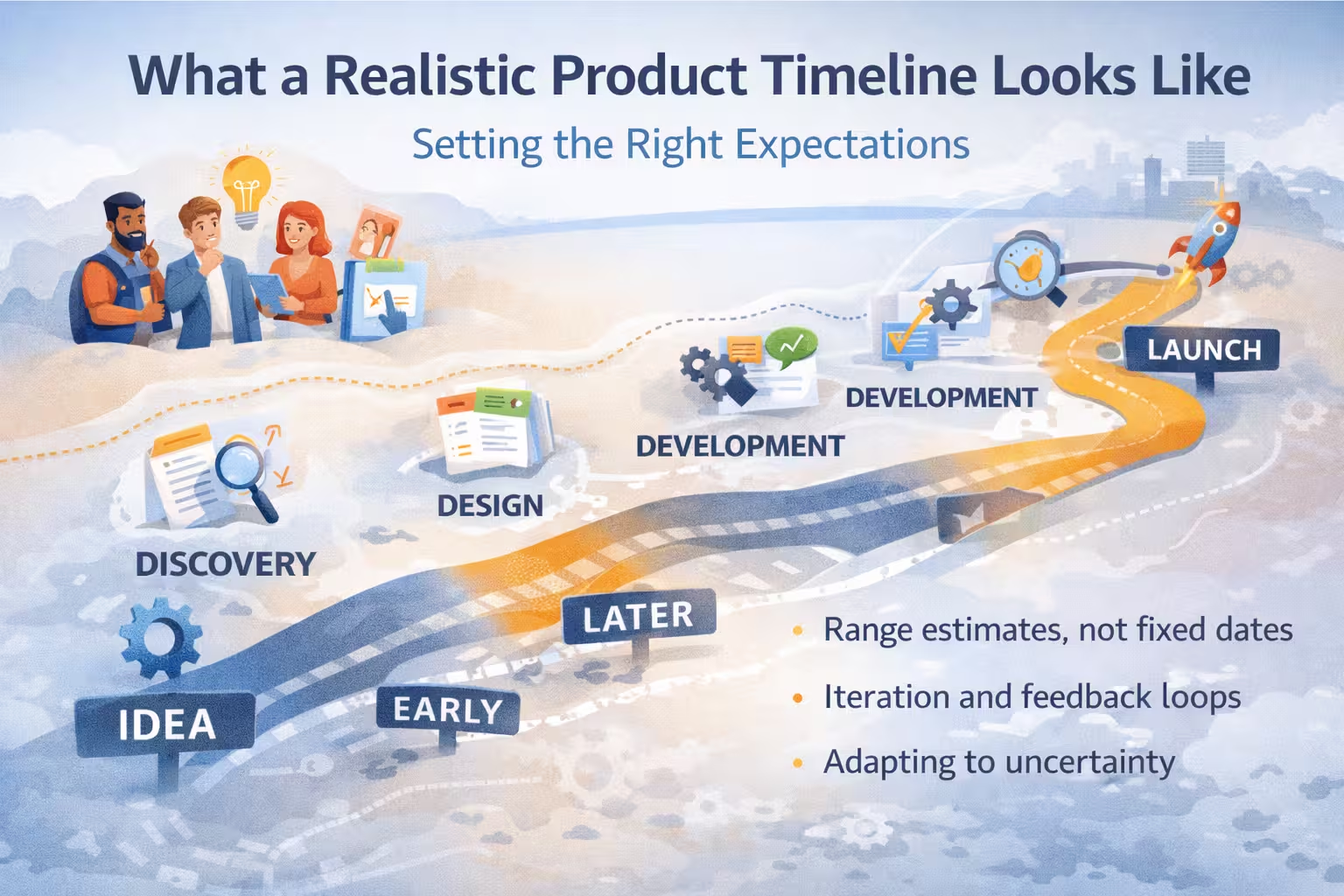
A realistic product timeline is not a straight line from idea to launch. It includes iteration and moments of uncertainty where plans need to adapt. Early phases often take longer than expected due to discovery and alignment, while later stages may speed up as the team gains clarity and momentum.
Instead of committing to exact dates too early, strong teams define timelines as ranges and continuously refine them as the product evolves. This approach creates better alignment with stakeholders and leads to more predictable outcomes over time.
What to Do When Timelines Slip
Delays are a natural part of product development, especially in complex or evolving environments. The key is to respond quickly when they occur. Trying to force the original plan often leads to bigger issues later, including quality compromises and team burnout.
The most effective response is to reassess priorities and to adjust scope if needed. Clear communication and fast decision-making are critical. Teams that handle delays proactively are far more likely to recover smoothly and still deliver meaningful results.
Final Thoughts on Product Development Timelines
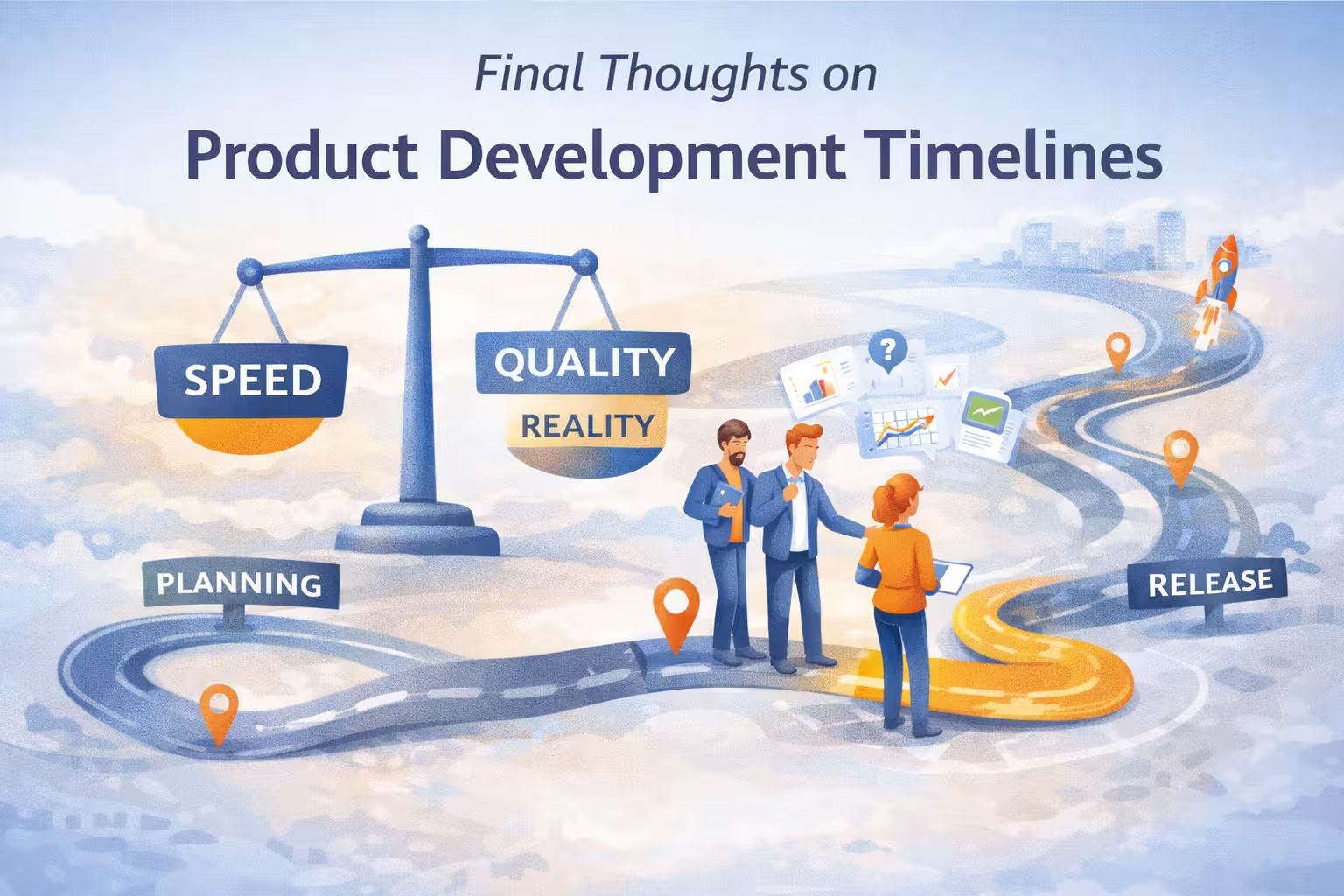
Product timelines are a reflection of how well a team understands the problem it is solving. The more clarity there is early on, the more predictable delivery becomes, but uncertainty can never be fully eliminated.
The goal is to build a system that can adapt as reality unfolds. This means being willing to adjust scope, revisit priorities, and make decisions quickly when needed.
Successful teams don’t chase rigid plans but they focus on delivering value consistently. By combining structure with planning and feedback, timelines become a reliable guide toward building products that actually succeed.
Related post
Handpicked Reads to Deepen Your Understanding
- Product Engineering
- Luka Skerjanc
- 22/01/2026
What is the Scrum Methodology?
The Scrum methodology is a framework for delivering complex software. This blog explains how Scrum works in practice, including its roles, events, as well as the benefits and limitations teams experience. It looks at how Scrum supports iterative delivery, feedback-driven development, and changing requirements, and outlines when Scrum is a good fit and when it may introduce challenges instead of solving them.
Readarticle- Product Engineering
- Luka Skerjanc
- 13/01/2026
What is the Waterfall Methodology?
The final step of product development goes beyond writing code. This guide explores how teams move from feature completion to production by focusing on quality assurance, different testing approaches, validation with stakeholders, and release readiness. It covers common checks, decision points, and responsibilities in the final phase, and explains how structured testing and clear acceptance criteria help teams launch stable products with confidence.
Readarticle- Product Engineering
- Luka Skerjanc
- 18/01/2026
The 5 Phases of a Software Development Life Cycle
The software development life cycle is more than a linear process. This blog breaks down the five phases of SDLC and explains what happens in each stage, from defining requirements to development, testing, and delivery. It looks at how teams move through these phases, how responsibilities and decisions shift over time, and why understanding the full life cycle helps teams build reliable, scalable products instead of treating development as a single step.
ReadarticleDo you have a specific idea in mind?
Share your vision, and we'll explore how we can make it happen together.