All Insights / How to Plan a Software Project?
How to Plan a Software Project?
Planning a software project is not about predicting everything upfront. This blog shows how teams plan scope, phases, and key decisions while acknowledging uncertainty. It explains how early assumptions, risks, and dependencies shape better plans, and how structured planning helps teams reduce risk and deliver with confidence.
Introduction to Planning a Software Project
Planning a software project is often mistaken for creating a detailed roadmap that predicts the future. In reality, good planning is about reducing uncertainty, not eliminating it. Teams that overplan features and timelines tend to fail when assumptions change, which they always do.
Effective planning focuses on defining goals, identifying risks early, and creating space to learn before committing too much.

Define the Goal, Not the Feature List
Many software projects fail before they start because they begin with a list of features instead of a clear goal. Features describe what will be built, but goals explain why it matters. Defining the goal forces teams to align on outcomes, constraints, and trade-offs.
When the goal is clear, decisions become easier and the project stays focused on delivering real value instead of just shipping functionality.
Understand the Problem
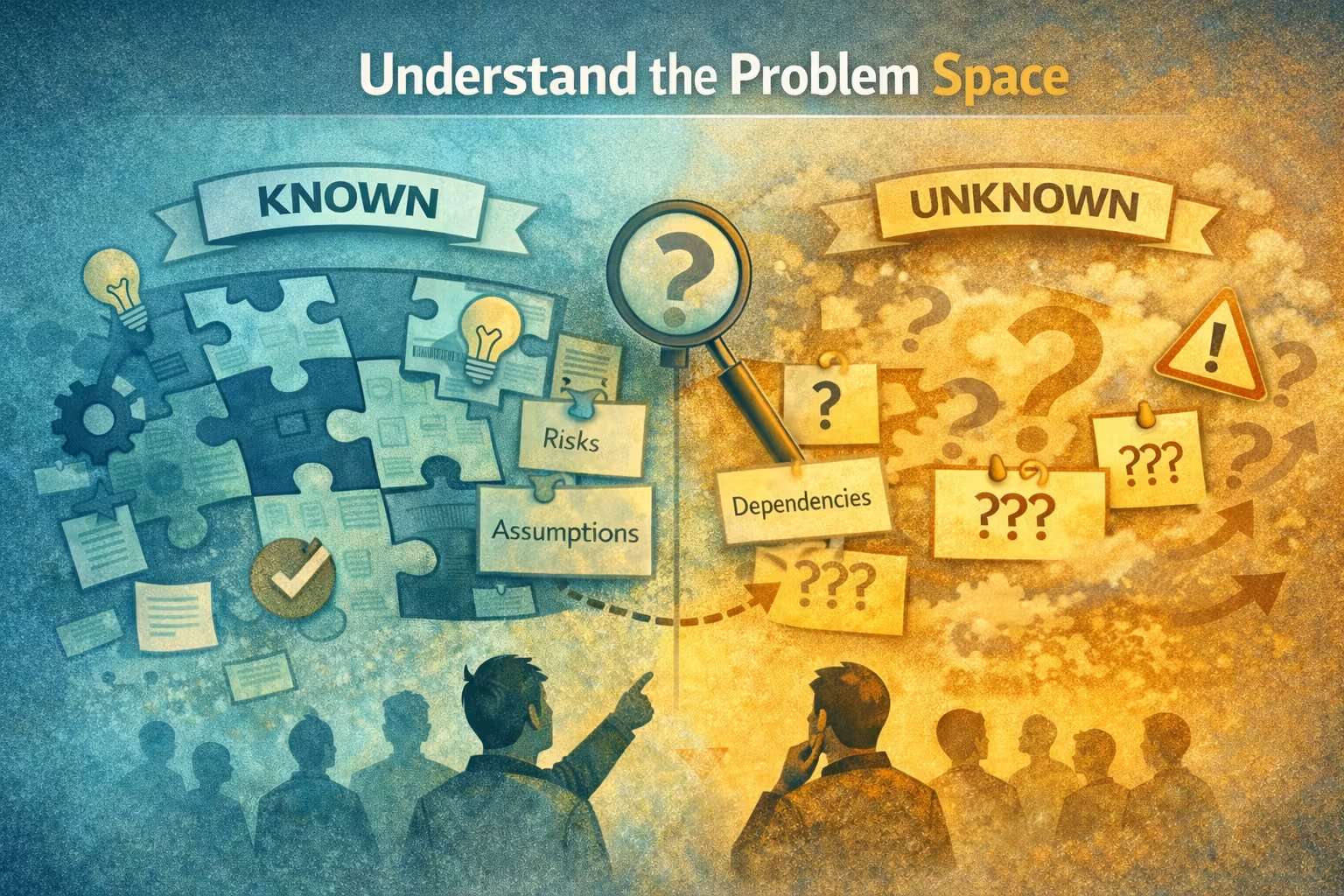
Planning without understanding the problem leads to fragile decisions and false confidence. This step is about identifying what is known and what is unclear before committing to scope and timelines.
Teams should surface risks, constraints, dependencies, and open questions early, rather than discovering them during development. Understanding the problem doesn’t mean solving everything upfront, but acknowledging uncertainty and planning around it.
Plan in Phases, Not in One Big Timeline
Trying to plan a software project as one fixed timeline assumes that everything is known upfront, which is rarely true. Instead of long-term plans, teams should break work into clear phases that allow for adjustment along the way. Planning in phases makes uncertainty visible and limits risk by committing only to what is reasonably understood. Each phase creates feedback that informs the next, keeping expectations realistic and decisions grounded.
Scope With Trade-Offs
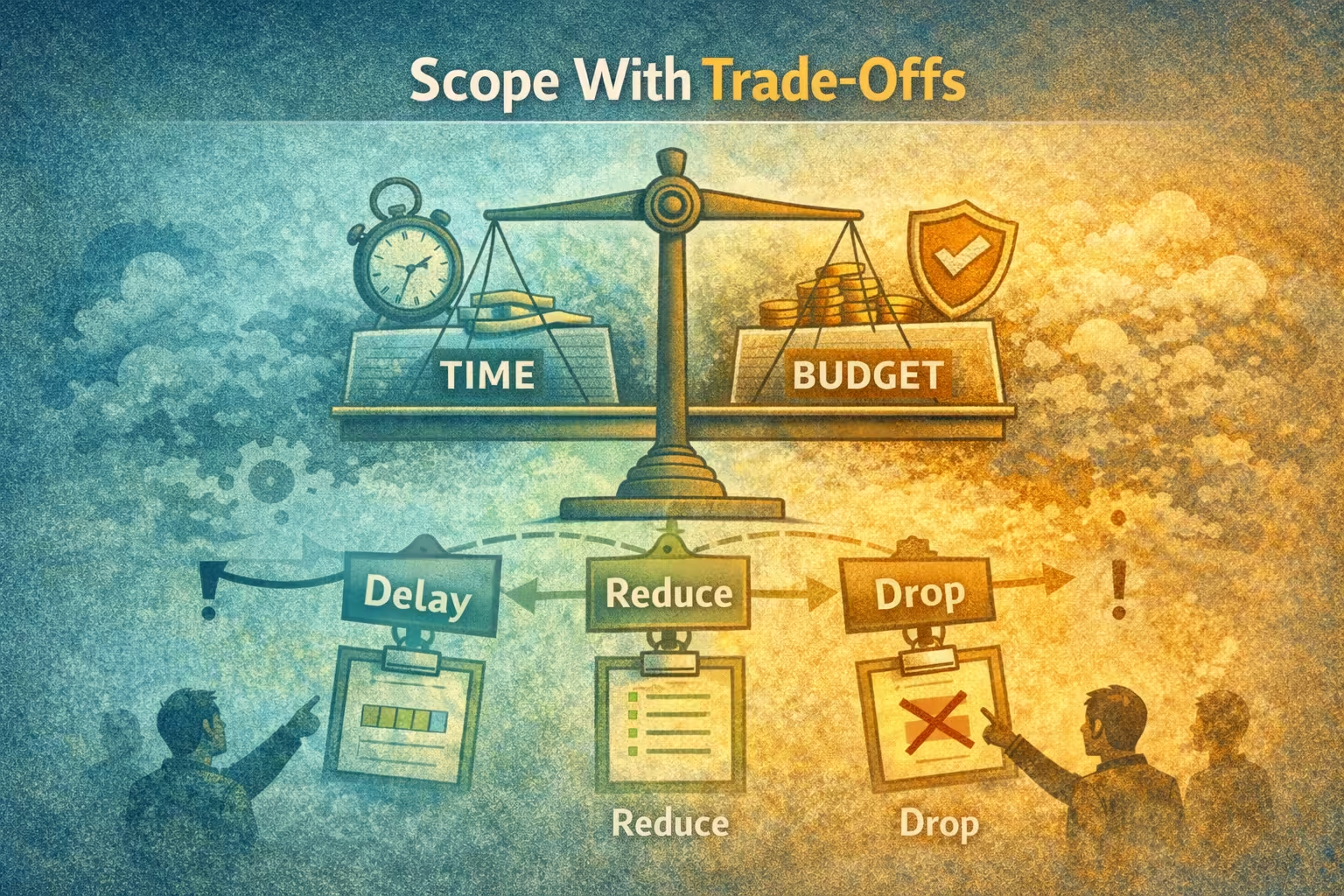
Every software project is constrained by time, budget, and quality, whether teams acknowledge it or not. Planning scope without discussing trade-offs creates unrealistic expectations. This step is about making conscious decisions on what will be built, what will be delayed, and what will not be included at all. Clear trade-offs force prioritization and protect the project from uncontrolled growth.
Align Stakeholders Early
A plan only works if the right people agree on it. Stakeholder misalignment is one of the fastest ways for a software project to drift off course. This step is about identifying decision-makers, clarifying roles, and setting expectations early. Clear alignment reduces work, speeds up decisions, and prevents surprises. When stakeholders share the same understanding of goals, scope, and constraints, planning becomes a tool for collaboration instead of a source of conflict.
Common Planning Mistakes
The most common planning mistakes are rarely about missing details. Teams plan features instead of outcomes, assume certainty where none exists, and commit too early to fixed timelines.
Stakeholders are brought in late, trade-offs remain implicit, and change is treated as a disruption. Plans look convincing on paper but lack room for learning, which causes friction as soon as reality intervenes.
These mistakes don’t happen because teams plan too little, but because they plan the wrong things and underestimate uncertainty.
A Good Plan Is a Tool, Not a Promise
A well-crafted software project plan does not predict the future. It creates clarity in the present. Good planning aligns teams around goals and provides a framework for making informed decisions as conditions change. When plans are treated as flexible tools instead of rigid promises, teams stay focused and deliver better outcomes. The goal of planning is not to eliminate uncertainty, but to manage it deliberately and move forward with confidence.
Related post
Handpicked Reads to Deepen Your Understanding
- Product Engineering
- Luka Skerjanc
- 04/01/2026
How to Build a Software Product?
This blog explains how to build a software product end to end. It covers discovery, validation, design, development, launch, and scaling. It shows how early decisions shape long-term outcomes. It highlights where teams most often fail and how to avoid those mistakes. The focus is on building products deliberately, not just delivering features.
Readarticle- Product Engineering
- Luka Skerjanc
- 08/01/2026
What is the Final Step in the Product Development Process?
The final step of product development goes beyond writing code. This blog explains the role of QA, testing, validation, and release readiness in bringing a product to production. It outlines common testing practices, approval flows, and launch criteria that help teams reduce risk and ensure a smooth release. By the end, you will understand what needs to happen between “feature complete” and a confident, stable launch.
Readarticle- Business
- Dino Starcic
- 03/09/2025
The Right Way to Hire a Development Agency
Learn how to hire a development agency the right way. Discover best practices, outsourcing tips, and how higroup helps build digital products that last.
ReadarticleDo you have a specific idea in mind?
Share your vision, and we'll explore how we can make it happen together.