All Insights / Strategy for Agile Adoption in Business
Strategy for Agile Adoption in Business
Adopting Agile is often seen as a quick fix for faster delivery, but in practice, it requires much more than new tools or processes. It’s a shift in how teams work, collaborate, and make decisions. In this blog, we look at what Agile adoption means in a business context, the most common pitfalls, and how to approach it step by step.
Introduction
Agile often looks straightforward from the outside. Teams run sprints, hold stand-ups, and deliver work in smaller increments. It feels like a simple shift in process.
In reality, adopting Agile in a business is rarely that simple.
Many companies start by introducing tools or frameworks, expecting quick improvements in speed and flexibility. But without a clear strategy, these changes often create confusion instead of progress. Teams follow new rituals, but the way decisions are made, work is structured, and responsibilities are defined remains the same.
This is where most Agile adoptions struggle. The issue is not in the concept of Agile itself, but in how it is introduced and applied within the organization.
Why Companies Even Try to Adopt Agile
Most companies don’t adopt Agile because they want to change how they work, they do it because something isn’t working.
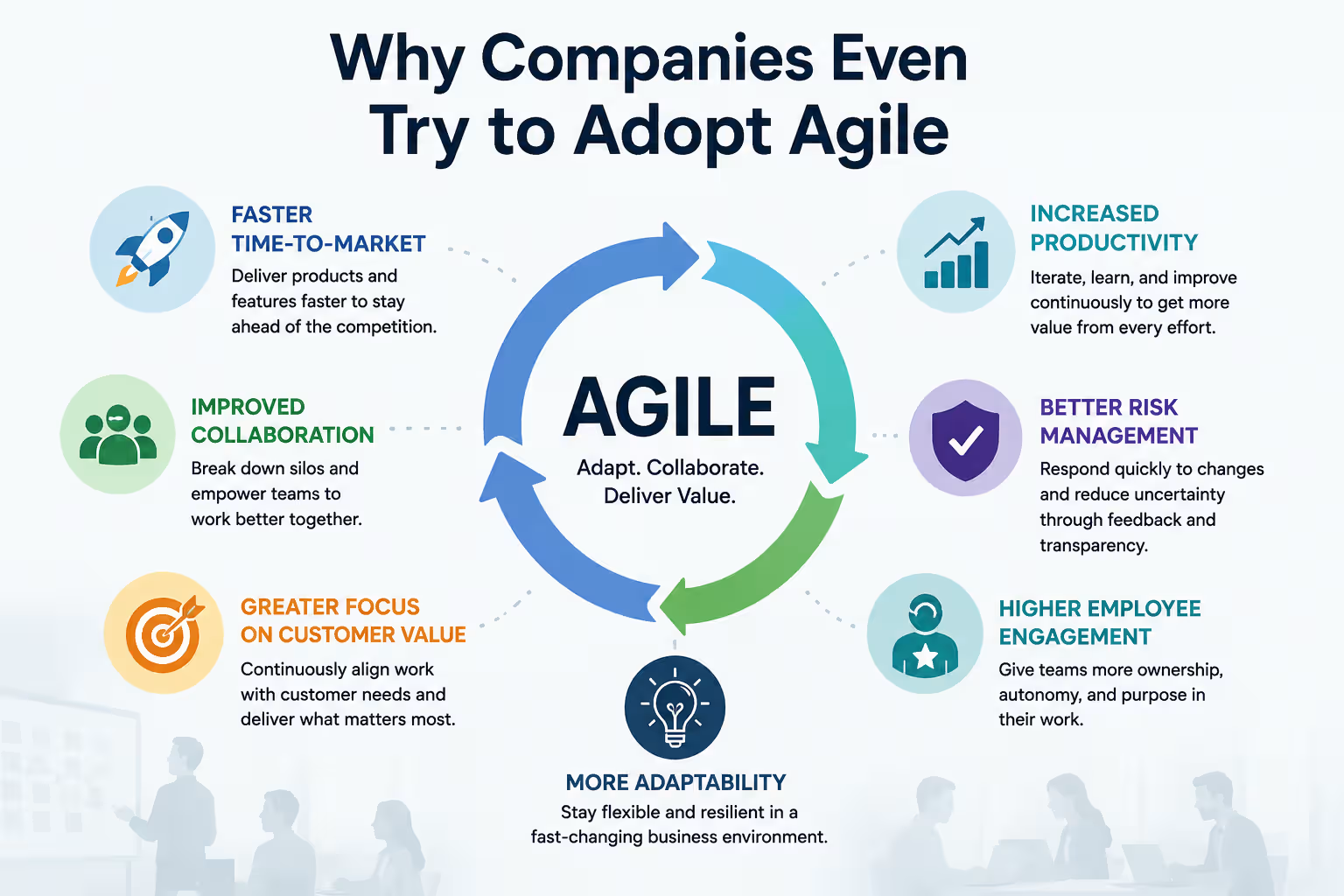
They are typically facing:
Slow delivery cycles
Projects take too long to move from idea to release, often passing through multiple layers of planning, approvals, and handovers. Work is split across departments, creating dependencies that slow everything down. Progress is difficult to track in real time, and visibility is limited until late stages. By the time something is finally delivered, business priorities may have shifted, reducing the impact of the work. This leads to frustration, missed opportunities, and a growing gap between planning and reality.
Difficulty adapting to change
Many organizations rely on detailed upfront planning, assuming that requirements will remain stable throughout the project. In reality, new insights, stakeholder feedback, and market changes constantly reshape priorities. When processes are rigid, even small changes can trigger delays, require re-approval, or cause cascading effects across multiple teams. Instead of adapting quickly, teams spend time managing the impact of change, which slows delivery and increases complexity.
Misalignment with customer needs
In traditional delivery models, feedback is often collected too late — after most of the product has already been built. This creates a risk of delivering solutions that don’t fully solve the user’s problem or reflect real-world usage. Without continuous validation, teams rely on assumptions rather than evidence. When issues are discovered late, they are more expensive and time-consuming to fix, often requiring compromises instead of proper solutions.
Pressure from the market
Markets are becoming faster and more competitive, with increasing expectations for continuous delivery and rapid iteration. Customers expect regular improvements, not large releases every few months or years. Competitors are able to test, learn, and adapt quickly, putting pressure on organizations that operate with slower, more rigid processes. To stay relevant, companies need to shorten feedback loops and respond to change as it happens, not after the fact.
What Agile Adoption Actually Means
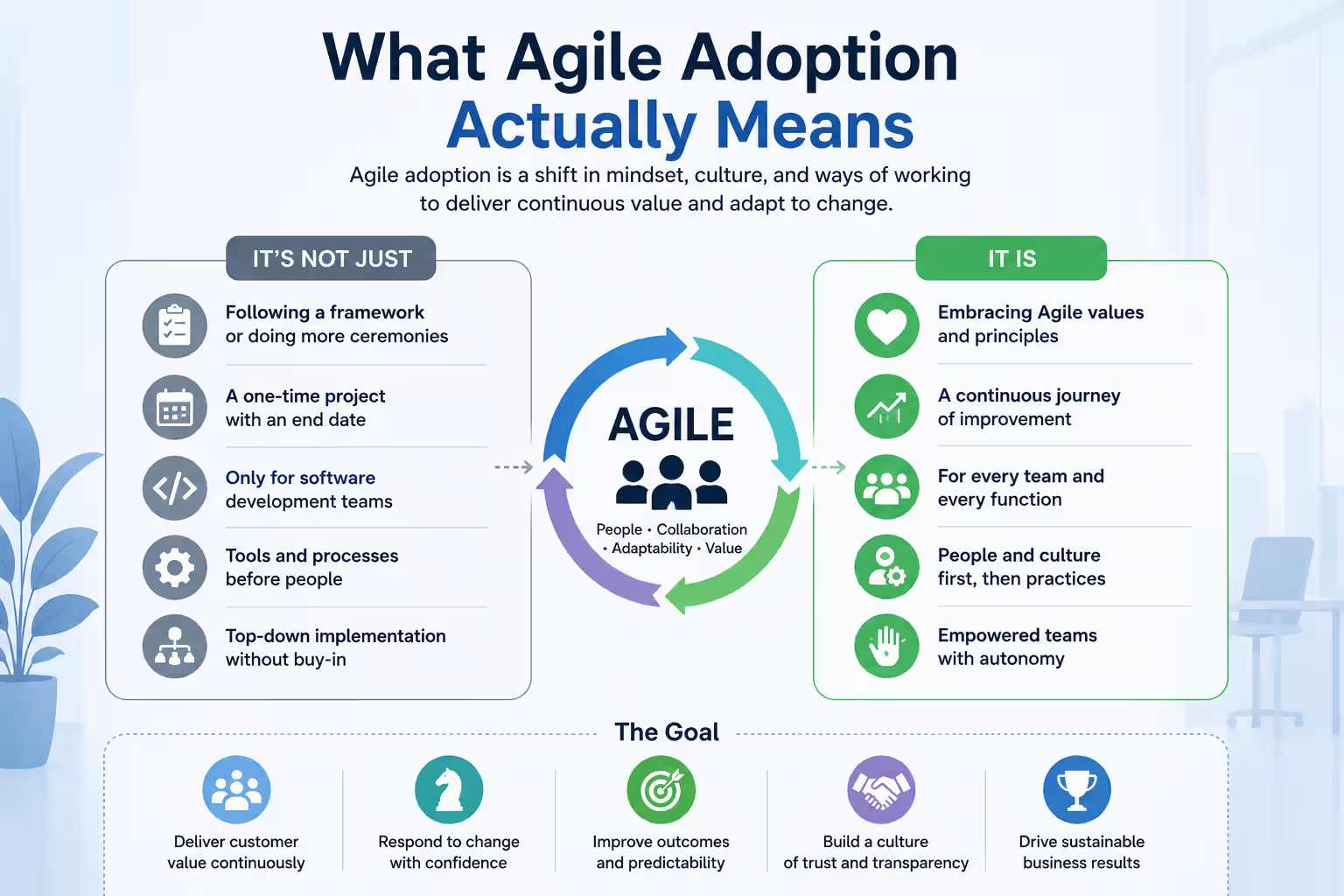
Agile adoption is often reduced to introducing new rituals like sprints, stand-ups, or tools. In reality, it goes much deeper than that.
At its core, adopting Agile means changing how work is structured, how decisions are made, and how teams collaborate. It shifts the focus from following a fixed plan to continuously delivering value and adapting based on feedback.
Instead of organizing work in large, predefined phases, teams move toward smaller, incremental delivery. Decision-making becomes faster and closer to the teams doing the work, reducing bottlenecks and enabling quicker responses to change. Teams themselves become more cross-functional, taking ownership of outcomes rather than just completing assigned tasks.
Where Things Usually Go Wrong
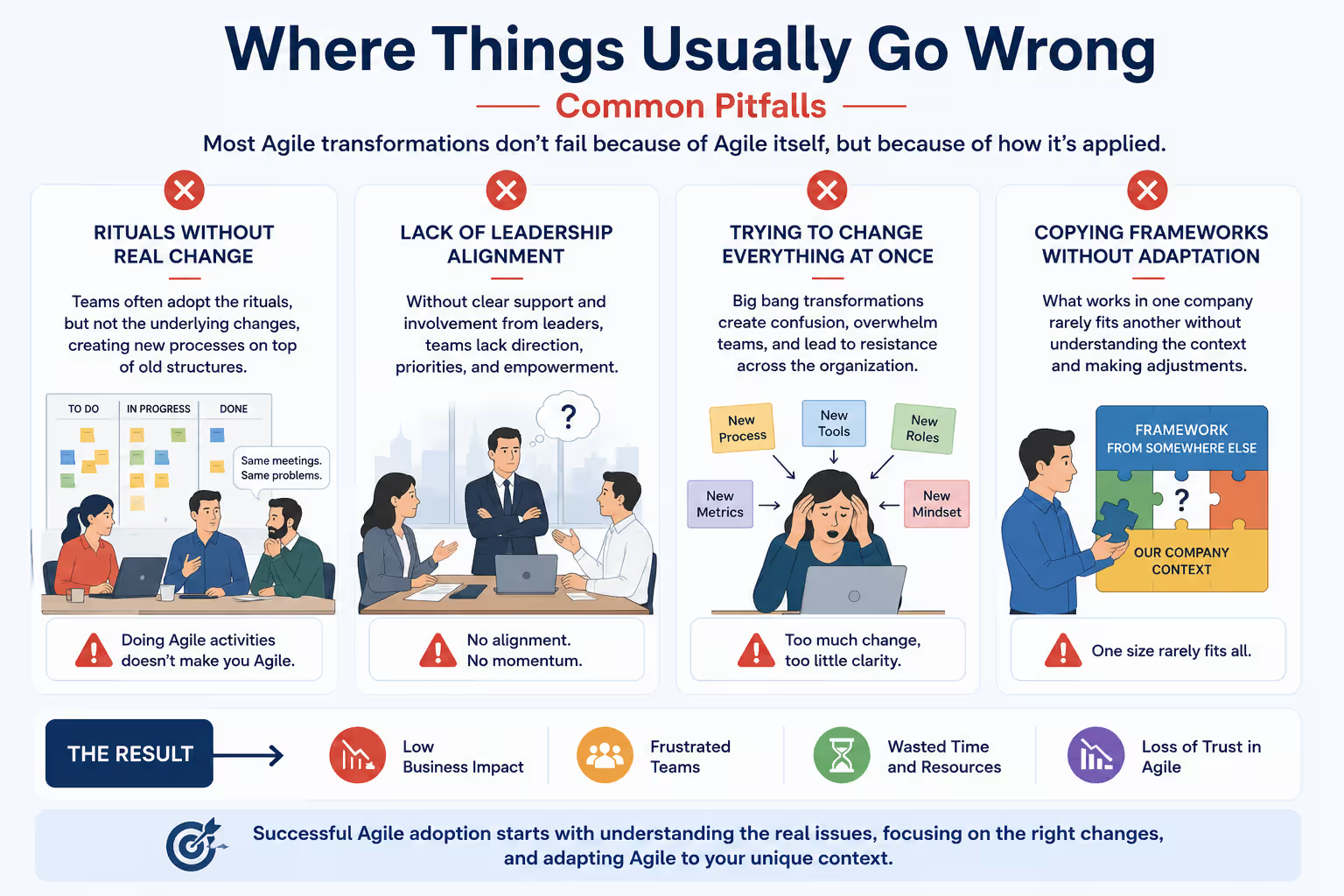
Most Agile transformations don’t fail because of Agile itself, but because of how it’s applied.
Teams often adopt the rituals, but not the underlying changes, creating new processes on top of old structures. At the same time, lack of leadership alignment and trying to change everything at once lead to confusion and resistance.
Another common issue is copying frameworks without adapting them. What works in one company rarely fits another without adjustment.
What a Strategy for Agile Adoption Looks Like
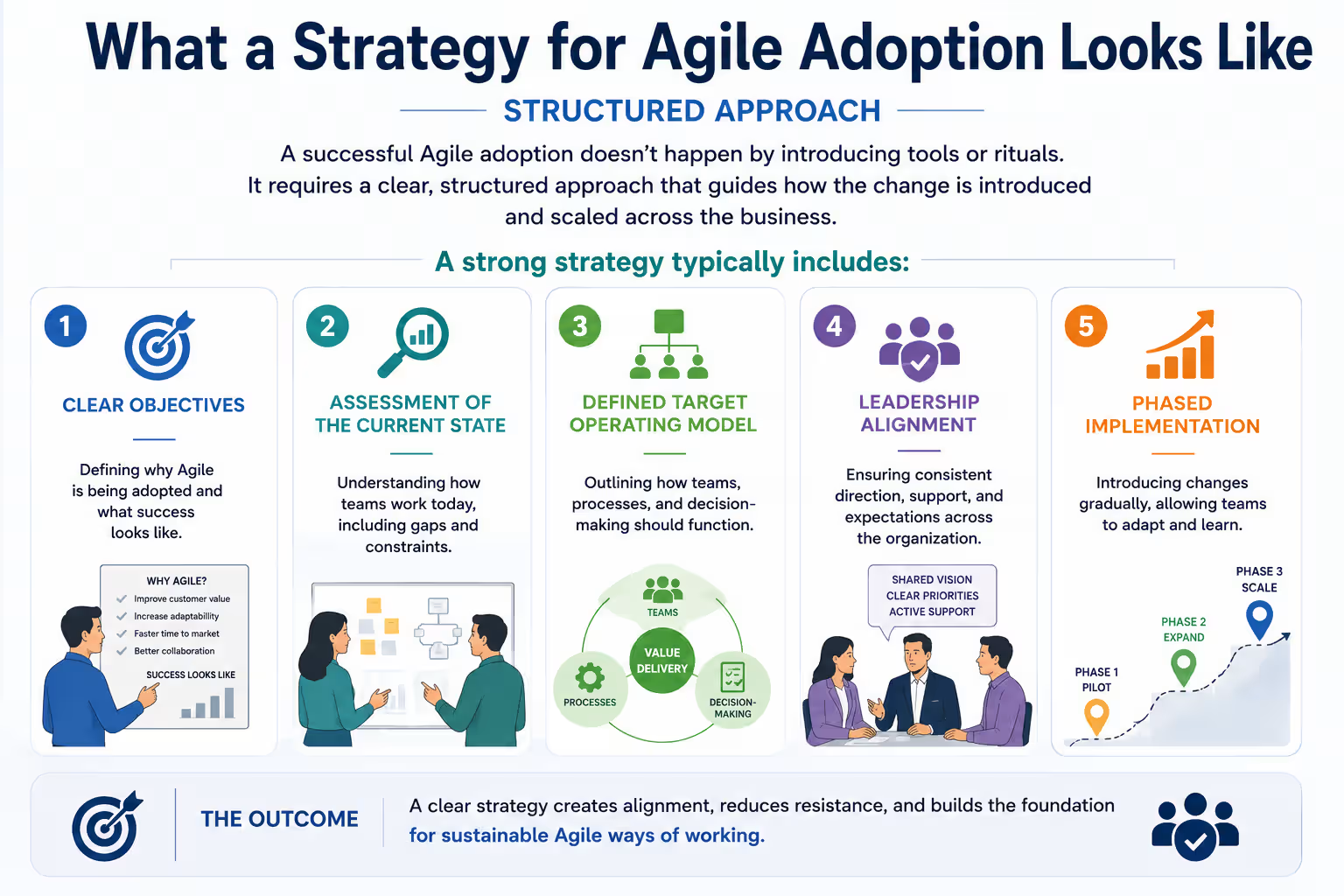
A successful Agile adoption doesn’t happen by introducing tools or rituals. It requires a clear, structured approach that guides how the change is introduced and scaled across the business.
A strong strategy typically includes:
Clear objectives - Defining why Agile is being adopted and what success looks like
Assessment of the current state - Understanding how teams work today, including gaps and constraints
Defined target operating model - Outlining how teams, processes, and decision-making should function
Leadership alignment - Ensuring consistent direction, support, and expectations across the organization
Phased implementation - Introducing changes gradually, allowing teams to adapt and learn
Key Components That Need to Change
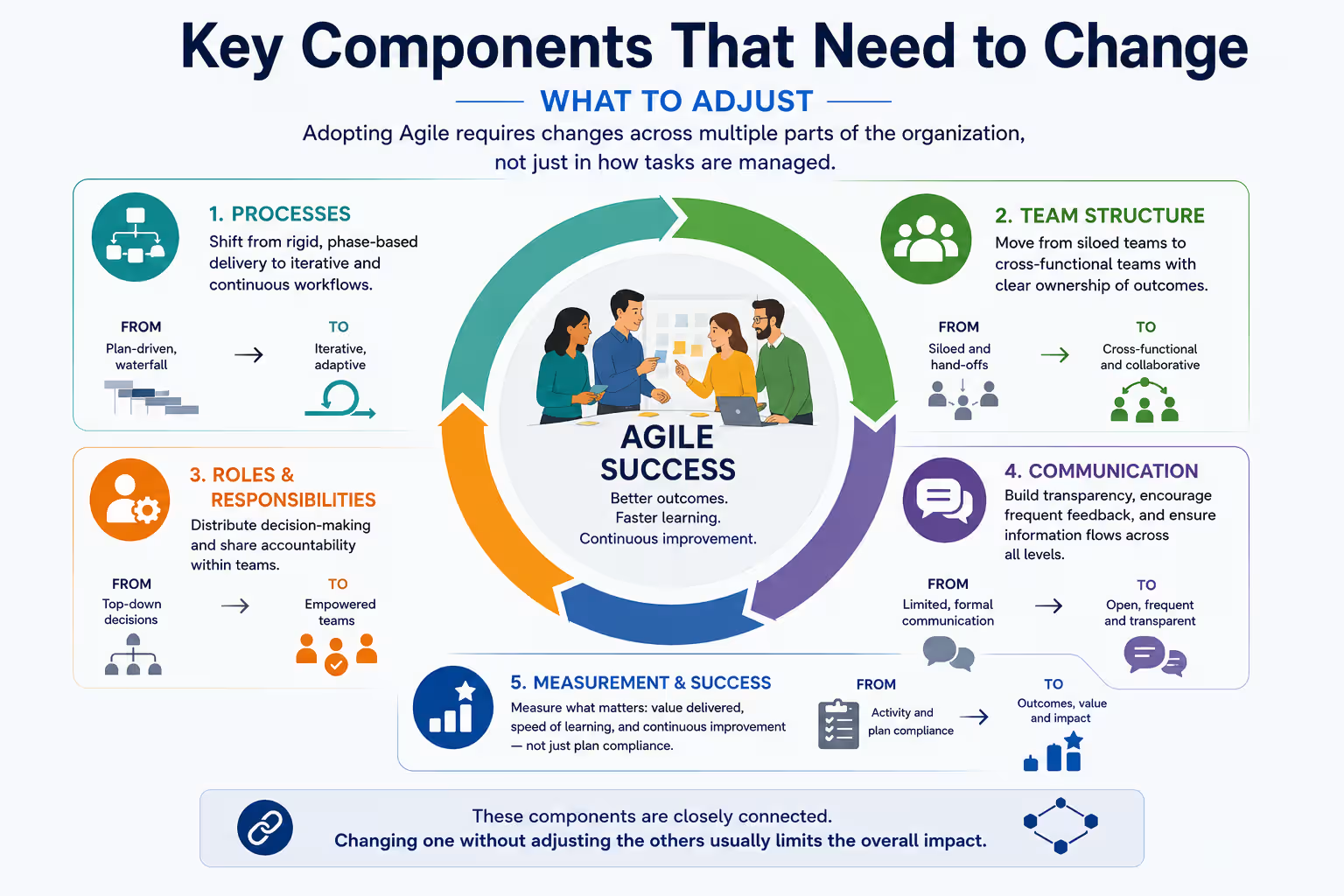
Adopting Agile requires changes across the organization. It begins with processes, shifting from phase-based delivery toward more iterative workflows that allow teams to adjust as they go.
Team structure also plays a key role. Instead of working in silos, teams move toward cross-functional setups with clearer ownership of outcomes. This naturally impacts roles and responsibilities, as decision-making becomes more distributed and accountability is shared more directly within teams.
At the same time, the way teams communicate needs to evolve. Agile relies on transparency, frequent feedback, and a steady flow of information across all levels of the organization.
How to Roll It Out Without Breaking the Business
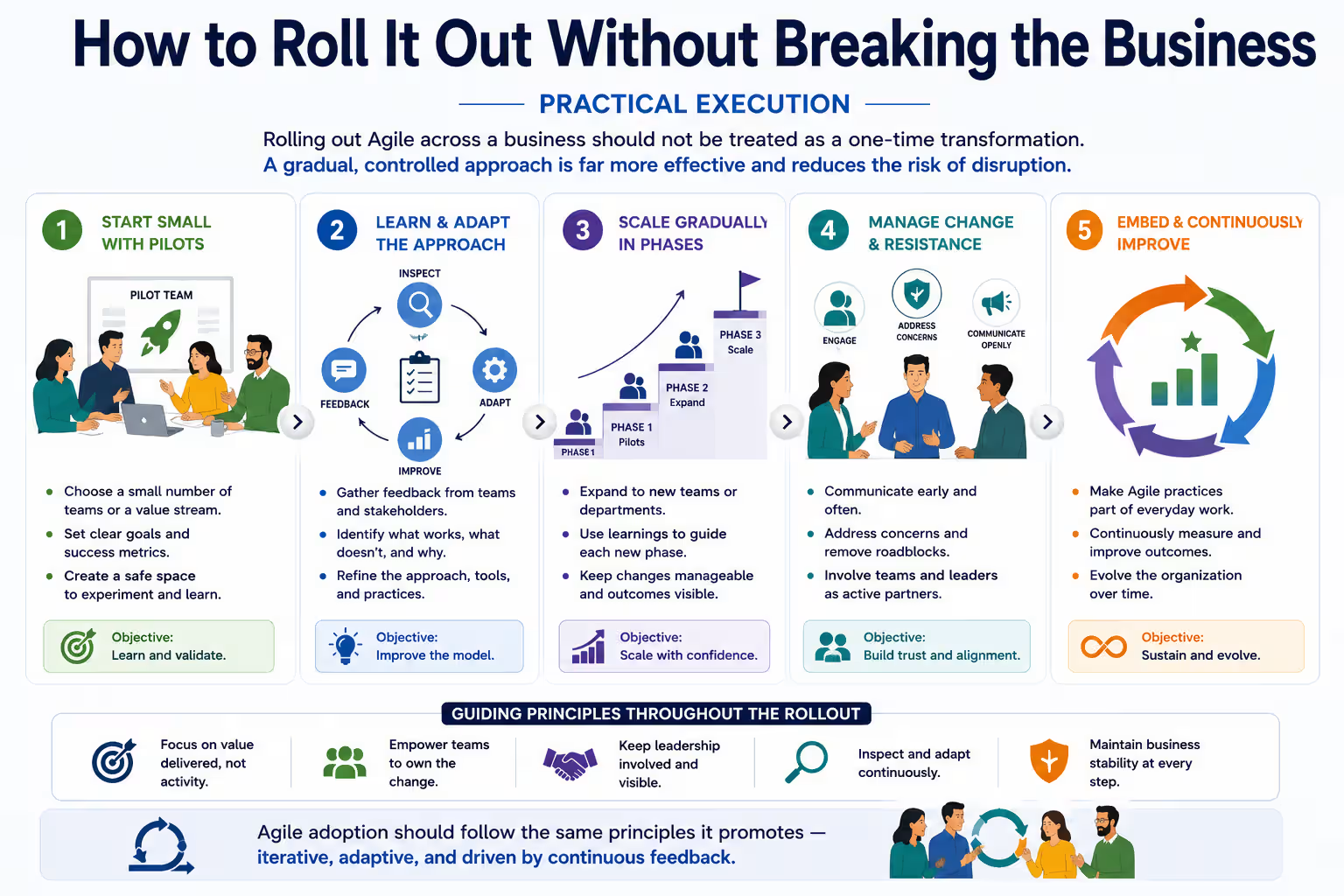
Rolling out Agile across a business should not be treated as a one-time transformation. A gradual, controlled approach is far more effective.
The process typically starts small, with a limited number of teams acting as pilots. This allows the organization to test the approach and adjust before expanding further. Instead of forcing a change, the focus is on learning and refining the model.
As confidence grows, the approach can be scaled step by step. Each phase builds on previous learnings, adopting new ways of working without losing stability. This makes it easier to address resistance and align different parts of the organization.
What Good Looks Like in Practice
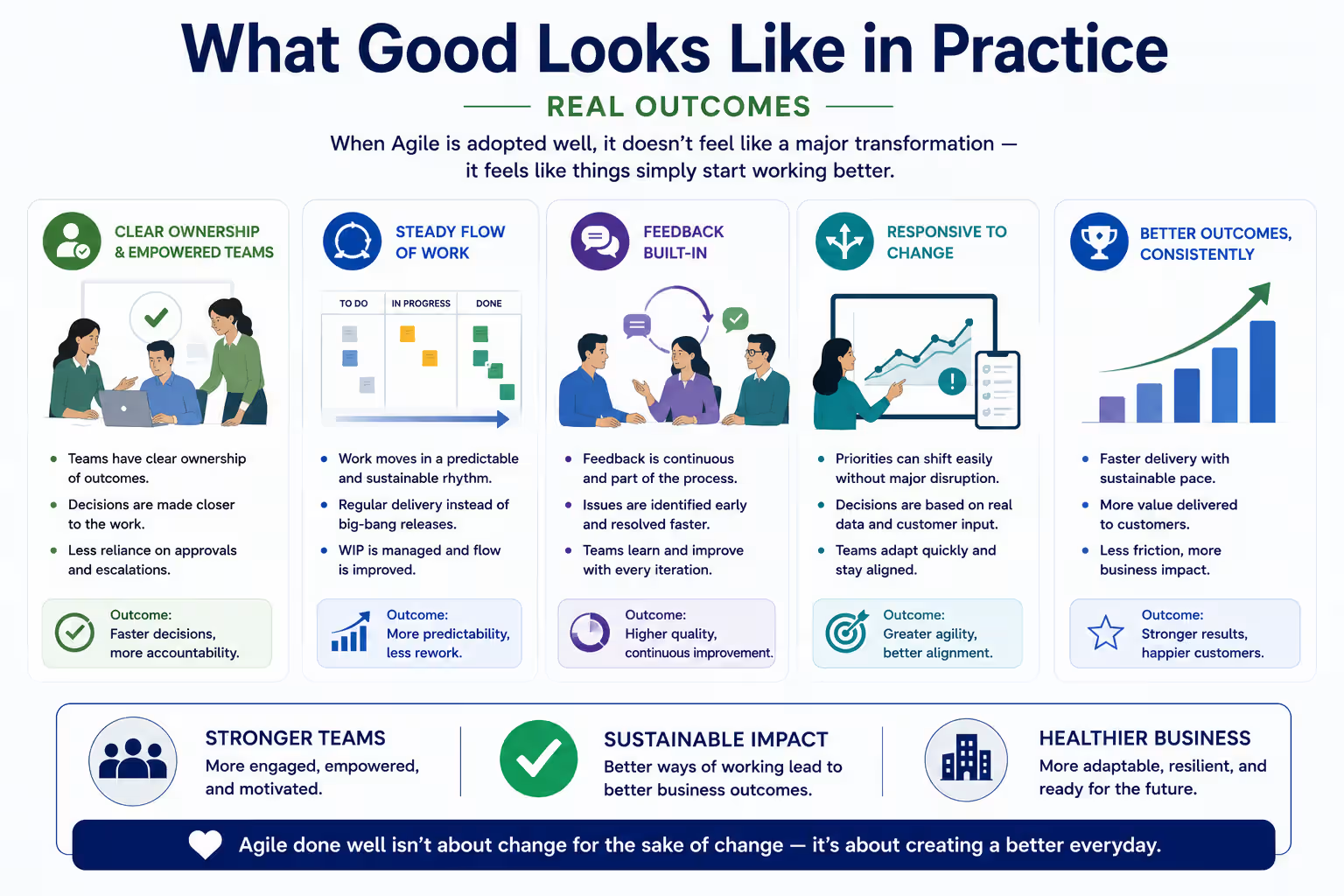
When Agile is adopted well, it feels like things simply start working better.
Teams operate with clear ownership and can make decisions without constant escalation. Work moves in a steady rhythm instead of long gaps between releases. Feedback is part of the process, not something that happens at the end.
At the same time, the organization becomes more responsive. Priorities shift without causing major disruption, and teams are able to adjust based on real input.
The result is not just faster delivery, but consistent and predictable outcomes.
Conclusion
Agile adoption is not something you implement overnight. It’s a gradual shift in how a business operates, from how work is structured to how decisions are made and how teams collaborate.
There is no single framework or tool that guarantees success. What matters is having a clear strategy and introducing change in a way that fits the company’s context.
When done right, Agile becomes a capability that allows the business to adapt, deliver and improve.
Related post
Handpicked Reads to Deepen Your Understanding
- Product Engineering
- Luka Skerjanc
- 13/01/2026
What is the Waterfall Methodology?
The final step of product development goes beyond writing code. This guide explores how teams move from feature completion to production by focusing on quality assurance, different testing approaches, validation with stakeholders, and release readiness. It covers common checks, decision points, and responsibilities in the final phase, and explains how structured testing and clear acceptance criteria help teams launch stable products with confidence.
Readarticle- Product Engineering
- Luka Skerjanc
- 22/01/2026
What is the Scrum Methodology?
The Scrum methodology is a framework for delivering complex software. This blog explains how Scrum works in practice, including its roles, events, as well as the benefits and limitations teams experience. It looks at how Scrum supports iterative delivery, feedback-driven development, and changing requirements, and outlines when Scrum is a good fit and when it may introduce challenges instead of solving them.
Readarticle- Product Engineering
- Dino Starcic
- 03/03/2026
Waterfall vs Scrum Methodology
Waterfall and Scrum are often treated as opposites, but each serves a different purpose. This blog shows how the two methodologies differ in structure, planning, and delivery, what they have in common and how teams actually use them in real projects. It focuses on choosing the right approach based on context, constraints, and goals rather than following trends or defaults.
ReadarticleDo you have a specific idea in mind?
Share your vision, and we'll explore how we can make it happen together.