All Insights / What Is a Minimum Viable Product (MVP)?
What Is a Minimum Viable Product (MVP)?
Discover what a Minimum Viable Product is, why companies build MVPs, and how a focused first version helps validate ideas before larger product investments.
New Digital Products
Bringing a new product to market is always a balance between speed, cost, and uncertainty. Invest too much too early, and you risk building features customers don't actually need. Move too slowly, and you may miss valuable opportunities to learn from the market.
That's where a Minimum Viable Product (MVP) comes in. Rather than building a fully featured product from day one, an MVP focuses on delivering the smallest version that solves a real problem and provides meaningful feedback from real users. It helps businesses validate assumptions, reduce development risk, and make smarter product decisions before committing significant time and resources.
In this guide, you'll learn what an MVP is, what it should include, how it differs from a prototype and a finished product, and why it has become one of the most effective approaches for launching successful digital products.
What Is a Minimum Viable Product?
A Minimum Viable Product (MVP) is the simplest version of a product that delivers enough value to solve a real problem for early users while enabling a company to learn from real-world feedback. Rather than aiming for a feature-rich launch, an MVP focuses on testing the core assumptions behind a product idea before investing heavily in development.
The concept was popularized by Eric Ries through the Lean Startup methodology, which defines an MVP as the version of a product that enables a team to gain the maximum amount of validated learning with the least amount of effort. Instead of relying on assumptions, businesses use an MVP to observe how real users interact with the product, identify what works, and uncover what needs to change.
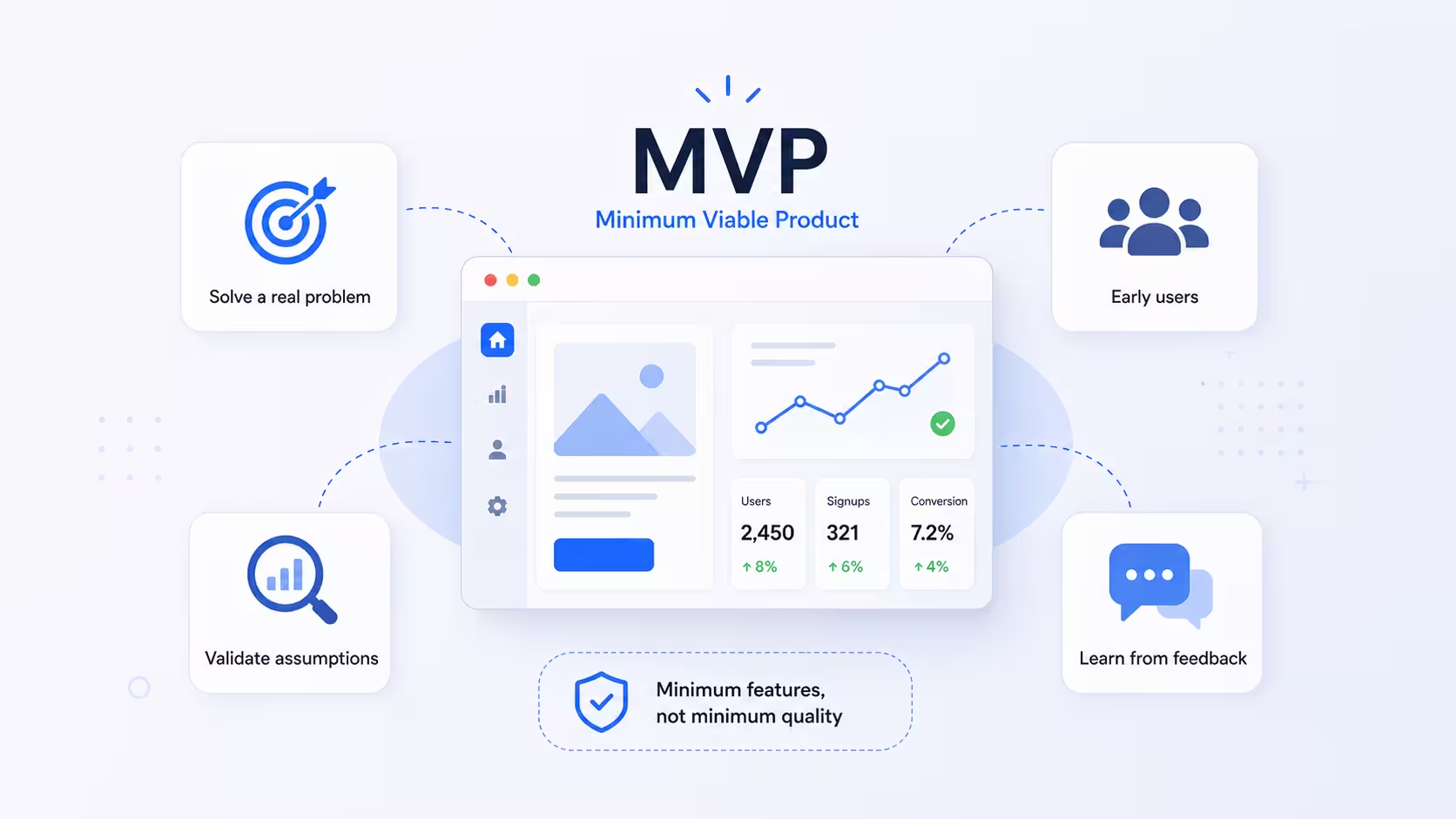
An MVP is therefore much more than an early product release. It is a structured way to answer fundamental business questions, such as:
Are we solving a problem people actually have?
Does our proposed solution create enough value?
Which features matter most to users?
Is this idea worth further investment?
To answer these questions, an MVP must be functional enough for real customers to use in realistic conditions. Users should be able to complete the product's primary task and provide meaningful feedback based on their experience. That feedback then guides future development, helping teams prioritize improvements based on evidence rather than assumptions.
By learning early and iterating continuously, companies can reduce uncertainty, avoid unnecessary development, and make better product decisions throughout the development lifecycle.
Why "Minimum" Doesn't Mean Low Quality
One of the biggest misconceptions about MVPs is that "minimum" means releasing an unfinished or low-quality product. In reality, the word minimum refers to the number of features, not the quality of the user experience.
A successful MVP includes only the functionality required to validate the product's core value proposition. Everything that doesn't directly contribute to solving the user's primary problem, advanced settings, secondary workflows, extensive integrations, or premium features, can usually wait until later iterations.
What should never be considered optional is quality. Even with a limited feature set, an MVP should be reliable, intuitive, secure, and stable enough to fulfill its core purpose. Limiting the scope of a product does not justify poor performance, confusing interfaces, or unstable functionality.
The goal isn't to build as little as possible; it's to build only what is necessary to deliver the product's core value. A focused, well-executed MVP often creates more value than a larger product packed with features that users may never need.
Viewed this way, an MVP isn't about cutting corners. It's about prioritizing the functionality that matters most today while leaving room for future growth.
Why Do Companies Build an MVP?
Building an MVP isn't simply about reducing development costs or launching faster. At its core, the approach is designed to help businesses make better decisions before committing significant resources to a new product.
Rather than investing heavily upfront, companies use MVPs to reduce uncertainty, test product concepts, and make better decisions before scaling development. Whether you're a startup exploring a new market or an established business testing an innovative concept, an MVP provides a structured way to reduce uncertainty and build with greater confidence.
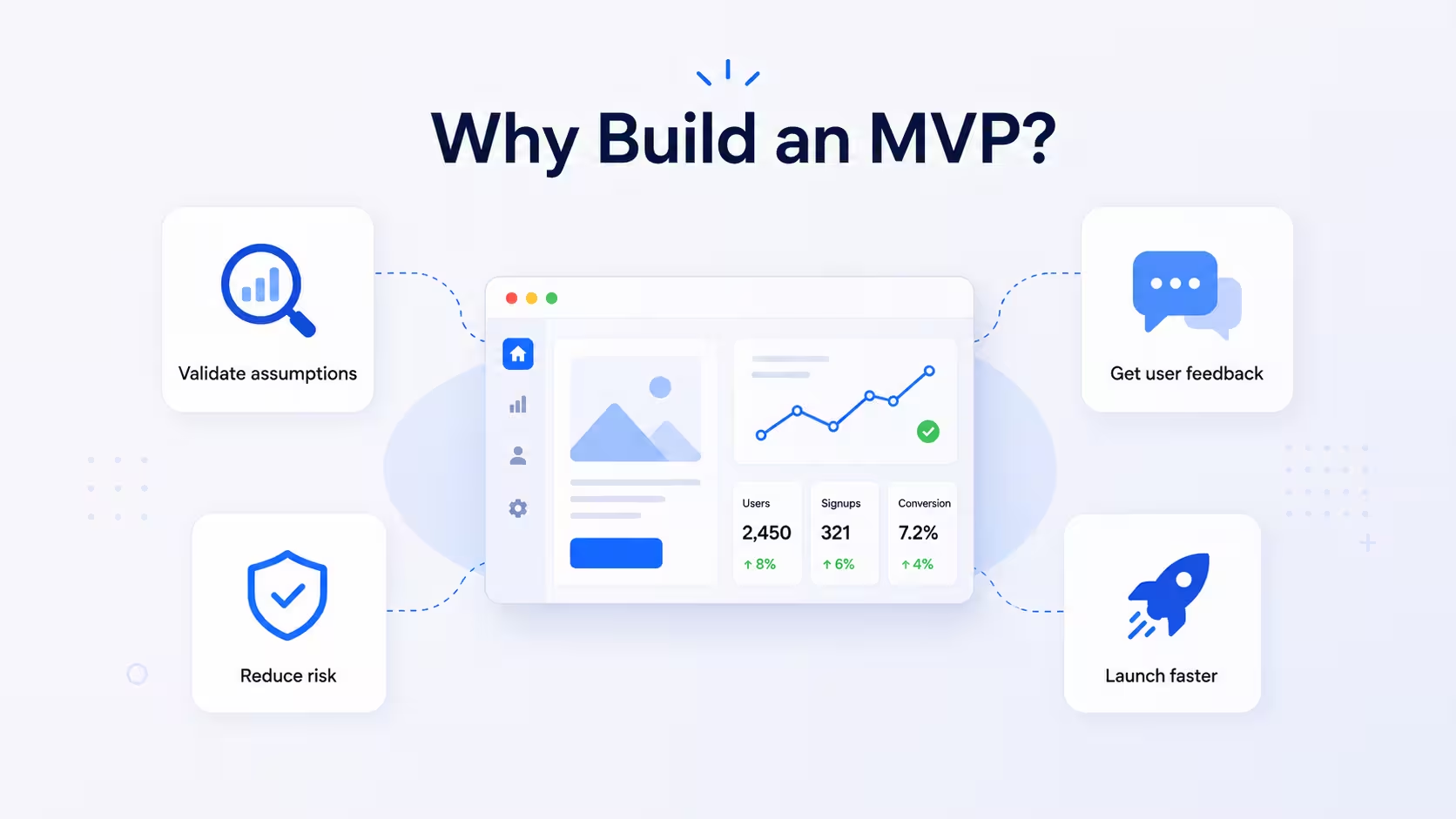
The following sections explore the main reasons why the MVP approach has become a cornerstone of modern product development.
Validate Business Assumptions
Every new product begins with a series of assumptions. Founders may believe they've identified a genuine customer problem, designed the right solution, or selected the features users will value most. However, until those assumptions are tested with real customers, they remain educated guesses.
An MVP provides a practical way to validate these hypotheses before committing significant time and financial resources. Instead of spending months building a comprehensive product, companies release a focused version that addresses one core problem and observe how users respond. The goal isn't to prove that every idea is correct, it's to identify what works, what doesn't, and what should be improved before scaling development.
This evidence-based approach helps teams make informed product decisions rather than relying on intuition alone. As highlighted in the Harvard Business Review article Why the Lean Start-Up Changes Everything, testing assumptions early enables businesses to reduce uncertainty and adapt more effectively to changing market needs.
Gather Real User Feedback
No amount of internal planning can fully predict how customers will interact with a new product. Features that seem essential during brainstorming sessions may prove unnecessary, while seemingly minor improvements can have a significant impact on user satisfaction.
Launching an MVP allows companies to collect meaningful feedback from real users as early as possible. Through interviews, analytics, usability testing, customer support conversations, and product usage data, teams gain valuable insights into how people actually use the product, not how they expect them to use it.
This continuous feedback loop enables businesses to refine priorities, improve the user experience, and invest future development efforts where they create the greatest value.
Reduce Development Risk
One of the biggest advantages of an MVP is its ability to reduce risk throughout the product development process.
Building a fully featured product without market validation often results in wasted time, unnecessary development costs, and features that customers never requested. By contrast, an MVP limits the initial investment while providing the information needed to make smarter decisions about future development.
Instead of committing large budgets upfront, companies can validate demand, confirm product-market fit, and identify potential challenges before expanding the product. This iterative approach reduces the likelihood of expensive redesigns and helps teams allocate resources more efficiently.
Reach the Market Faster
Speed is another major reason companies adopt the MVP approach.
Rather than waiting until every feature has been perfected, businesses can launch sooner, begin learning immediately, and establish an early presence in the market. Faster releases also allow teams to respond more quickly to customer feedback, changing market conditions, and emerging opportunities.
In highly competitive industries, shortening the time between idea and launch can provide a meaningful strategic advantage. More importantly, an early release creates opportunities for continuous improvement, allowing products to evolve based on real user needs instead of lengthy planning cycles.
Once you've validated your idea and defined what your MVP should include, the next question is usually budget. Our guide to MVP development costs explains the main cost factors, realistic pricing expectations, and common hidden expenses to help you plan your project with confidence.
What Should an MVP Include?
An MVP isn't defined by the number of features it contains; it's defined by how effectively it delivers its core value. The objective isn't to build the smallest product possible, but to create a focused solution that addresses a specific user need.
Every successful MVP starts with a single, clearly defined problem. Instead of trying to satisfy every potential customer need, teams focus on delivering one core value exceptionally well. This disciplined approach keeps development manageable while making it easier to understand which aspects of the product genuinely resonate with users.
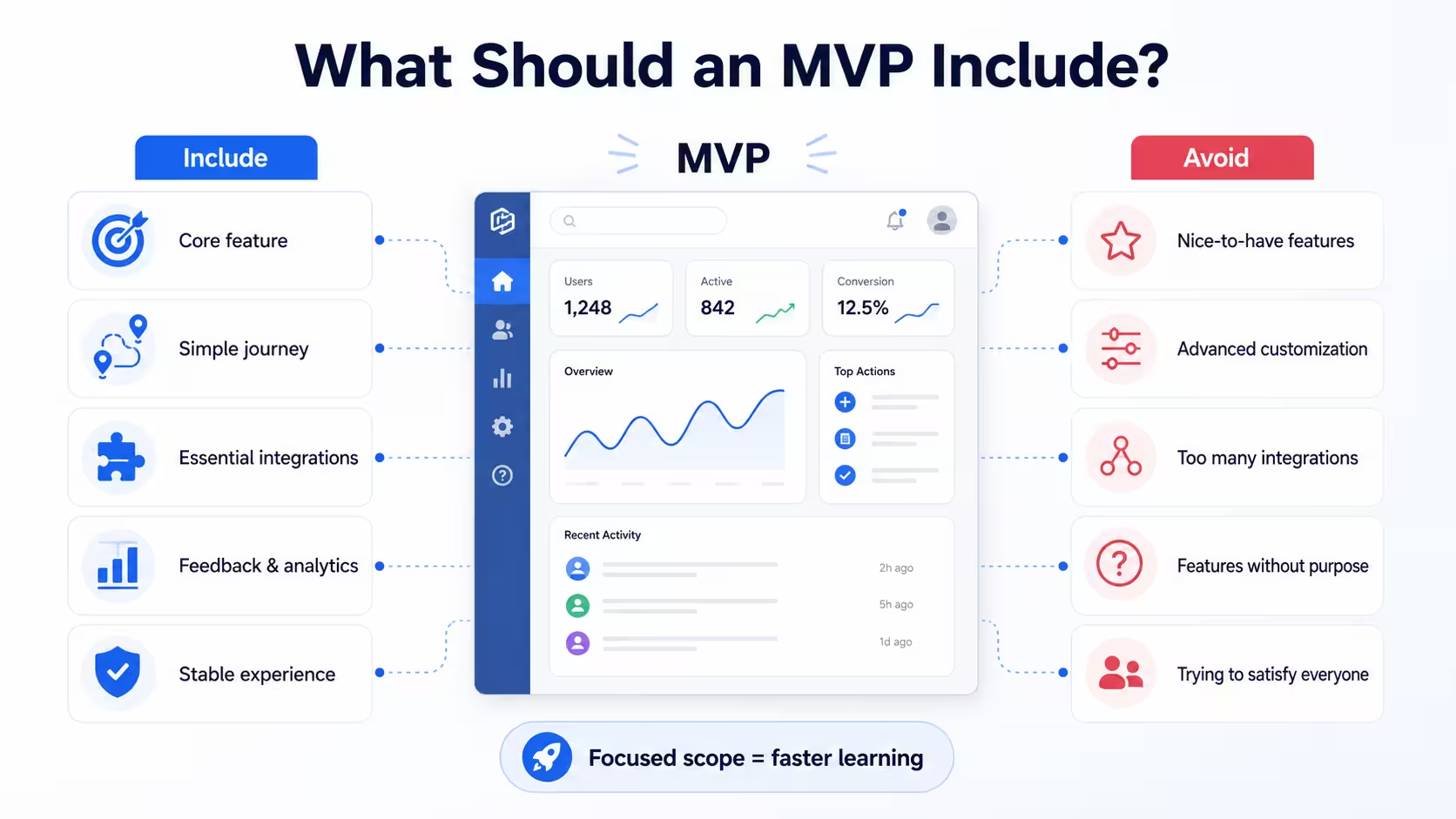
To achieve this, an MVP should provide a complete, but intentionally focused, experience. Users should be able to accomplish the product's primary goal from beginning to end, while the team collects meaningful insights through analytics, interviews, surveys, or other feedback mechanisms. These insights help teams prioritize future improvements and refine the product over time.
The table below summarizes what belongs in a successful MVP, and what is usually better left for later releases.
Include | Avoid |
|---|---|
One core feature that solves the primary problem | Nice-to-have features |
A simple, intuitive user journey | Advanced customization |
Only the integrations required for the first release | Every possible integration |
Feedback and analytics to support learning | Features without a clear validation purpose |
A stable, reliable experience | Trying to satisfy every user from day one |
Launching with a focused scope doesn't mean thinking small, it means learning quickly. Once the core concept has been validated, additional features can be introduced with confidence, backed by real customer feedback instead of assumptions.
Prototype vs MVP vs Final Product
The terms prototype, Minimum Viable Product (MVP), and final product are often used interchangeably. In reality, they represent three distinct stages of product development, each serving a different purpose.
A prototype is created to explore and validate ideas internally. An MVP takes the next step by validating those ideas with real users in real-world conditions. Once enough feedback has been collected and the product has evolved through multiple iterations, it gradually becomes a mature, fully featured solution.
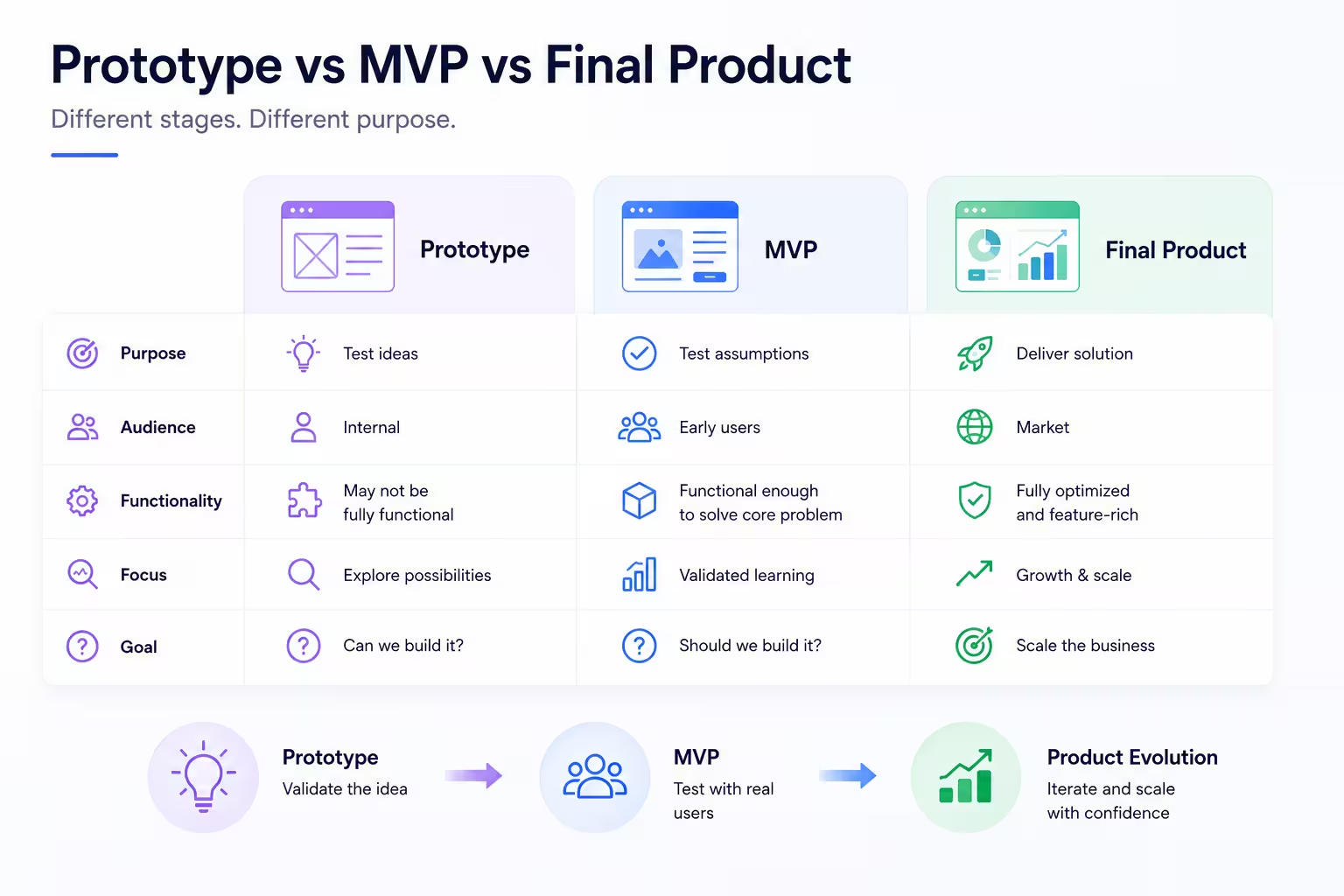
Understanding these differences helps teams choose the right approach at the right stage instead of investing in unnecessary development too early.
Prototype | MVP | Final Product |
|---|---|---|
Tests ideas and concepts | Tests assumptions with real users | Delivers a mature, scalable solution |
Used primarily for internal validation | Released to early customers | Available to a broader market |
May not be fully functional | Functional enough to solve a core problem | Fully optimized with expanded functionality |
Focuses on exploring possibilities | Focuses on validated learning | Focuses on growth, performance, and long-term success |
Built to answer "Can we build it?" | Built to answer "Should we build it?" | Built to scale the business |
Rather than viewing these stages as separate milestones, it's helpful to think of them as part of a continuous product evolution.
A prototype helps teams visualize an idea, test concepts, and gather early internal feedback before investing in development.
Once the core concept has been validated, the focus shifts to building an MVP, a real product that customers can use. At this stage, the objective is no longer to test whether the idea is technically possible, but whether it creates enough value for users to justify further investment.
Only after collecting feedback, refining priorities, and validating product-market fit does the product evolve into a final product. New features, advanced integrations, performance improvements, and scalability enhancements are introduced progressively based on evidence gathered throughout earlier iterations.
This progression can be summarized as: Prototype → MVP → Product Evolution
Each stage reduces uncertainty while increasing confidence in the product's direction. Skipping directly from an initial concept to a fully featured product often leads to unnecessary costs, longer development cycles, and features that customers may never use.
If you've already validated an idea with a prototype, the next step is transforming it into a reliable product that real users can test. That's exactly what our AI Prototype to MVP approach is designed to support.
How to Build a Successful MVP
A successful MVP isn't the result of building as quickly as possible, it's the result of building the right product as efficiently as possible. While every product is different, the most successful MVPs tend to follow the same fundamental process: understand the problem, define the minimum solution, launch, learn, and improve.
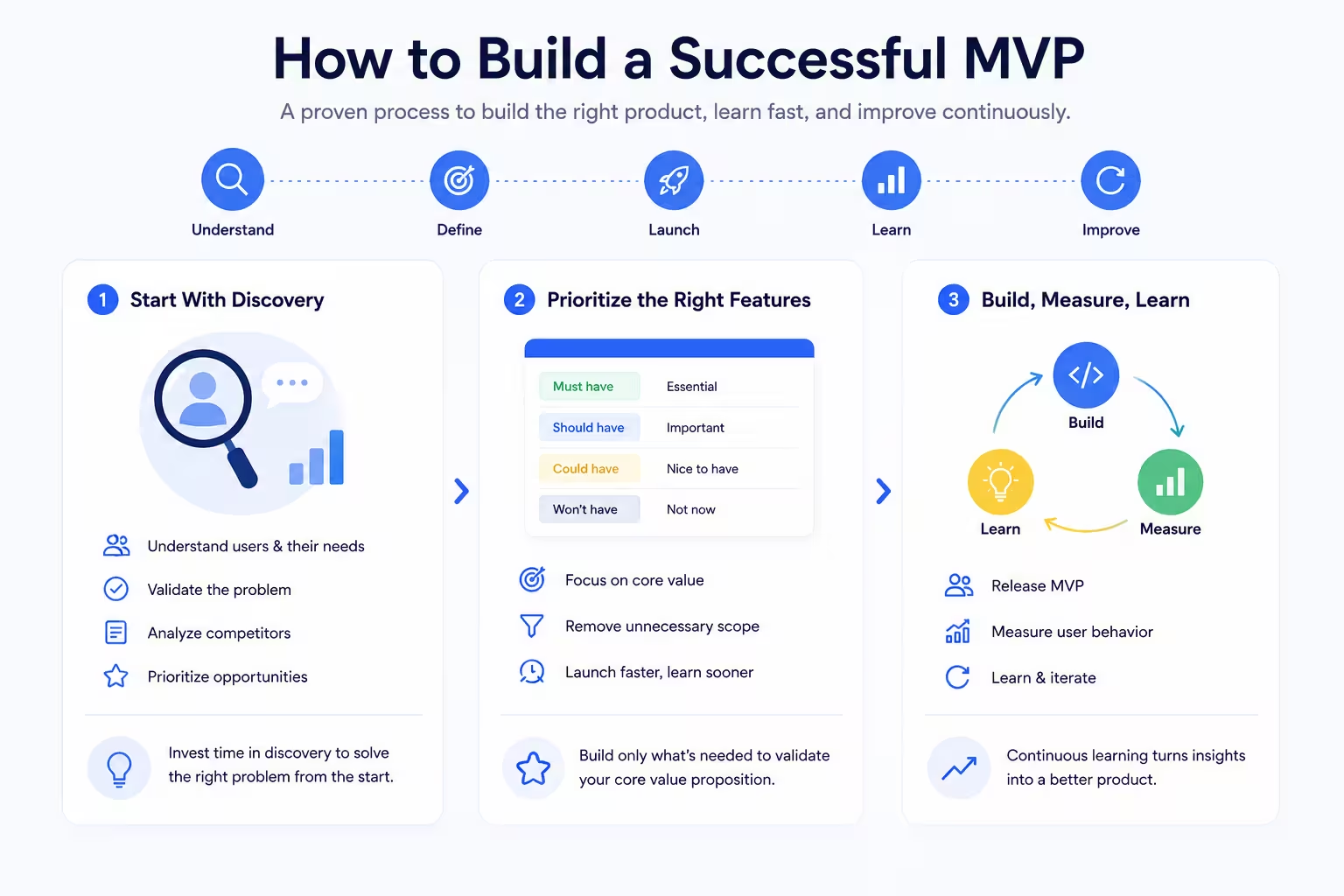
By approaching product development as a continuous learning cycle rather than a one-time project, companies can reduce risk, make better decisions, and adapt more effectively to user needs.
Start With Discovery
The success of an MVP is often determined long before development begins.
Rushing straight into coding without understanding the market, the users, or the problem frequently leads to unnecessary features, changing priorities, and expensive rework. Investing time in discovery helps teams build with confidence by ensuring they're solving the right problem from the outset.
A structured discovery phase typically includes activities such as:
conducting user research to understand customer needs and pain points;
validating that the problem is worth solving;
analyzing competitors and existing market solutions;
prioritizing features based on business value and user impact.
By answering these questions early, companies establish a clear direction for development and avoid spending valuable resources on assumptions that may prove incorrect.
At higroup, this approach is central to our Design & Discovery process, where product strategy, user research, and feature prioritization help teams reduce uncertainty before development begins.
Prioritize the Right Features
One of the biggest challenges in MVP development is deciding what not to build.
Founders are often tempted to include every feature they envision for the final product. However, every additional feature increases development time, complexity, testing requirements, and maintenance costs.
A practical way to prioritize functionality is the MoSCoW framework, which categorizes features into four groups:
Must have: essential functionality required for the product to deliver its core value.
Should have: important improvements that aren't critical for the initial release.
Could have: desirable features that can wait until later iterations.
Won't have (for now): ideas intentionally postponed to keep the MVP focused.
This framework encourages teams to protect the product's core value proposition while resisting unnecessary scope expansion. By concentrating on the features that directly support validation, companies can launch sooner and collect meaningful feedback more quickly.
Build, Measure, Learn
Launching an MVP isn't the end of the process, it's the beginning.
The Lean Startup methodology, popularized by Eric Ries, is built around a continuous Build–Measure–Learn cycle. Instead of treating development as a linear project, teams release an MVP, observe how users interact with it, analyze the results, and use those insights to guide the next iteration.
Each cycle answers new questions:
Are users engaging with the core feature?
Which assumptions have been validated?
Where are users encountering friction?
What should be improved or removed next?
This iterative approach enables products to evolve based on real customer behavior rather than internal opinions. Over time, small, evidence-based improvements create a product that is more valuable, more intuitive, and better aligned with market demand.
Rather than trying to build the perfect product from day one, successful teams focus on learning quickly, improving continuously, and allowing customer feedback, not assumptions, to shape the product's evolution.
Common MVP Misconceptions
The concept of a Minimum Viable Product has been around for years, yet it remains one of the most misunderstood terms in product development. Many founders associate an MVP with building the cheapest possible product or releasing something unfinished simply to get to market faster.
In reality, an MVP is neither incomplete nor low quality. Its purpose is to answer critical business questions while minimizing unnecessary investment. Understanding what an MVP truly represents helps teams make better product decisions and avoid costly mistakes early in the development process.
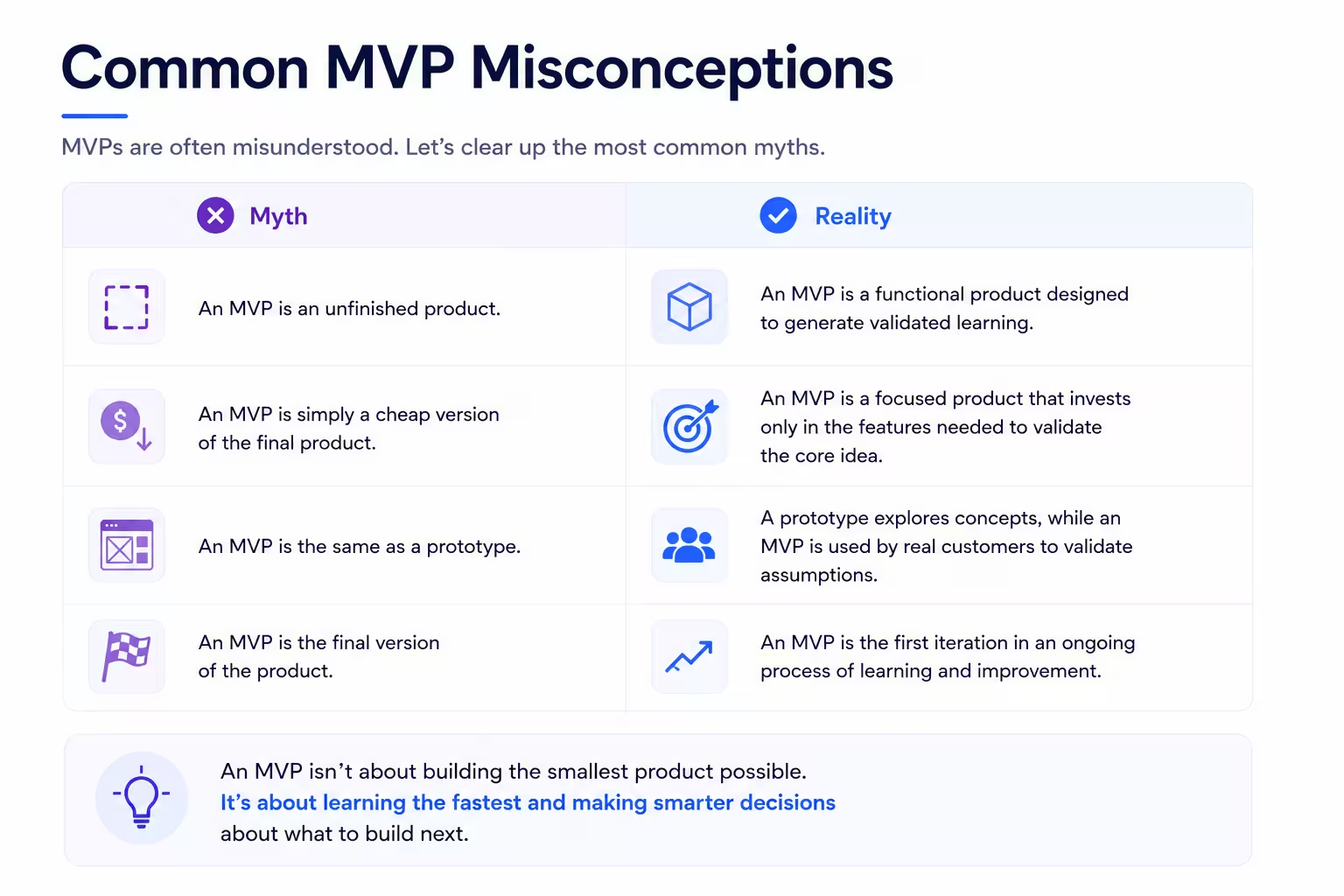
The table below highlights some of the most common misconceptions.
Myth | Reality |
|---|---|
An MVP is an unfinished product. | An MVP is a functional product designed to generate validated learning. |
An MVP is simply a cheap version of the final product. | An MVP is a focused product that invests only in the features needed to validate the core idea. |
An MVP is the same as a prototype. | A prototype explores concepts, while an MVP is used by real customers to validate assumptions. |
An MVP is the final version of the product. | An MVP is the first iteration in an ongoing process of learning and improvement. |
Another common mistake is treating the MVP as the end goal rather than the beginning of the product journey. A successful MVP is designed to evolve. User feedback, analytics, and market insights shape future iterations, allowing the product to grow in the areas that deliver the greatest value.
Ultimately, the success of an MVP isn't measured by how many features it includes. It's measured by how effectively it helps a team learn, reduce uncertainty, and make informed decisions about what to build next.
Is Your Idea Ready for an MVP?
Not every product idea is ready to move straight into development. Taking the time to answer a few key questions before building an MVP can help you avoid unnecessary costs, reduce uncertainty, and improve your chances of creating a product that genuinely resonates with users.
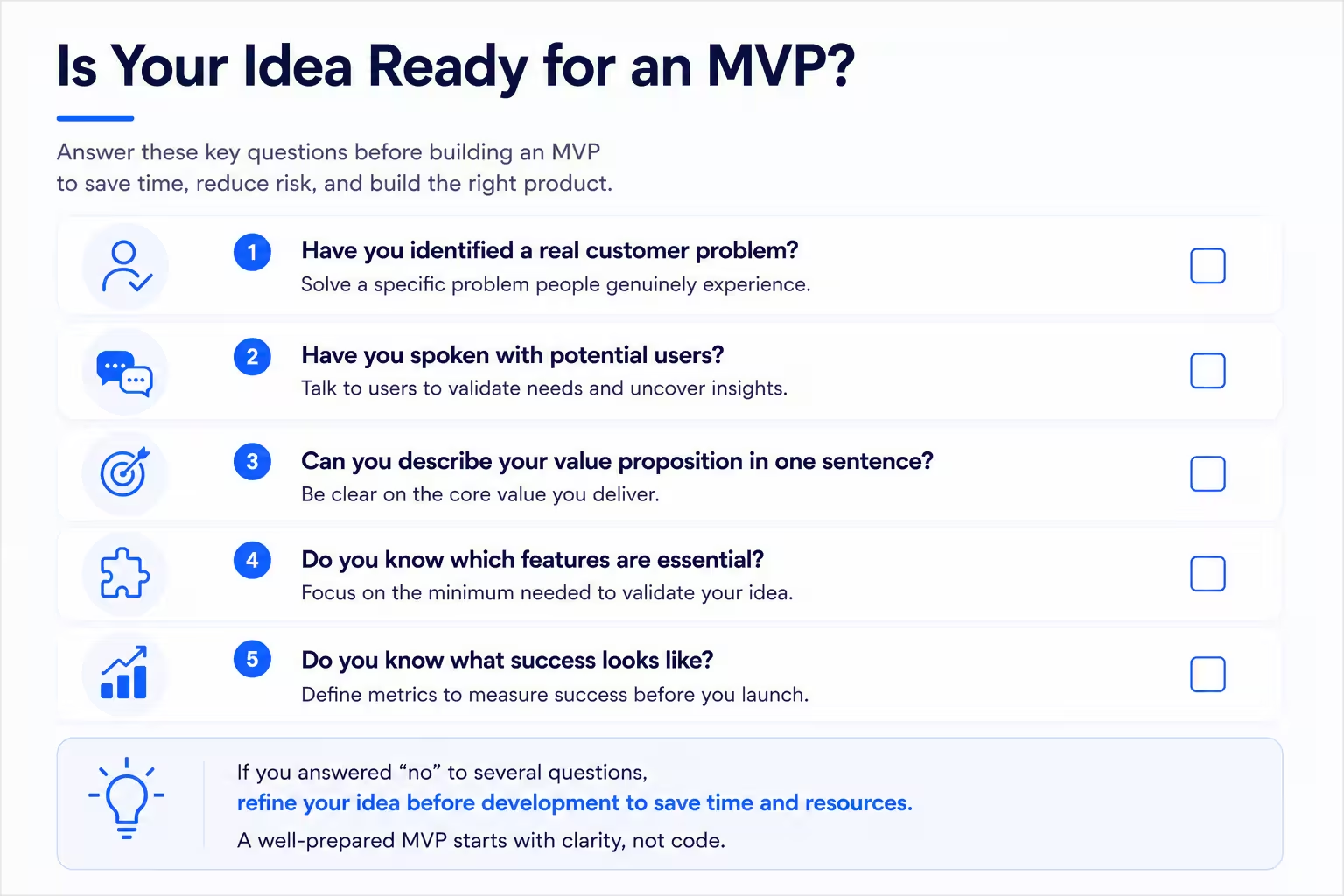
Use the checklist below as a starting point:
Have you identified a real customer problem?
Your MVP should solve a specific problem that people genuinely experience—not one you assume exists.
Have you spoken with potential users?
Customer interviews, surveys, and early conversations often reveal valuable insights that shape a stronger product.
Can you describe your value proposition in one sentence?
If it's difficult to explain the core value of your product, it may be too early to start building.
Do you know which features are essential?
An MVP should focus on the minimum functionality required to validate your idea, leaving non-essential features for future iterations.
Do you know what success looks like?
Define clear success metrics before launch, whether that's user adoption, engagement, customer feedback, or another measurable outcome.
If you answered "no" to several of these questions, spending more time refining your idea before development may save considerable time and resources later. A well-prepared MVP starts with clarity, not code.
Build to Learn, Then Build to Scale
A Minimum Viable Product is far more than a simplified version of a product. It's a structured approach to reducing uncertainty, prioritizing the right features, and creating a strong foundation for future growth.
By focusing on a clearly defined problem, prioritizing only the features that matter most, and continuously improving based on user feedback, businesses can reduce risk while building products that are better aligned with market needs. Rather than striving for perfection from day one, successful teams treat every release as an opportunity to learn and evolve.
Once your MVP has validated the market, the next step is transforming those early insights into a scalable, production-ready product. Learn how our Product Engineering team helps businesses build reliable software designed for long-term growth, supporting products as they evolve from early validation to sustainable success.
Related post
Handpicked Reads to Deepen Your Understanding
- Business
- Luka Skerjanc
- 05/07/2026
How Much Does It Cost to Build an MVP in 2026?
An in-depth look at MVP development costs in 2026, covering expected investment, key pricing factors, budget examples, and smarter ways to control scope.
Readarticle- Business
- Dino Starcic
- 15/06/2026
Software Development Cost and Budgeting Guide in 2026
A practical guide to software development costs in 2026, explaining the key factors that influence project budgets, typical pricing models, hidden expenses, and how businesses can plan their investment more accurately.
ReadarticleDo you have a specific idea in mind?
Share your vision, and we'll explore how we can make it happen together.