All Insights / What is the Waterfall Methodology?
What is the Waterfall Methodology?
The final step of product development goes beyond writing code. This guide explores how teams move from feature completion to production by focusing on quality assurance, different testing approaches, validation with stakeholders, and release readiness. It covers common checks, decision points, and responsibilities in the final phase, and explains how structured testing and clear acceptance criteria help teams launch stable products with confidence.
Introduction
The Waterfall methodology is one of the earliest structured approaches to software development, built around clear phases and sequential delivery. While seen as outdated, it still plays an important role in certain project contexts.
Waterfall emphasizes upfront planning, fixed requirements, and predictable execution, which can be valuable when problems are well understood and change is limited. Understanding how Waterfall works and where it fits helps teams choose it deliberately, rather than defaulting to it without considering the trade-offs.
What Is Waterfall Software Development?
Waterfall software development is a linear approach where each phase of the project is completed before the next one begins. Requirements are defined upfront, followed by design, development, testing, and final delivery. Progress flows in one direction, with limited opportunities to revisit earlier decisions. This structure prioritizes predictability and documentation over flexibility.
Waterfall works best when project scope is stable and outcomes can be clearly defined from the start.
Waterfall Methodology Phases
The Waterfall methodology is built around a sequence of clearly defined phases, each dependent on the completion of the previous one. Projects typically move from requirements gathering to design, then into development, testing, and final delivery. Each phase has a specific purpose and set of outputs, with formal handoffs between stages. The strength of Waterfall lies in this order, while its risk comes from committing early before real-world feedback is available.
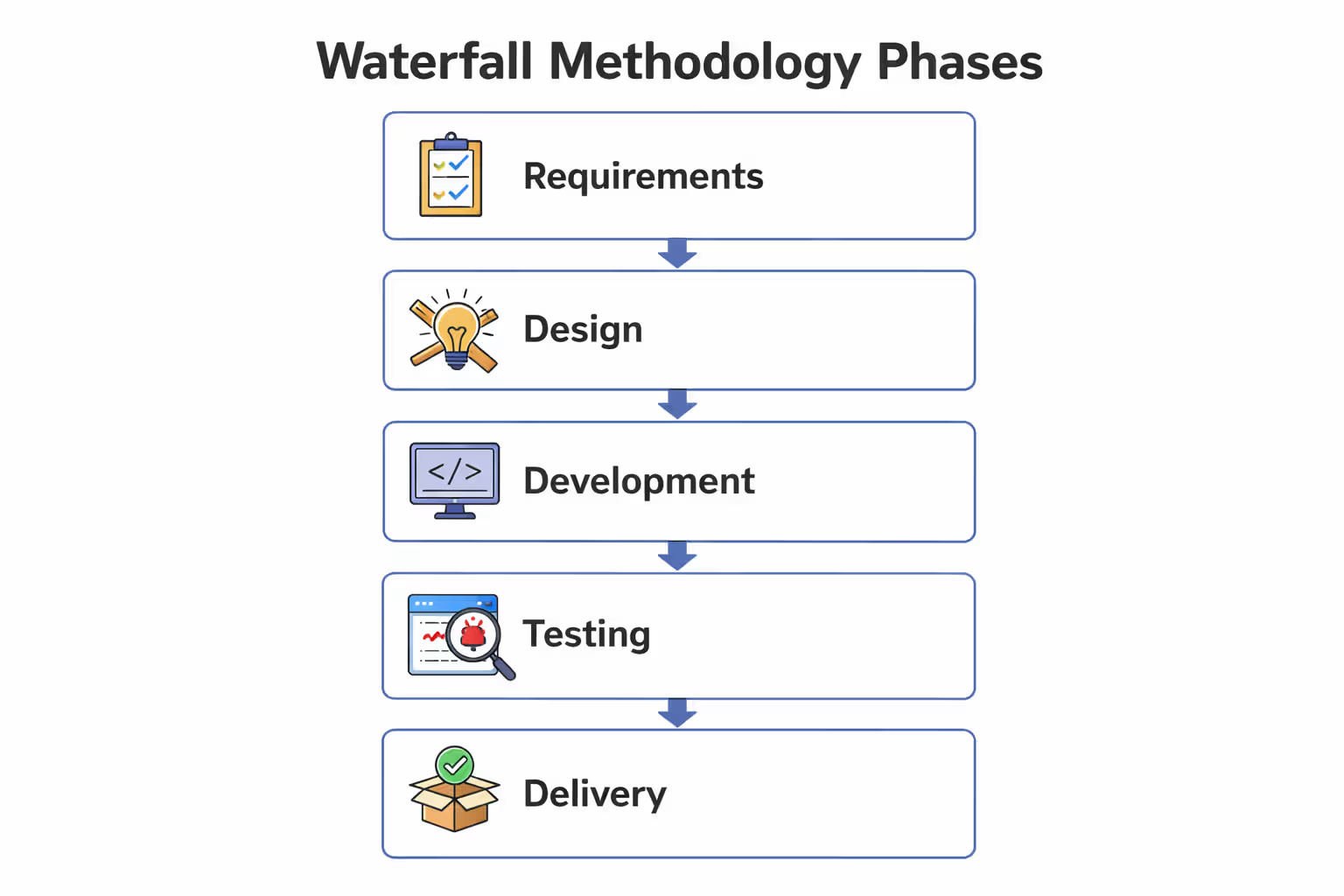
Requirements
This phase focuses on defining the full scope of the project upfront. Business needs, constraints, and expectations are documented in detail, forming the foundation for all subsequent phases. Changes after this point are intentionally limited to protect predictability.
Design
Based on the agreed requirements, the solution is designed in detail before any implementation begins. This includes architecture, workflows, and specifications, ensuring development can proceed with minimal ambiguity.
Development
During development, the solution is built according to the approved design. The emphasis is on execution rather than exploration, with teams following predefined specifications and timelines.
Testing
Testing verifies that the implemented solution meets the original requirements. Issues are identified and resolved before delivery, with the focus on correctness and completeness rather than redefining scope.
Delivery
The final phase involves releasing the completed solution to the client or end users. At this point, success is measured by alignment with the original requirements, marking the formal conclusion of the project lifecycle.
When to Use the Waterfall Methodology
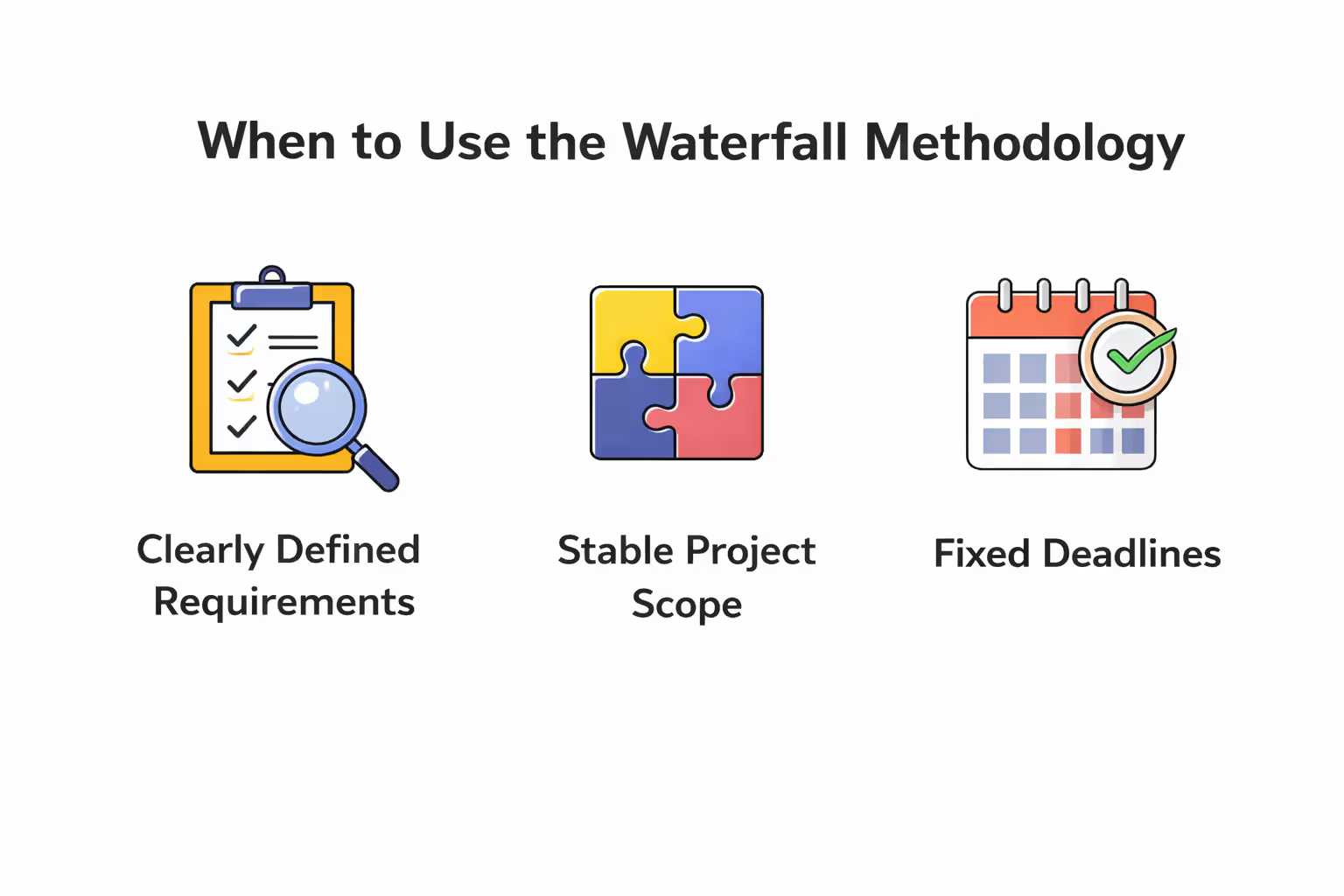
The Waterfall methodology works best when requirements are clearly defined, the problem space is well understood, and change is expected to be minimal. It is suited for projects with fixed scope, strict deadlines, and strong documentation needs. Waterfall is often effective in regulated environments, infrastructure-heavy systems, or projects where compliance and predictability are more important than rapid iteration.
When Not to Use the Waterfall Methodology
The Waterfall methodology is not well suited for projects where requirements are unclear or expected to change significantly over time. In situations that require ongoing learning, frequent validation, or adaptation based on user feedback, a sequential approach can lock decisions too early and make course correction expensive. Waterfall can also struggle in environments with shifting external constraints or complex dependencies, where revisiting completed phases becomes unavoidable. When close collaboration and continuous alignment are critical, Waterfall often introduces friction by postponing feedback until late in the process.
Benefits of Waterfall Project Management
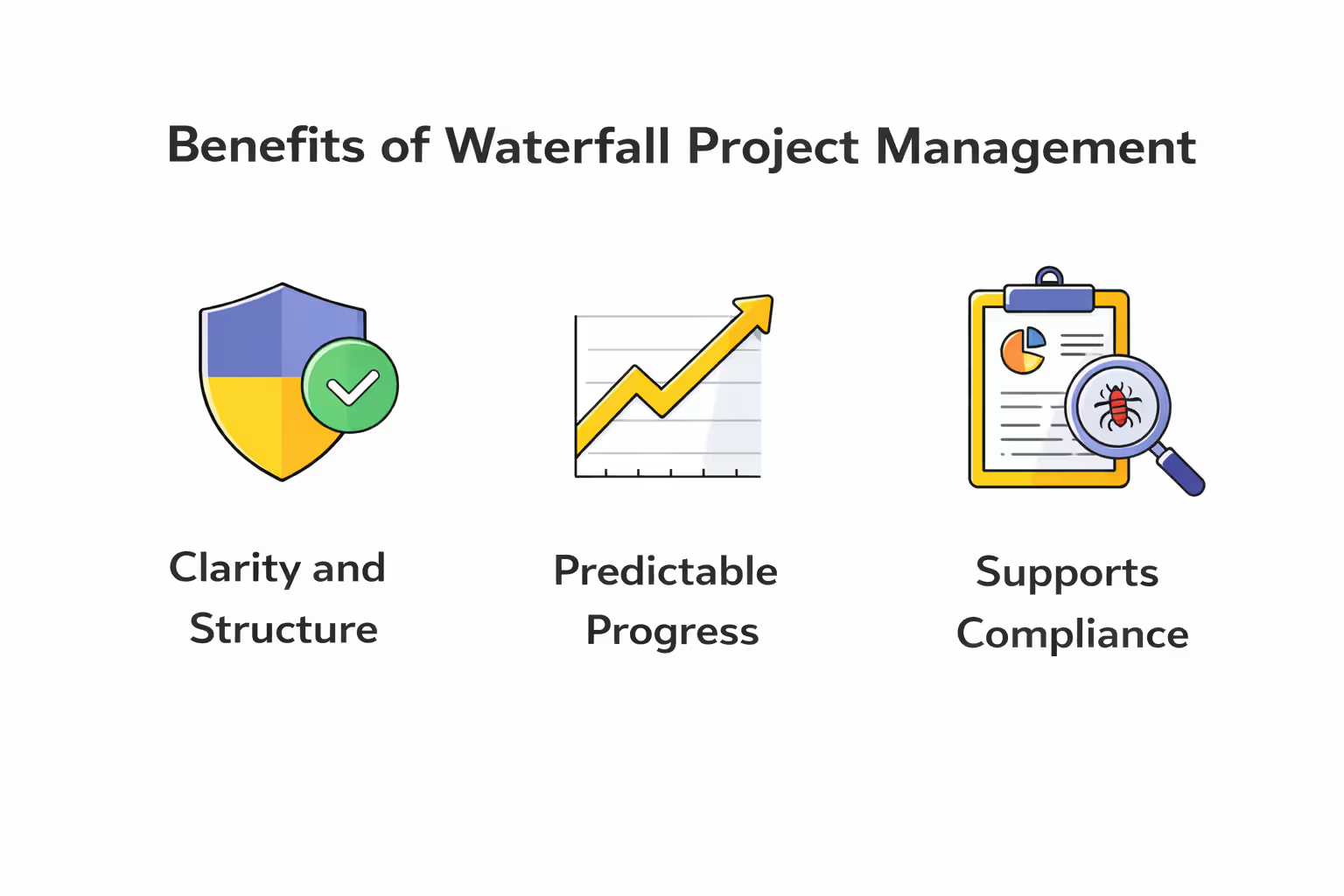
Waterfall project management offers clarity, structure, and predictability throughout delivery. With clearly defined phases and documentation, teams know what is expected at each stage and can plan resources and timelines more easily. This approach makes progress easier to track against predefined milestones. For projects with stable requirements, Waterfall provides a controlled environment that minimizes surprises and supports consistent execution from start to finish.
Disadvantages of Waterfall Project Management
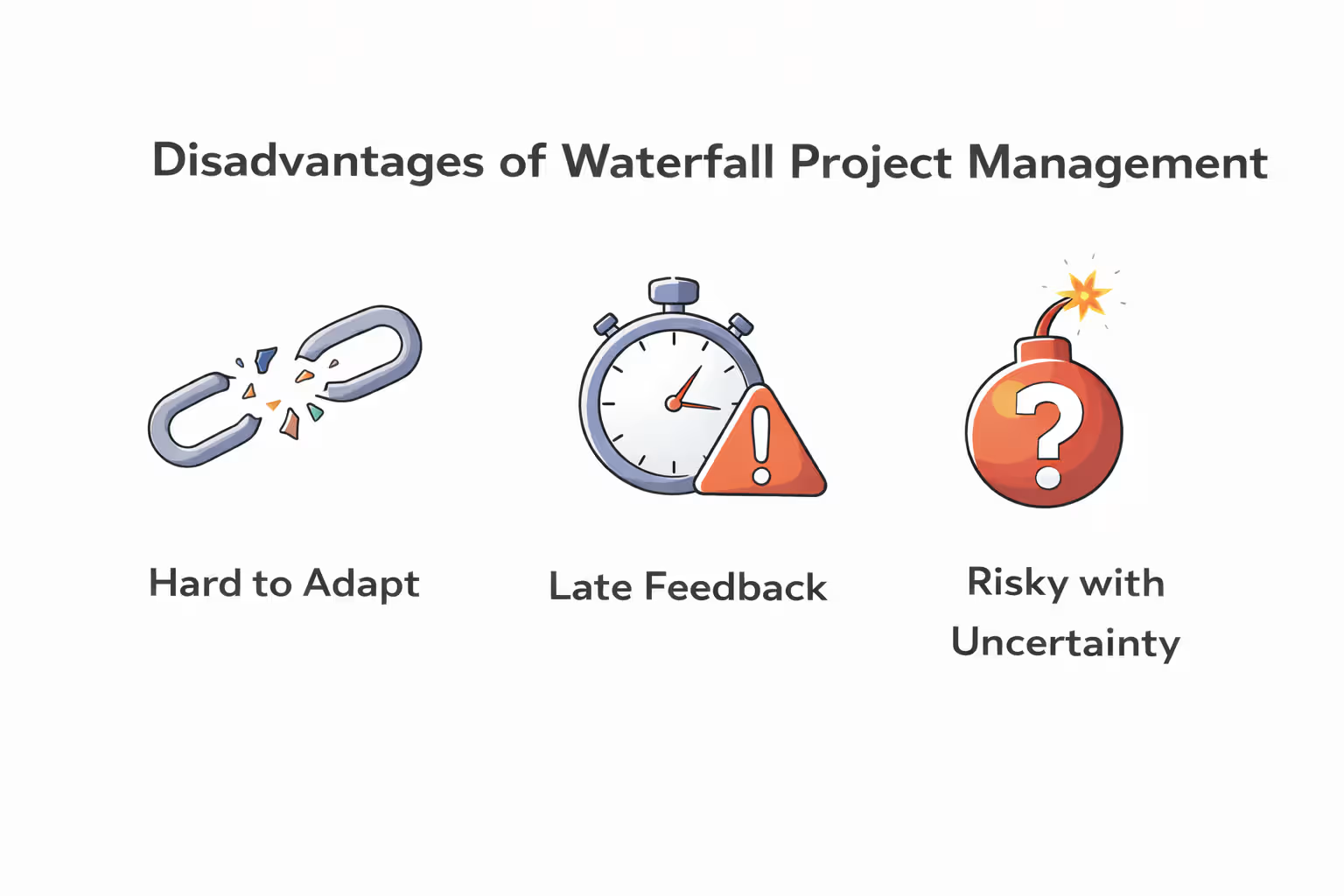
The main limitation of Waterfall project management is its rigidity once execution begins. Because requirements are fixed early, adapting to new insights or changing needs becomes difficult and costly. Feedback arrives late, often during testing, when changes have the biggest impact on timelines and budgets. This approach also assumes a high level of certainty upfront, which is rarely realistic for complex or evolving software products. When uncertainty is underestimated, Waterfall can amplify risk instead of reducing it.
How Waterfall Methodology Varies by Industry
Waterfall is applied differently depending on industry constraints and expectations. In regulated sectors such as finance, healthcare, and government, Waterfall aligns well with compliance, documentation, and audit requirements. Infrastructure and systems integration projects also benefit from its structured handoffs and fixed milestones. The methodology itself stays the same, but its strictness and enforcement vary based on regulatory pressure, system complexity, and tolerance for change.
Use Waterfall Deliberately, Not Automatically
The Waterfall methodology is neither outdated nor universally applicable. It is a structured approach designed for situations where certainty, documentation, and predictability matter more than rapid change. When used in the right context, Waterfall provides control, clarity, and dependable delivery. The key is not choosing a methodology because it is familiar, but selecting it deliberately based on the problem you are solving and the constraints you face.
Related post
Handpicked Reads to Deepen Your Understanding
- Product Engineering
- Luka Skerjanc
- 26/01/2026
How to Plan a Software Project?
Planning a software project is not about predicting everything upfront. This blog shows how teams plan scope, phases, and key decisions while acknowledging uncertainty. It explains how early assumptions, risks, and dependencies shape better plans, and how structured planning helps teams reduce risk and deliver with confidence.
Readarticle- Product Engineering
- Luka Skerjanc
- 04/01/2026
How to Build a Software Product?
This blog explains how to build a software product end to end. It covers discovery, validation, design, development, launch, and scaling. It shows how early decisions shape long-term outcomes. It highlights where teams most often fail and how to avoid those mistakes. The focus is on building products deliberately, not just delivering features.
Readarticle- Product Engineering
- Luka Skerjanc
- 18/01/2026
The 5 Phases of a Software Development Life Cycle
The software development life cycle is more than a linear process. This blog breaks down the five phases of SDLC and explains what happens in each stage, from defining requirements to development, testing, and delivery. It looks at how teams move through these phases, how responsibilities and decisions shift over time, and why understanding the full life cycle helps teams build reliable, scalable products instead of treating development as a single step.
ReadarticleDo you have a specific idea in mind?
Share your vision, and we'll explore how we can make it happen together.