

Introduction
Scrum is one of the most widely adopted delivery frameworks in product development. Originally designed to help teams navigate complex and uncertain work, it promises flexibility, transparency, and faster feedback cycles. Scrum has become the default choice for many organizations, often adopted without much reflection.
Understanding what Scrum actually is, where it adds value and where it creates friction helps teams use it intentionally rather than treating it as a universal solution.
What Is Scrum Methodology?
Scrum is a lightweight framework built to manage complex work through short, iterative cycles called sprints. It defines a small set of roles, events, and artifacts that aim to create transparency, inspection, and adaptation.
Scrum does not prescribe technical practices, detailed processes, or fixed outcomes. Instead, it provides a structure within which teams are expected to make decisions and continuously improve.

What Is Scrum?
Why Scrum Became the Default?
Scrum gained widespread adoption as organizations searched for alternatives to rigid, plan-driven delivery models. Its clearly defined ceremonies and roles made it easy to explain and scale across teams. For many enterprises, Scrum offered a sense of control and predictability in environments where requirements were changing and complexity was increasing.
This led to Scrum being adopted as a standard, often without assessing whether the underlying conditions actually supported it.
Benefits of Scrum Methodology
When applied in the right context, Scrum offers several clear advantages. Short feedback loops help teams identify problems early and adjust course before risks escalate. Reviews and retrospectives improve transparency between stakeholders and delivery teams. Scrum also encourages continuous learning, making it effective in environments where solutions cannot be defined upfront.

Benefits of Scrum
Disadvantages of Scrum Methodology
Scrum can quickly become counterproductive when applied mechanically. Teams may focus more on ceremonies than outcomes, mistaking activity for progress. Weak product ownership often leads to poorly prioritized backlogs and diluted accountability. In organizations with fixed scope and deadlines, Scrum can create a false sense of flexibility while pressure quietly accumulates.
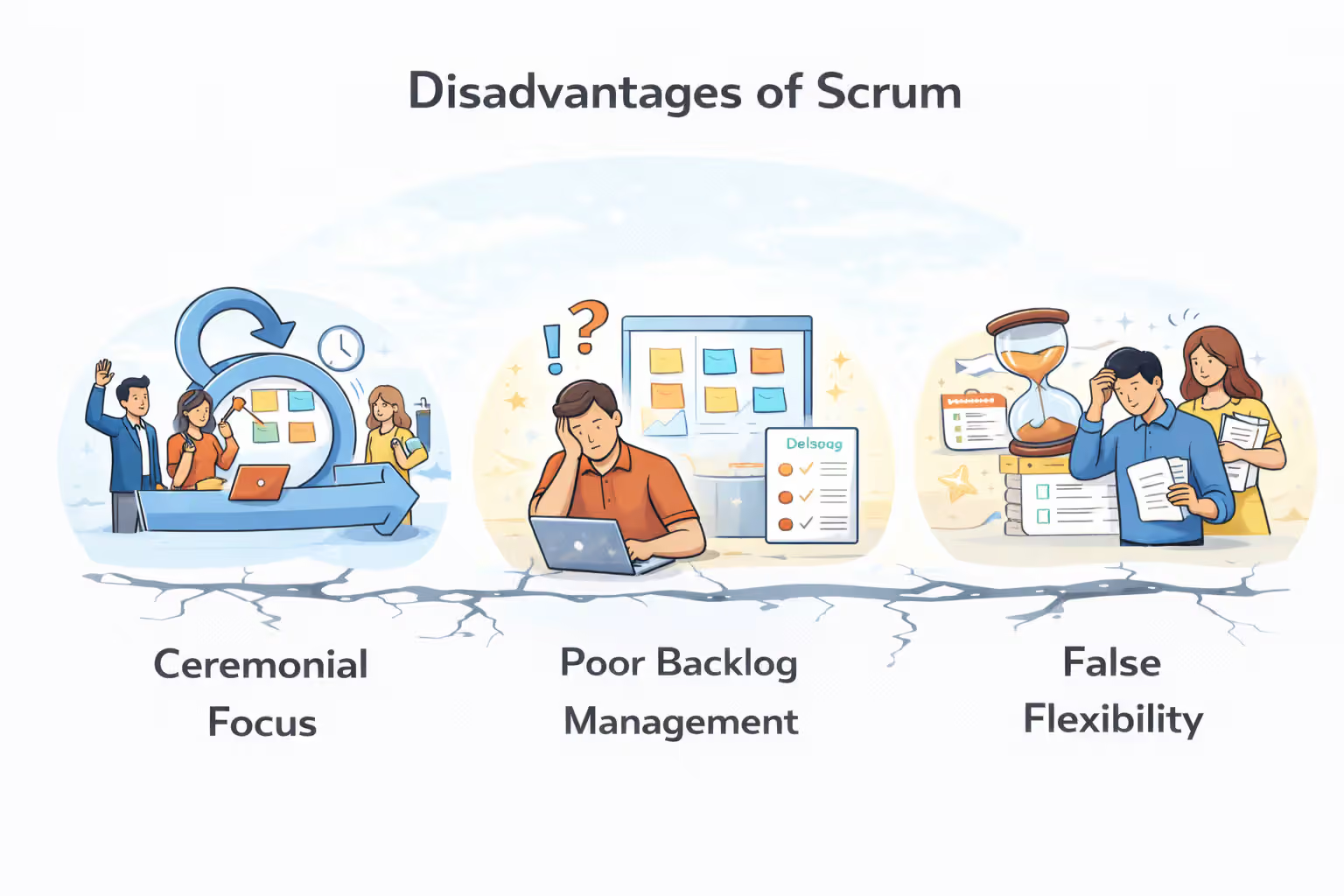
Disadvantages of Scrum
Scrum Methodology vs Reality
Scrum does not solve organizational issues on its own. It cannot compensate for unclear strategy, misaligned stakeholders, or a lack of ownership. In practice, Scrum often exposes these problems rather than fixing them. Teams expecting Scrum to act as a shield against difficult decisions are usually disappointed, as the framework makes underlying dysfunction more visible over time.
When to Use Scrum
Scrum works best in environments where change is expected and requirements evolve over time. It is well suited for product development where assumptions need to be tested and refined through regular delivery and feedback.
This approach supports teams that release value incrementally and adjust priorities based on real user input and stakeholder collaboration. Short iterations help surface risks early and keep progress visible.
Scrum is especially effective for cross-functional teams that can take ownership, make decisions quickly, and work toward clear goals in short cycles. When flexibility, transparency, and continuous improvement matter, Scrum provides a practical framework to support delivery.
When Not to Use Scrum
Scrum is less suitable in environments where requirements are fixed upfront and change is minimal. Projects that rely on detailed specifications, long-term planning, and clearly defined outcomes often benefit more from structured, sequential approaches.
This framework can struggle when delivery must follow strict processes, approvals, or regulatory constraints that limit iteration and frequent feedback. In such cases, short cycles and changing priorities add overhead without real benefit.
Scrum is also a weaker fit for teams that are not cross-functional, cannot make decisions independently, or depend heavily on external handovers. When predictability, formal governance, and stability are the primary goals, Scrum’s flexibility may create friction rather than clarity.
Closing remarks
Scrum is neither a silver bullet nor an outdated relic. It can support learning, alignment and adaptive delivery. Applied blindly, it often adds process overhead without improving outcomes.
The real value of Scrum comes from understanding its limits and treating it as a tool rather than a guarantee of success.