All Insights / The Process of New Product Development
The Process of New Product Development
Developing a successful product requires more than a good idea. This blog explains the full process of new product development, from identifying opportunities and designing the solution to development, market launch, and long-term support. It outlines the key stages, decisions, and practices that help teams turn concepts into scalable, real-world products.
Introduction
New product development is often associated with innovation and breakthrough ideas, but successful products rarely come from ideas alone. In practice, they emerge from a structured process that transforms early concepts into real, market-ready solutions.
Many teams move directly from idea to development. This often leads to products that solve the wrong problem or fail to gain adoption. In fact, studies frequently show that up to 70–90% of new products fail, often because teams skip validation and build before fully understanding the market.
This is where the process of new product development becomes essential. A structured approach helps organizations test assumptions, reduce uncertainty, and make better decisions before major investments are made.
Identifying Opportunities
Every new product begins with an opportunity. This usually emerges from unmet customer needs, inefficiencies in existing solutions, or shifts in technology and market behavior. Instead of relying on isolated ideas, successful teams actively observe users and analyze markets to identify where meaningful value can be created.
Common sources of product opportunities include:
Customer feedback and user pain points
Market research and competitive analysis
Technological innovation or new capabilities
Internal product insights and operational challenges
Changing user behavior or emerging trends
The goal of this stage is not to define the final product yet, but to recognize where a real problem exists and where solving it could create meaningful value.

Understanding the Problem
Once a potential opportunity has been identified, the next step is to understand the problem behind it. Many product ideas fail because teams move too quickly from recognizing an opportunity to designing a solution, without fully exploring the underlying user needs.
At this stage, teams aim to understand who the problem affects, why it occurs, and how people currently deal with it. This often involves speaking with users, studying existing workflows, and analyzing how current solutions succeed or fall short.
Typical methods used in this stage include:
User interviews and customer conversations
Market and competitor analysis
Observing how users interact with current solutions
Mapping user journeys and workflows
Identifying constraints and market conditions
Validating the Product Idea
After clearly understanding the problem, the next step is to validate whether the proposed solution actually makes sense. At this stage, the goal is not to build a full product yet, but to test whether the idea resonates with potential users and solves the intended problem.
The objective is to learn as quickly as possible whether the idea is worth pursuing. When validation reveals strong interest and clear value, teams can move forward with greater confidence. When it does not, it is often better to adjust the concept early rather than continue building the wrong product.
Product Design
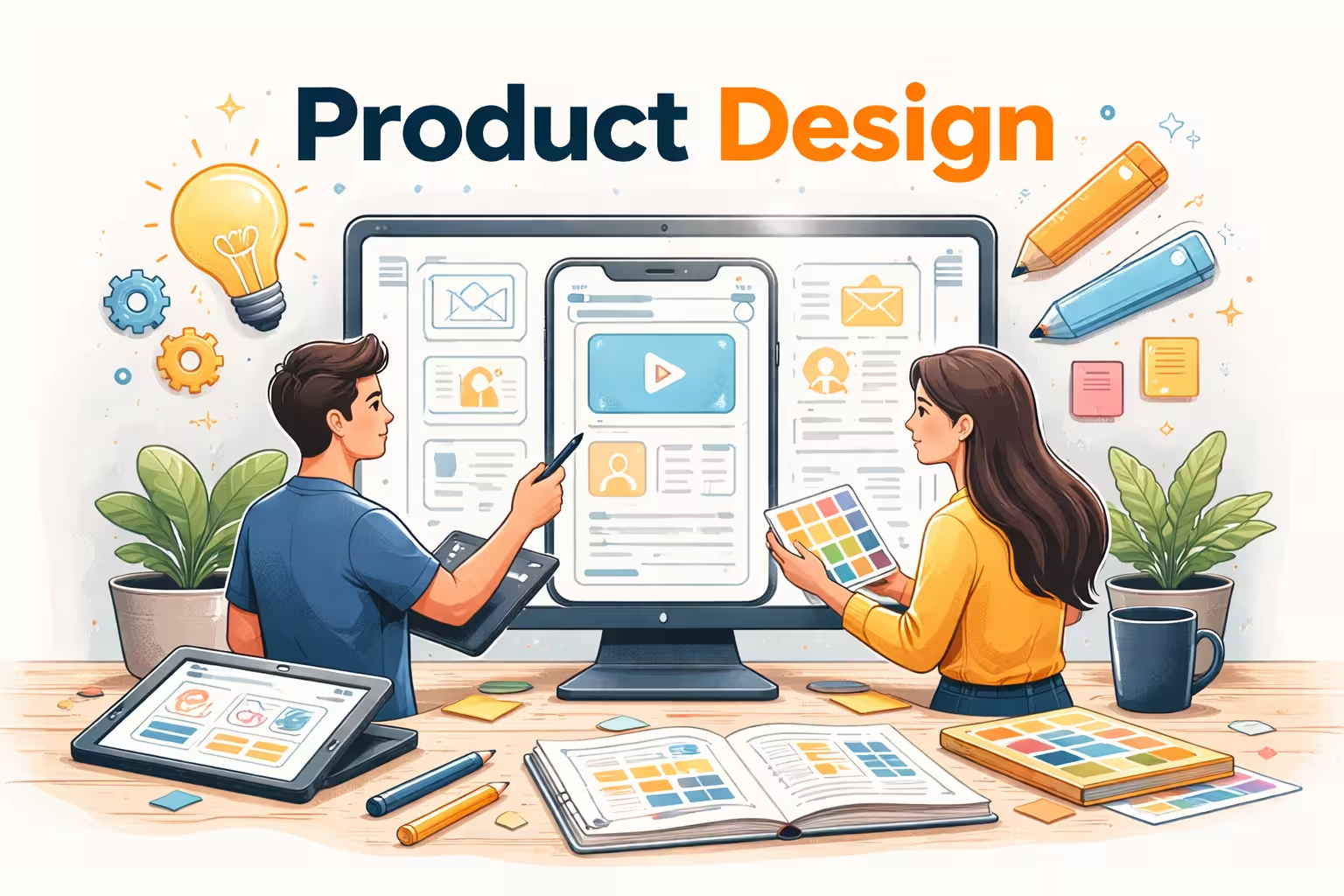
Once an idea has been validated, the next step is to translate the concept into a concrete product design. This stage focuses on defining how the product will work, how users will interact with it, and which features should be included in the first version.
Product design combines user experience thinking with practical constraints such as technical feasibility, cost, and time to market. Teams typically define the product’s core functionality, map user flows, create UX and UI prototypes, and evaluate how the solution will be built from a technical perspective.
The goal of this stage is to create a clear blueprint for development. A well-defined product design aligns stakeholders, reduces ambiguity, and provides a shared understanding of what will be built before development begins.
Development
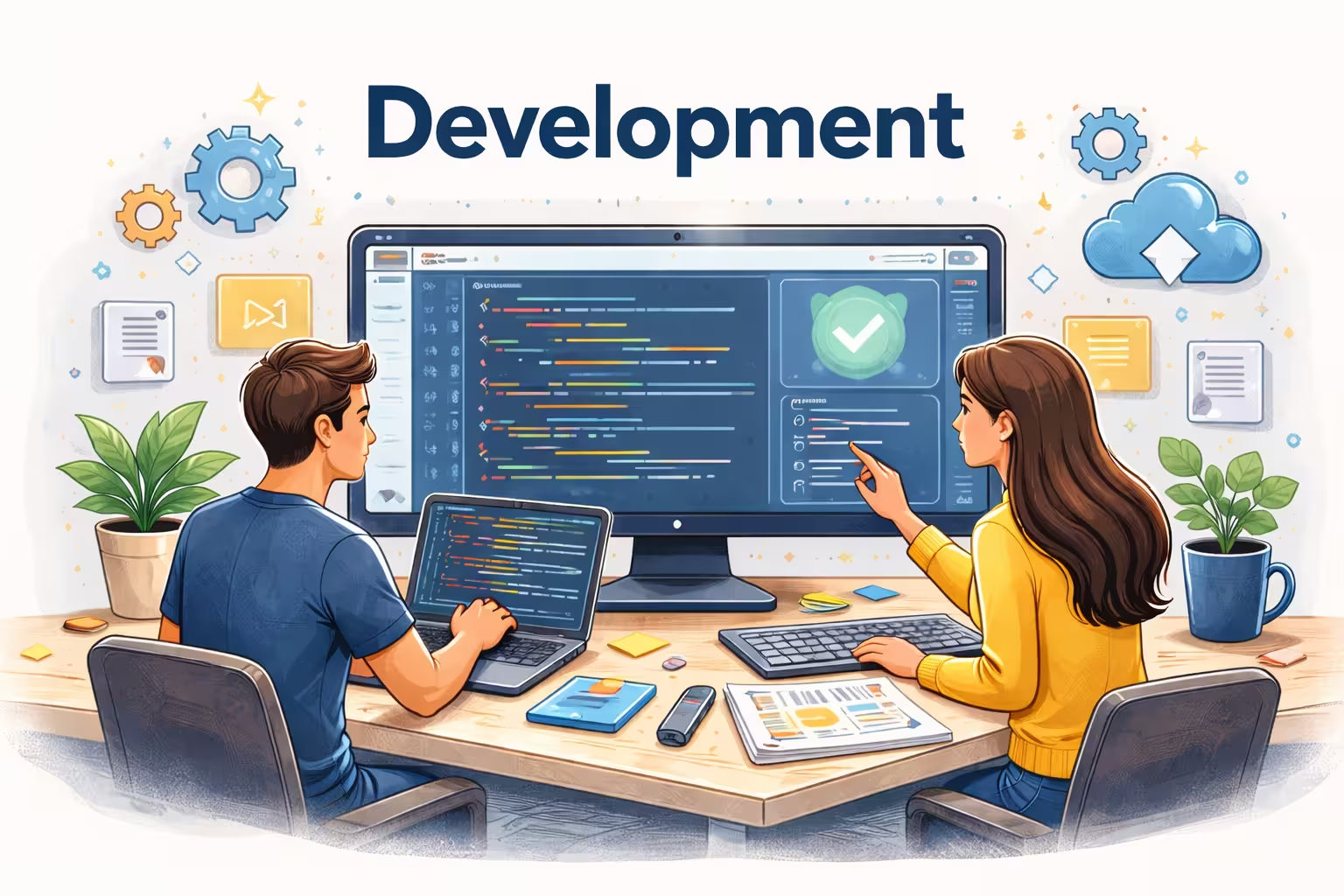
Development is the stage where the product design begins to turn into a working solution. Engineering teams start implementing the core functionality, translating product requirements and design decisions into real software. This stage transforms the product concept from prototypes and plans into something that can actually be used and tested.
Instead of attempting to build a fully featured product immediately, teams typically focus on implementing the most important capabilities first. Concentrating on the core functionality helps reduce complexity and allows the product to begin delivering value sooner. This approach also gives teams the flexibility to refine the product as they learn more about how it performs.
As development progresses, collaboration between product managers, designers, and engineers becomes increasingly important. Regular communication helps ensure that the implementation remains aligned with the intended user experience, technical constraints, and business objectives. Small adjustments and improvements are often made throughout the development process as new insights emerge.
Development is rarely a strictly linear process. Teams often revisit earlier decisions, refine features, and adjust priorities as they move forward. By maintaining flexibility and focusing on the most important product capabilities first, organizations can build a strong foundation that supports future improvements and growth.
Testing and Validation
Before a product is released to the market, it must be thoroughly tested to ensure it works reliably and delivers a consistent user experience. Testing helps identify defects, performance issues, and usability problems that could affect how users interact with the product. Addressing these issues before launch significantly reduces the risk of problems once the product reaches real users.
This stage typically includes technical testing, quality assurance, and validation of how the product behaves under different conditions. Teams verify that core features work as intended, that integrations function correctly, and that the system performs reliably under expected usage scenarios.
Testing also provides an opportunity to confirm that the product delivers the value originally intended. By reviewing how the product behaves in realistic situations, teams can make final adjustments and ensure that the solution is ready for a successful release.
Market Launch
Once the product has been developed and tested, the next step is introducing it to the market. The launch phase involves making the product available to real users and beginning the process of understanding how it performs outside controlled development environments.
A successful launch requires coordination across multiple teams to ensure the product is stable, accessible, and clearly communicated to its intended audience.
Key activities during this phase often include:
Preparing production infrastructure and deployment environments
Coordinating marketing and communication activities
Providing documentation and onboarding materials for users
Setting up customer support and operational processes
Monitoring system performance and user adoption

Iteration and Scaling
After launch, the focus shifts from delivery to learning. Real user behavior, feedback, and product analytics begin to reveal how the product performs in everyday use. These insights help teams understand which features provide the most value, where users encounter friction, and what improvements should be prioritized next.
Product teams typically review multiple sources of information to guide further development, such as:
User feedback and support requests
Product usage data and behavioral analytics
Performance and reliability metrics
Requests for new features or improvements
Market response and competitive developments
As adoption grows, the product must also scale to support increased demand. This often involves improving system performance, expanding infrastructure, refining workflows, and introducing new capabilities. Continuous iteration allows the product to evolve alongside user needs and ensures it remains relevant as the market changes.
Successful products rarely remain static. Instead, they improve gradually through a cycle of feedback, refinement, and expansion that continues long after the initial release.
Product Support and Maintenance
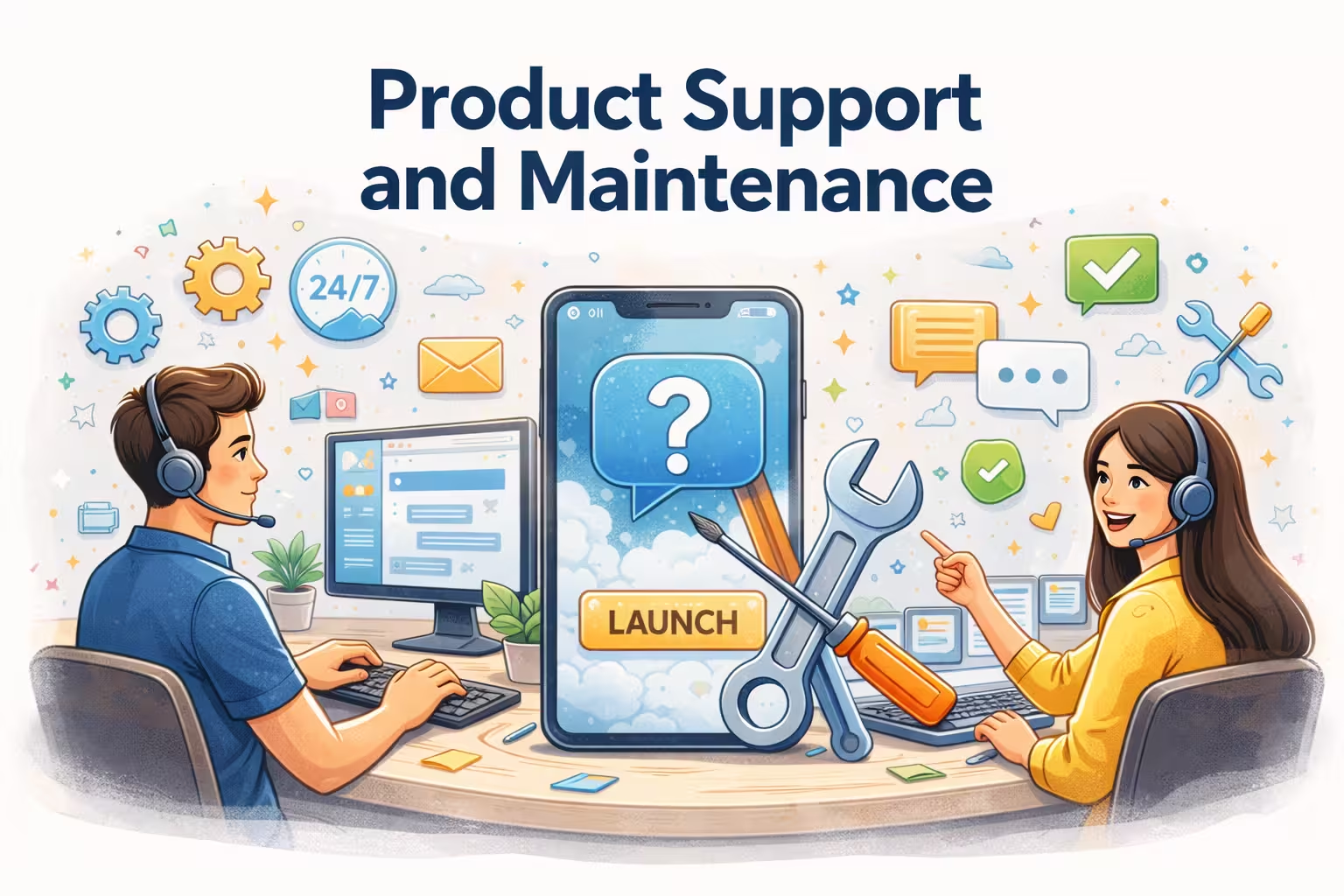
Once a product is in active use, ongoing support becomes essential to maintain reliability and user satisfaction. Users may encounter issues, require assistance, or need clarification on how certain features work. Providing timely support ensures that problems are resolved quickly and that the product continues to operate smoothly.
Support also provides valuable insights for future improvements. User questions, feedback, and recurring issues can reveal usability challenges and opportunities to refine the product, helping teams continue improving the solution after launch.
Bringing It All Together
Developing a successful product is rarely the result of a single idea or breakthrough moment. It is the outcome of a structured process that moves from identifying opportunities and understanding real problems to designing, building, launching, and continuously improving the product. Organizations that approach new product development deliberately are better equipped to reduce risk, learn from the market, and transform promising ideas into solutions that can grow and remain valuable over time.
Related post
Handpicked Reads to Deepen Your Understanding
- Product Engineering
- Luka Skerjanc
- 18/01/2026
The 5 Phases of a Software Development Life Cycle
The software development life cycle is more than a linear process. This blog breaks down the five phases of SDLC and explains what happens in each stage, from defining requirements to development, testing, and delivery. It looks at how teams move through these phases, how responsibilities and decisions shift over time, and why understanding the full life cycle helps teams build reliable, scalable products instead of treating development as a single step.
Readarticle- Product Engineering
- Luka Skerjanc
- 26/01/2026
How to Plan a Software Project?
Planning a software project is not about predicting everything upfront. This blog shows how teams plan scope, phases, and key decisions while acknowledging uncertainty. It explains how early assumptions, risks, and dependencies shape better plans, and how structured planning helps teams reduce risk and deliver with confidence.
Readarticle- Product Engineering
- Luka Skerjanc
- 04/01/2026
How to Build a Software Product?
This blog explains how to build a software product end to end. It covers discovery, validation, design, development, launch, and scaling. It shows how early decisions shape long-term outcomes. It highlights where teams most often fail and how to avoid those mistakes. The focus is on building products deliberately, not just delivering features.
ReadarticleDo you have a specific idea in mind?
Share your vision, and we'll explore how we can make it happen together.