All Insights / What is a Software Process Model?
What is a Software Process Model?
Software projects are not just defined by code, but by how the work is structured. A software process model determines how teams plan, collaborate, and deliver. In this blog, we explain what a process model is, explore common approaches like Waterfall, Agile, and hybrid models, highlight typical mistakes teams make, and show how to choose the right approach based on your project.
Introduction
Most software projects don’t struggle because of code but because of how the work is structured.
The way a project is planned, how decisions are made and how teams collaborate all come down to the process behind it. For many stakeholders “process” feels like overhead rather than something that drives results.
In reality, the process model you choose shapes how your project behaves. It determines how quickly you move, how you handle change, and how predictable the outcome will be.
Understanding this is key to understanding why some projects run smoothly, while others constantly fight delays.
What Is a Software Process Model
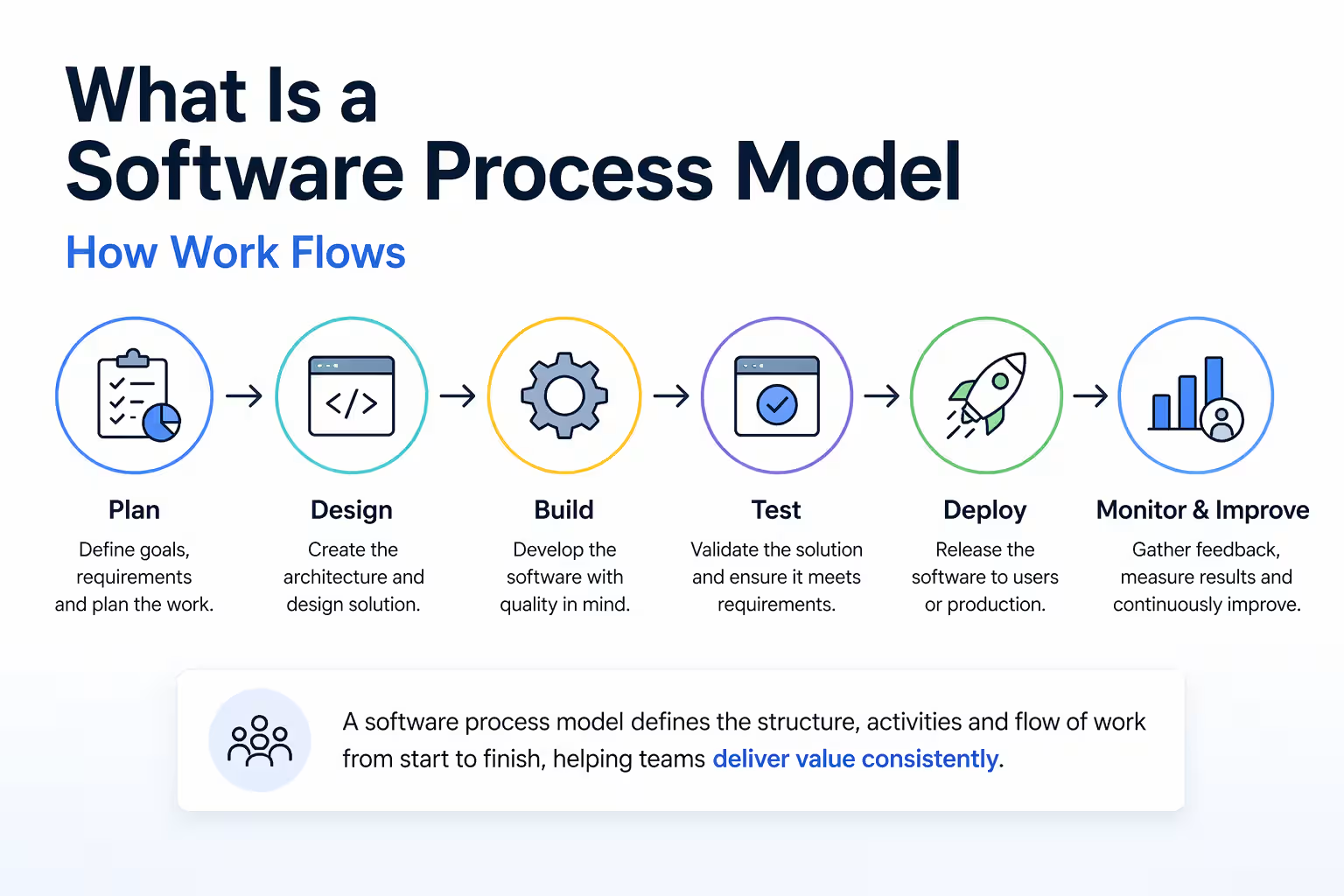
A software process model is a structured way of organizing how a product is planned, built, and delivered. It defines the flow of work, what happens first, what comes next and how teams move from idea to release.
Rather than leaving things to be figured out along the way, it provides a clear framework for:
How decisions are made - Ensuring clarity instead of constant back-and-forth
How tasks are handled - Structuring work so teams can execute efficiently
How progress is tracked - Making delivery visible and predictable
This also includes how requirements are defined, how development is executed, and how feedback is incorporated.
Why the Process Model Matters
The process model you choose directly shapes how your project runs and influences speed, flexibility and delivery.
Different models create different behaviors. Some prioritize predictability, while others focus on adaptability. The same team, working on the same project, can produce very different outcomes depending on how the work is structured.
In practice, a process model determines:
How quickly you can move - Whether work flows smoothly or gets blocked by unclear steps
How changes are handled - Whether adjustments are easy to introduce or disruptive
How teams collaborate - Whether communication is structured or reactive
How predictable delivery is - Whether timelines and outcomes can be estimated with confidence
The Most Common Process Models
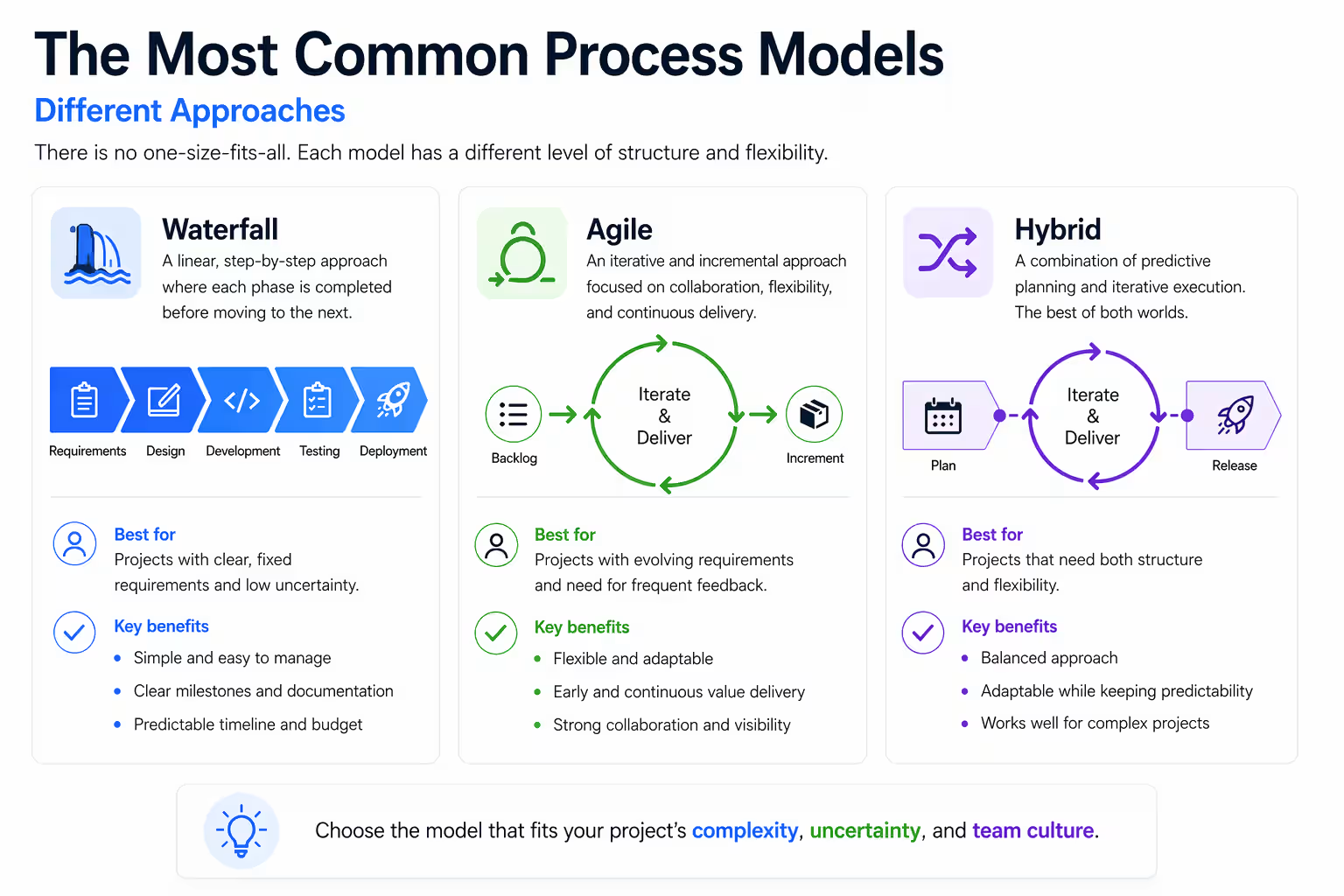
There are several ways to structure a software project, but most fall into a few common approaches. Each one defines how work flows, how decisions are made, and how changes are handled.
Waterfall
A linear, step-by-step approach where each phase is completed before the next begins. It works best when the scope and requirements are clearly defined upfront and unlikely to change. The main advantage is predictability, as timelines and deliverables can be planned in advance. The downside is limited flexibility, since making changes later in the process can be difficult and costly.
Agile (Scrum / Kanban)
An iterative approach where work is delivered in smaller increments, allowing for continuous feedback and adjustment. It is well suited for products that evolve over time or where requirements are not fully known at the start. Its strength lies in flexibility and faster learning cycles, but it requires strong discipline, clear communication, and active stakeholder involvement to work effectively.
Hybrid (Real-World Approach)
A combination of structured planning and flexible execution. In practice, many teams don’t follow a single model strictly, but adapt their approach based on the project. This allows for better balance between predictability and adaptability, but it also requires experience to apply correctly and avoid confusion.
No single model is universally better. Each comes with trade-offs, and the right choice depends on the type of product, the level of uncertainty, and how the team operates.
When to Use Which Model
Choosing a process model is not about preference but about fit. When the scope is stable and well defined, a structured approach like Waterfall can provide clarity and predictability. When the product is evolving or requirements are uncertain, a more flexible approach like Agile allows teams to adapt, iterate, and learn as they go.
In practice, many projects require a balance of both. Hybrid approaches combine upfront structure with iterative execution, allowing teams to plan where needed and adapt where it matters. The key is choosing a model that reflects the reality of the project, not forcing the project into a model that doesn’t fit.
Common Mistakes Teams Make
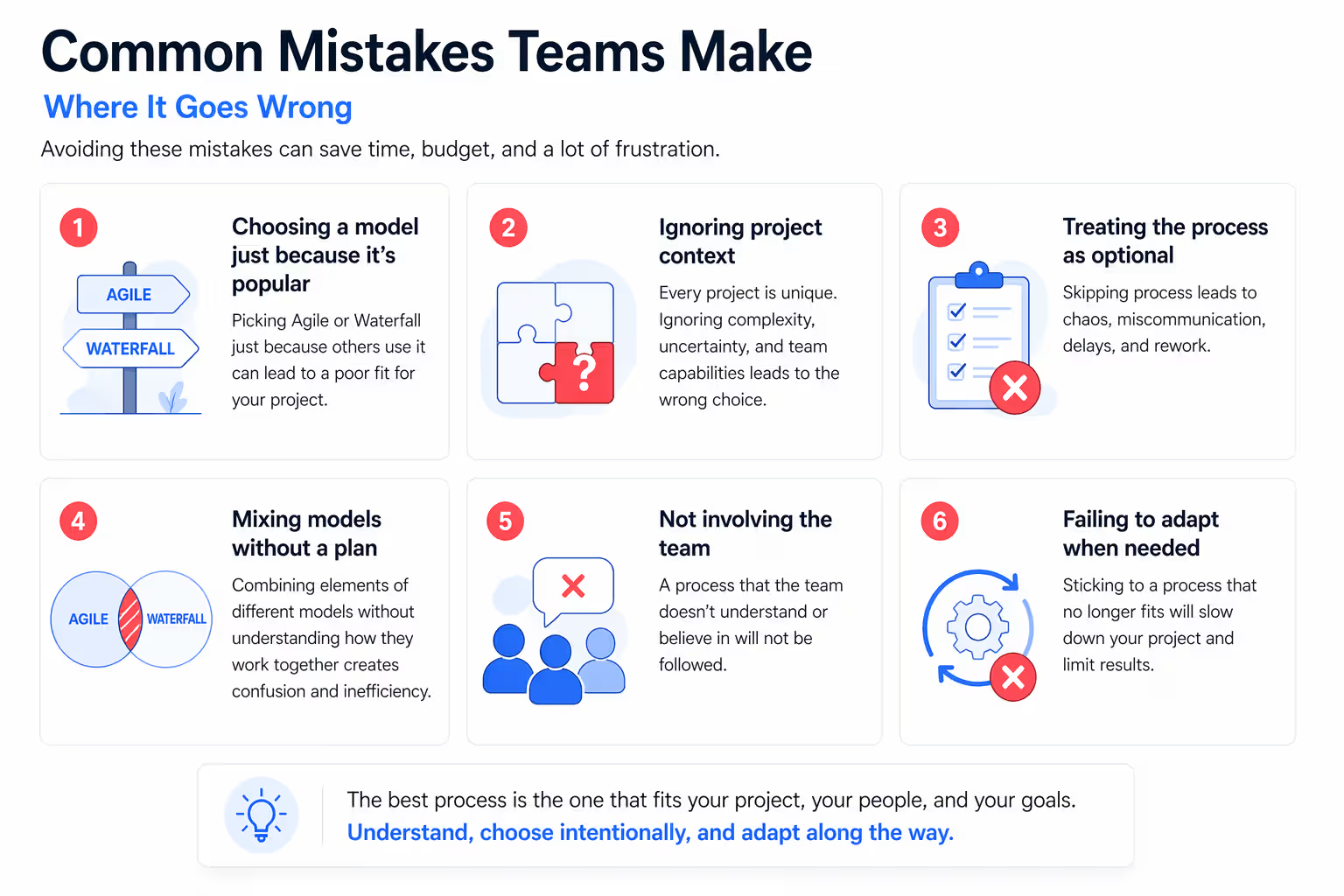
Many teams don’t struggle because of the process model itself, but because of how it’s applied. What often looks like a “process issue” is actually a lack of structure, clarity, or discipline in execution.
Common pitfalls
Choosing Agile because it’s trendy - Without the structure, ownership, or discipline needed to support it
Treating process as optional - Leading to ad hoc decisions, unclear priorities, and reactive work
Mixing models without understanding them - Creating confusion instead of flexibility
Lack of clear ownership - Slowing down decisions and causing misalignment across teams
In most cases, the problem is the execution. A well-chosen process, applied consistently, creates clarity and momentum. A poorly applied one creates friction, even if the model itself is sound.
What Good Looks Like
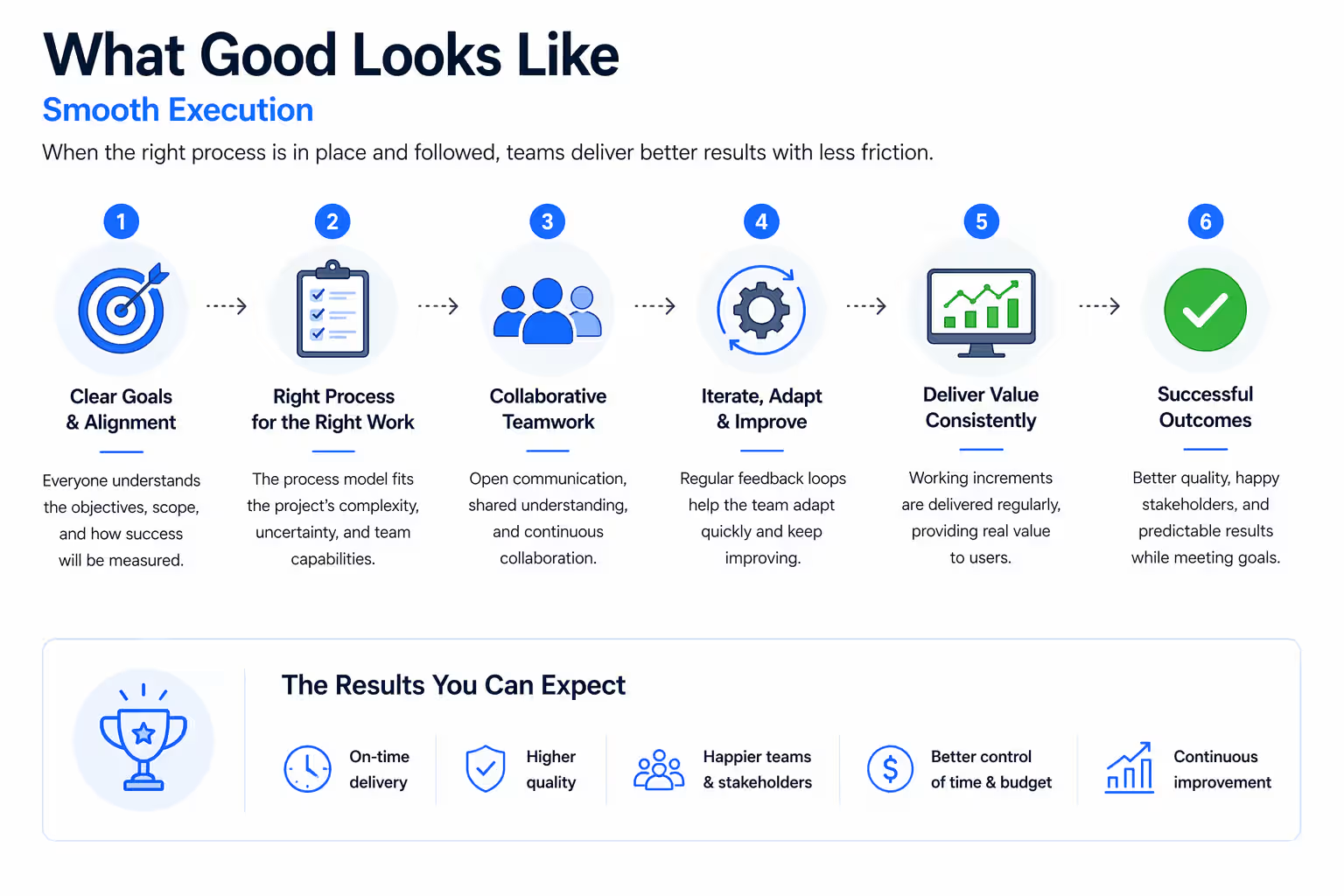
A good process model is almost invisible when it works well. It doesn’t slow teams down or add unnecessary overhead. Instead, it creates a steady flow where work progresses naturally and decisions don’t get stuck.
Teams know what needs to be done, who is responsible, and how progress is measured. Communication is clear, expectations are aligned, and changes can be introduced without disrupting the entire project. There is enough structure to provide direction, but not so much that it blocks momentum.
The result is consistency and work moves forward in a predictable way.
Conclusion
A software process model is not just a way of organizing work but a strategic choice that shapes how a project runs from start to finish.
There is no single “best” model. The right approach depends on the nature of the product, the level of uncertainty, and the way the team operates. What matters is not strictly following a model, but applying the right level of structure and flexibility at the right time.
Related post
Handpicked Reads to Deepen Your Understanding
- Product Engineering
- Luka Skerjanc
- 18/01/2026
The 5 Phases of a Software Development Life Cycle
The software development life cycle is more than a linear process. This blog breaks down the five phases of SDLC and explains what happens in each stage, from defining requirements to development, testing, and delivery. It looks at how teams move through these phases, how responsibilities and decisions shift over time, and why understanding the full life cycle helps teams build reliable, scalable products instead of treating development as a single step.
Readarticle- Product Engineering
- Luka Skerjanc
- 26/01/2026
How to Plan a Software Project?
Planning a software project is not about predicting everything upfront. This blog shows how teams plan scope, phases, and key decisions while acknowledging uncertainty. It explains how early assumptions, risks, and dependencies shape better plans, and how structured planning helps teams reduce risk and deliver with confidence.
Readarticle- Product Engineering
- Edin Ceman
- 28/01/2026
The Process of New Product Development
Developing a successful product requires more than a good idea. This blog explains the full process of new product development, from identifying opportunities and designing the solution to development, market launch, and long-term support. It outlines the key stages, decisions, and practices that help teams turn concepts into scalable, real-world products.
ReadarticleDo you have a specific idea in mind?
Share your vision, and we'll explore how we can make it happen together.