
It starts with an Idea
Every successful digital product starts with an idea. But turning an idea into something people actually want to use requires much more than inspiration. Before investing time and resources into development, teams need to understand the problem they are solving, identify who they are building for, and determine whether their assumptions reflect real market needs.
Initial Idea
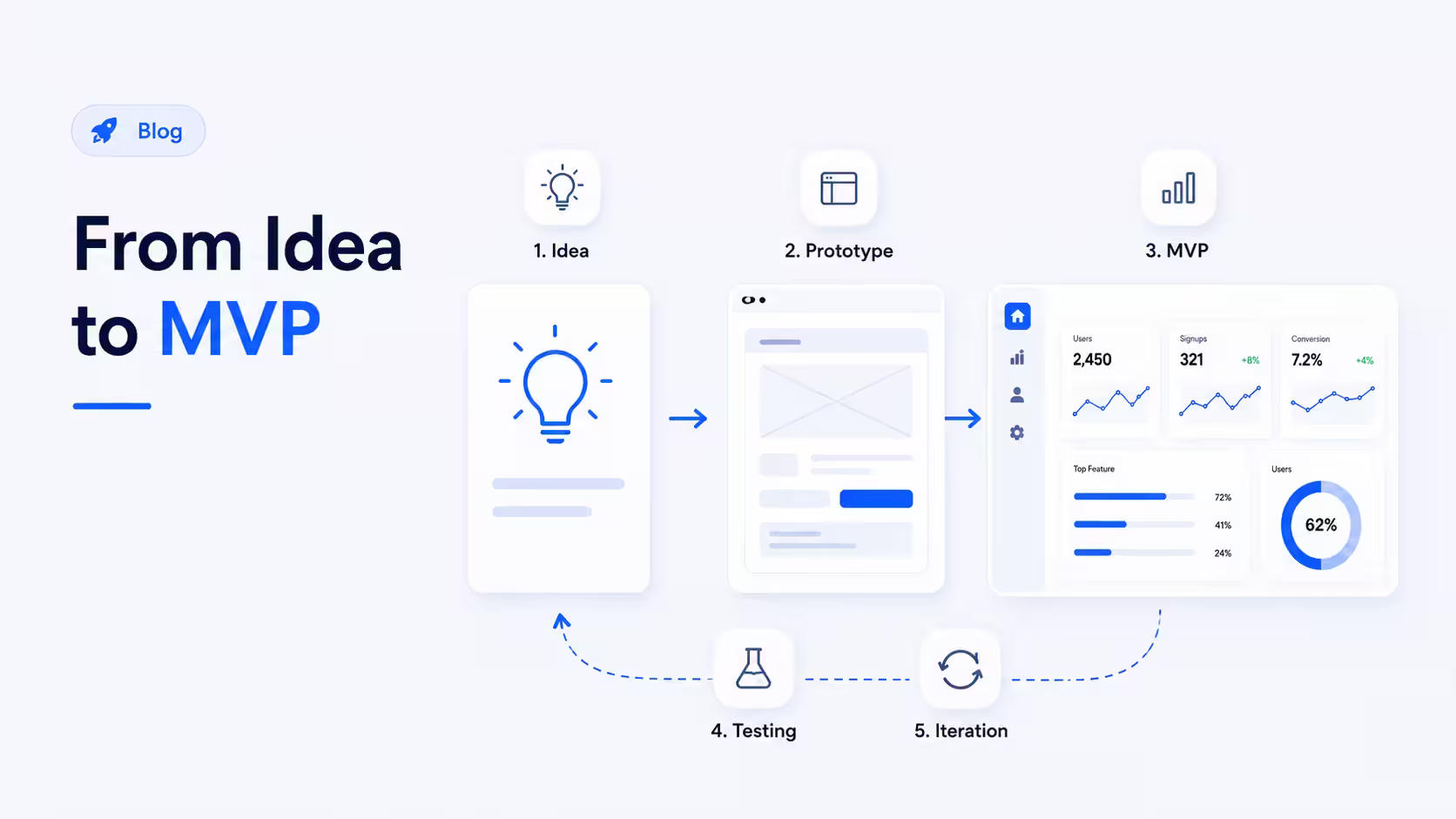
This is where prototypes and minimum viable products (MVPs) come in. Although the two concepts are often used interchangeably, they serve different purposes in the product development process. A prototype helps teams explore concepts, validate user experiences, and test early assumptions. An MVP, on the other hand, is a functional version of a product designed to gather feedback from real users and validate whether the solution delivers value in the market.
Knowing when to create a prototype and when to move toward an MVP can save months of unnecessary work and significantly reduce development risks. Instead of building every feature from the start, successful teams focus on learning quickly, prioritizing what matters most, and improving their product through continuous iteration.
In this guide, we'll walk through the key stages of transforming an idea into a first working version: defining the problem and the audience, prioritizing features, building prototypes, choosing the right technology, testing with users, and refining the product over time.
Start by Defining the Problem and Your Audience
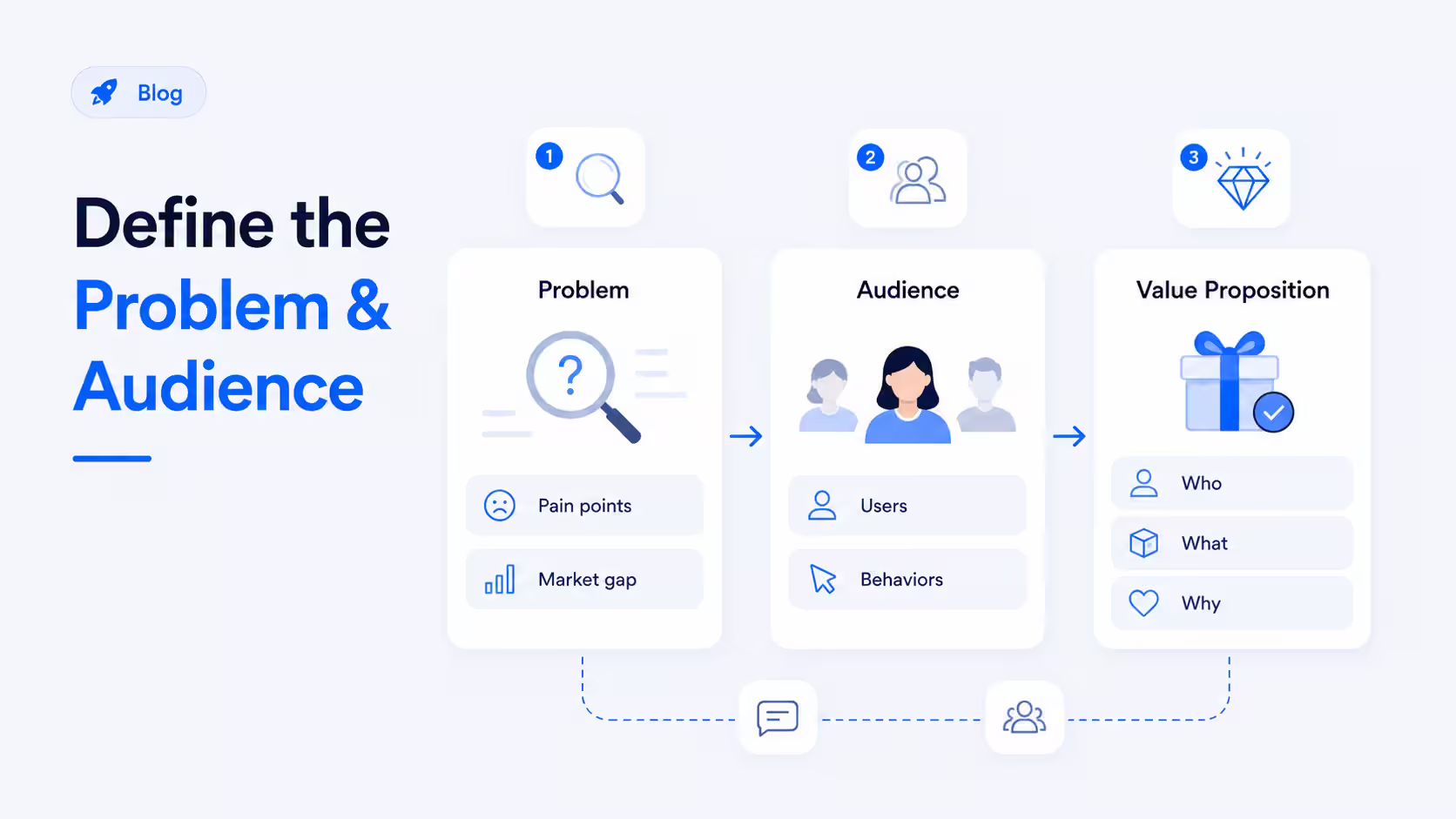
Many products fail not because they are poorly built, but because they solve the wrong problem or target the wrong audience. Before creating wireframes, choosing technologies, or writing a single line of code, teams need to understand what they are trying to achieve and for whom. The goal of a prototype or an MVP is not simply to launch quickly, it is to validate that the product addresses a real need.
Start by Defining
As explained in the official GOV.UK guidance on user research, successful products start by understanding users, their goals, and the challenges they face in their daily lives. The focus should be on learning about real behaviors and needs rather than making assumptions. Before investing in development, teams often begin with discovery workshops, user research, and early validation exercises. Learn more about Higroup's Design & Discovery services.
Identify the Problem You Want to Solve
Every product starts with a problem worth solving. The clearer the problem statement, the easier it becomes to define features, prioritize development efforts, and measure success.
At this stage, teams should ask fundamental questions:
- What frustration or inefficiency are users experiencing?
- How are they currently solving this problem?
- Why are existing solutions insufficient?
- Is the problem significant enough that people would actively seek a better alternative?
Understanding the competitive landscape is equally important. Studying competing products helps identify market gaps, uncover unmet needs, and avoid building features that users may not actually value. Initial validation can come from interviews, surveys, competitor reviews, or conversations with potential customers. The objective is not to confirm that the idea is perfect, but to determine whether the problem genuinely exists.
Define Your Target Audience
A product designed for everyone usually ends up serving no one particularly well. Defining a target audience helps teams make better decisions about functionality, design, and positioning.
Rather than focusing exclusively on demographics, effective product teams try to understand user behaviors, motivations, and constraints. Creating simple personas can help answer questions such as:
- What are users trying to accomplish?
- What obstacles do they encounter?
- Which devices and tools do they use?
- What factors influence their decisions?
These insights allow teams to prioritize the needs of the people most likely to become early adopters and provide meaningful feedback.
Clarify Your Core Value Proposition
Once the problem and audience are clearly defined, the next step is to articulate the product's core value proposition: the promise that explains why the product deserves users' attention.
A strong value proposition should answer three simple questions:
- What problem does the product solve?
- Who benefits from it?
- Why is this solution different from existing alternatives?
At this stage, simplicity matters. If the value proposition cannot be explained clearly in a few sentences, the concept itself may still need refinement. A prototype or MVP should not attempt to deliver every possible feature from day one. Its purpose is to validate whether the product's core promise resonates with the people it is intended to serve.
Prototype or MVP: Which One Do You Need?
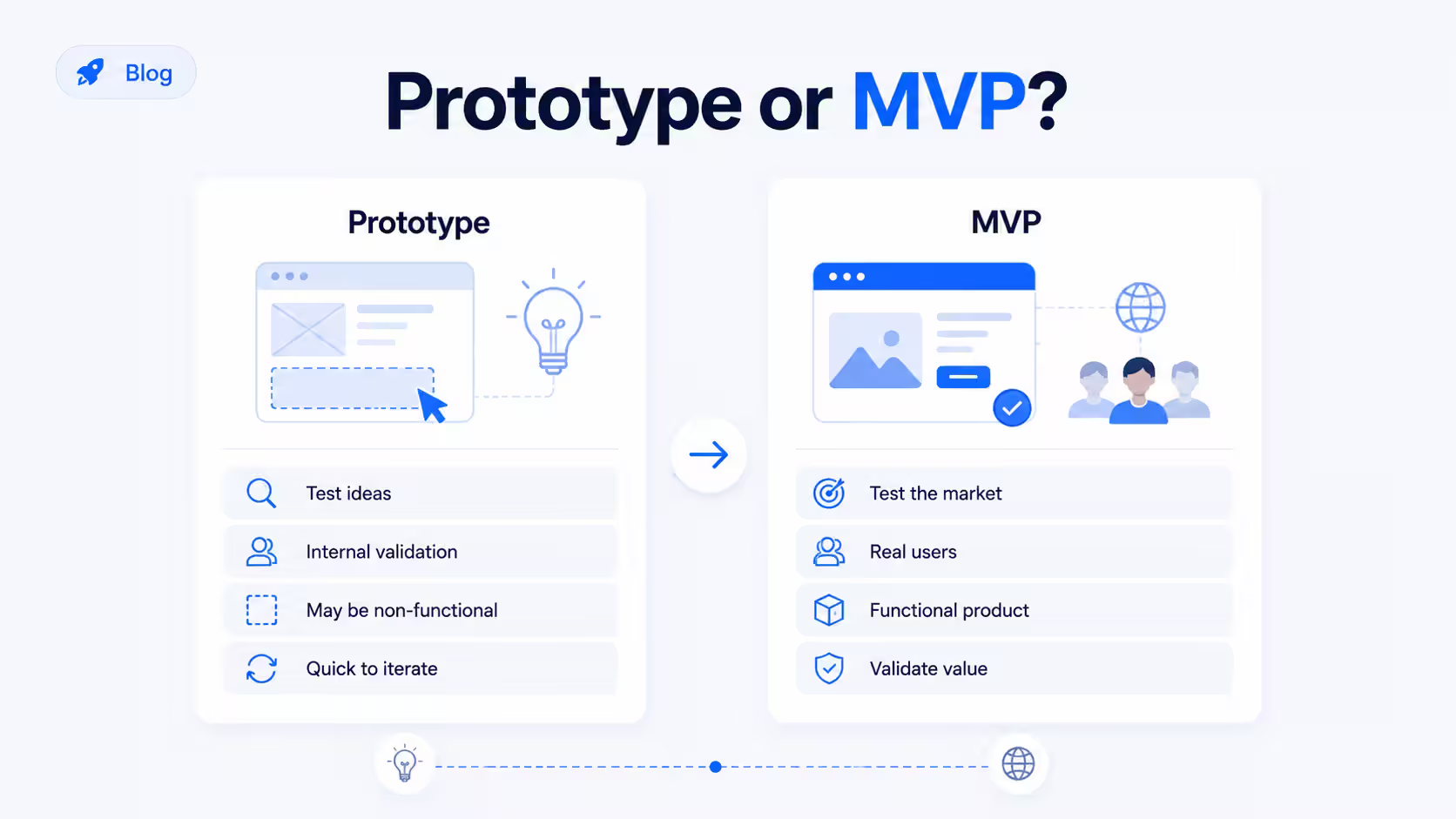
Teams often use the terms prototype and minimum viable product interchangeably, but they represent two distinct stages in the product development process. Understanding the difference is essential: launching an MVP too early can lead to misleading feedback, while spending too much time refining prototypes can delay valuable market insights.
Prototype or MVP
A prototype helps teams explore and validate ideas before committing to development. An MVP takes the next step by putting a working product into the hands of real users. Knowing when to move from one stage to the other allows businesses to reduce risk, allocate resources more effectively, and build with greater confidence.
According to the GOV.UK Prototype Kit documentation, prototypes can range from simple sketches to interactive experiences, depending on what teams need to learn. The goal is not to build the final product but to answer specific questions as quickly as possible.
What a Prototype Helps You Validate
A prototype exists to test assumptions before investing in full-scale development. It may take the form of wireframes, mockups, or clickable interfaces that simulate how the product will work.
At this stage, teams are usually trying to validate questions such as:
- Does the user journey make sense?
- Is the interface intuitive?
- Are users able to complete key tasks?
- Is the proposed solution technically feasible?
- Do stakeholders and team members share the same vision?
Unlike an MVP, a prototype does not necessarily need to be functional. Its purpose is to generate feedback, uncover weaknesses, and refine the concept before significant development resources are committed.
Because prototypes are designed for learning rather than launch, they can evolve rapidly. Teams often create several iterations before settling on the direction that offers the most value.
Moving from an early concept to a working product often requires bridging the gap between prototyping and development. Learn more about Higroup's AI Prototype to MVP approach.
When You're Ready for an MVP
An MVP comes into play once the fundamentals are in place. By this stage, the problem has been clearly defined, the target audience is understood, and the product's core value proposition has been validated.
Rather than testing whether an idea makes sense, an MVP tests whether people are willing to use, and potentially pay for, the solution in real-world conditions.
Teams are generally ready for an MVP when:
- they have identified a clear user problem;
- they understand who their early adopters are;
- the product solves a specific need;
- the core feature set has been prioritized;
- they are ready to collect feedback from actual users.
Unlike prototypes, MVPs are functional products. They may be limited in scope, but they must reliably deliver the product's core value.
Prototype | MVP |
|---|---|
Tests ideas | Tests the market |
May be non-functional | Functional product |
Internal validation | External validation |
Quick to modify | Used by real users |
The transition from prototype to MVP is not always linear. Some products require multiple rounds of prototyping before they are ready for release, while others move quickly to market testing. The key question is simple: are you still validating assumptions internally, or are you ready to learn from real users?
Prioritize the Features That Matter Most
One of the biggest challenges in product development is deciding what not to build. Once an idea starts taking shape, it becomes tempting to add more features, accommodate every use case, and anticipate future needs. While these additions may seem valuable, they often increase complexity, delay launch, and make it harder to validate the product's core assumptions.
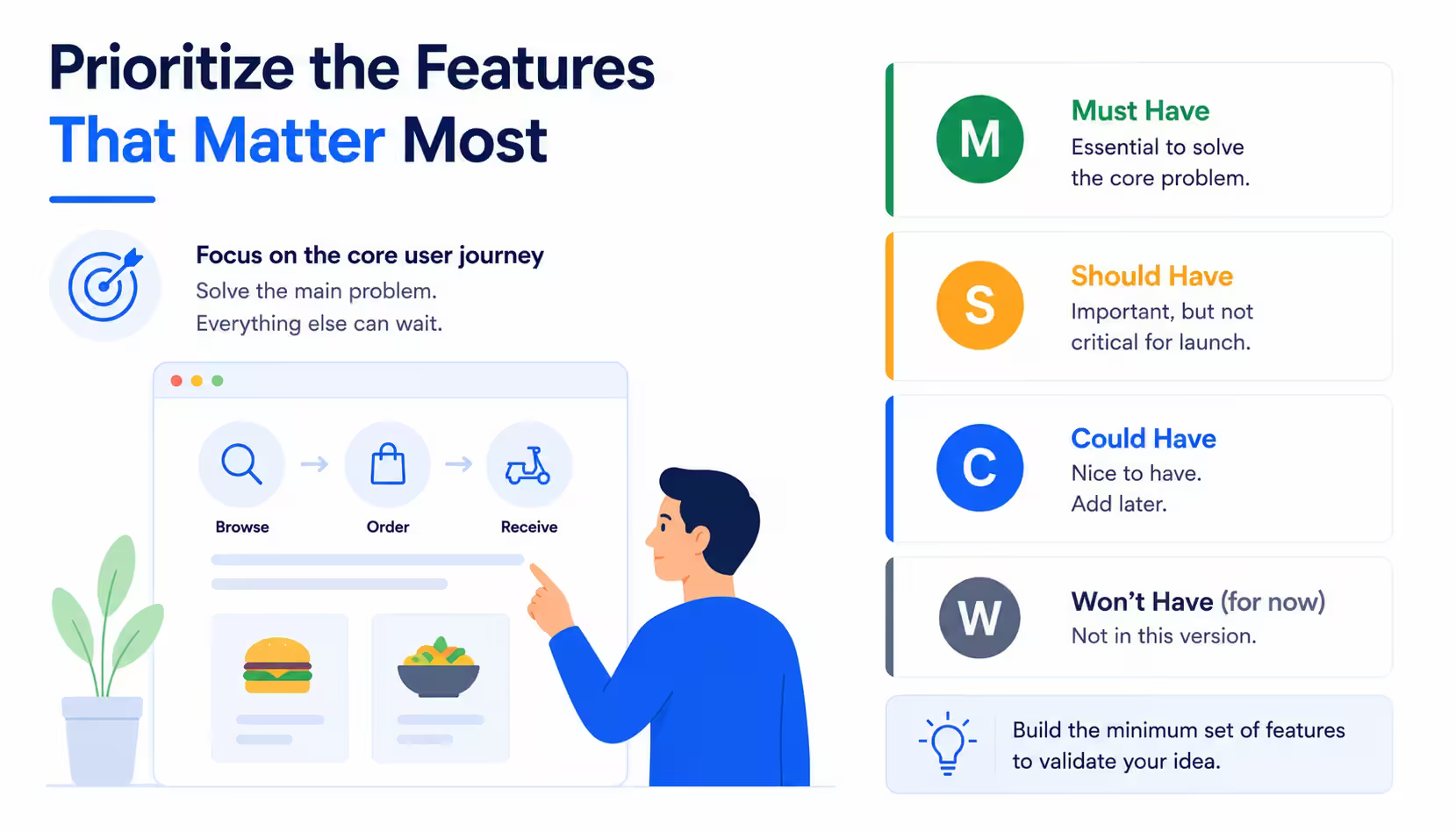
Prioritize Features
Whether you're building a prototype or an MVP, success rarely comes from offering the largest number of features. Instead, it comes from identifying the smallest set of functionalities capable of delivering meaningful value to users.
Focus on the Core User Journey
Before prioritizing features, teams need to define the product's core user journey: the sequence of actions that allows users to solve their main problem.
For example, a food delivery app may eventually include loyalty programs, advanced filters, and social features. However, its primary user journey is much simpler: browse restaurants, place an order, and receive the meal. Everything else can potentially wait.
Focusing on the core user journey helps answer fundamental questions:
- What is the single most important problem the product solves?
- Which actions must users be able to complete?
- What features directly support that experience?
- Which ideas add complexity without creating immediate value?
By concentrating on the essential experience, teams can reduce development time and gather feedback more quickly. Additional features can always be introduced later, once the product has proven its usefulness.
Use a Prioritization Framework
A structured prioritization framework helps teams make objective decisions and avoid feature creep. One of the most widely used methods is the MoSCoW framework, developed by the Agile Business Consortium.
It divides features into four categories:
- Must Have: essential capabilities without which the product would fail to fulfill its purpose.
- Should Have: important features that improve the experience but are not critical for the initial release.
- Could Have: desirable additions that can be postponed if resources are limited.
- Won't Have (for now): features intentionally excluded from the current version.
The goal is not to include as many features as possible in the MVP, but to identify the minimum set required to solve the user's problem effectively. A feature should only be considered a true Must Have if removing it would prevent the product from delivering its core value.
Ask yourself:
- Would users still get value without this feature?
- Does it solve the core problem?
- Can it wait until a later release?
If the answer suggests that the product would still work without it, that feature probably does not belong in the first version.
Prioritization is ultimately an exercise in focus. The products that succeed are not necessarily those that launch with the most features, but those that solve a specific problem clearly and efficiently.
Build the Prototype or MVP
Once the problem has been clearly defined and the essential features have been prioritized, it's time to turn ideas into something tangible. This stage bridges strategy and execution: concepts become screens, assumptions become user interactions, and plans become working software.
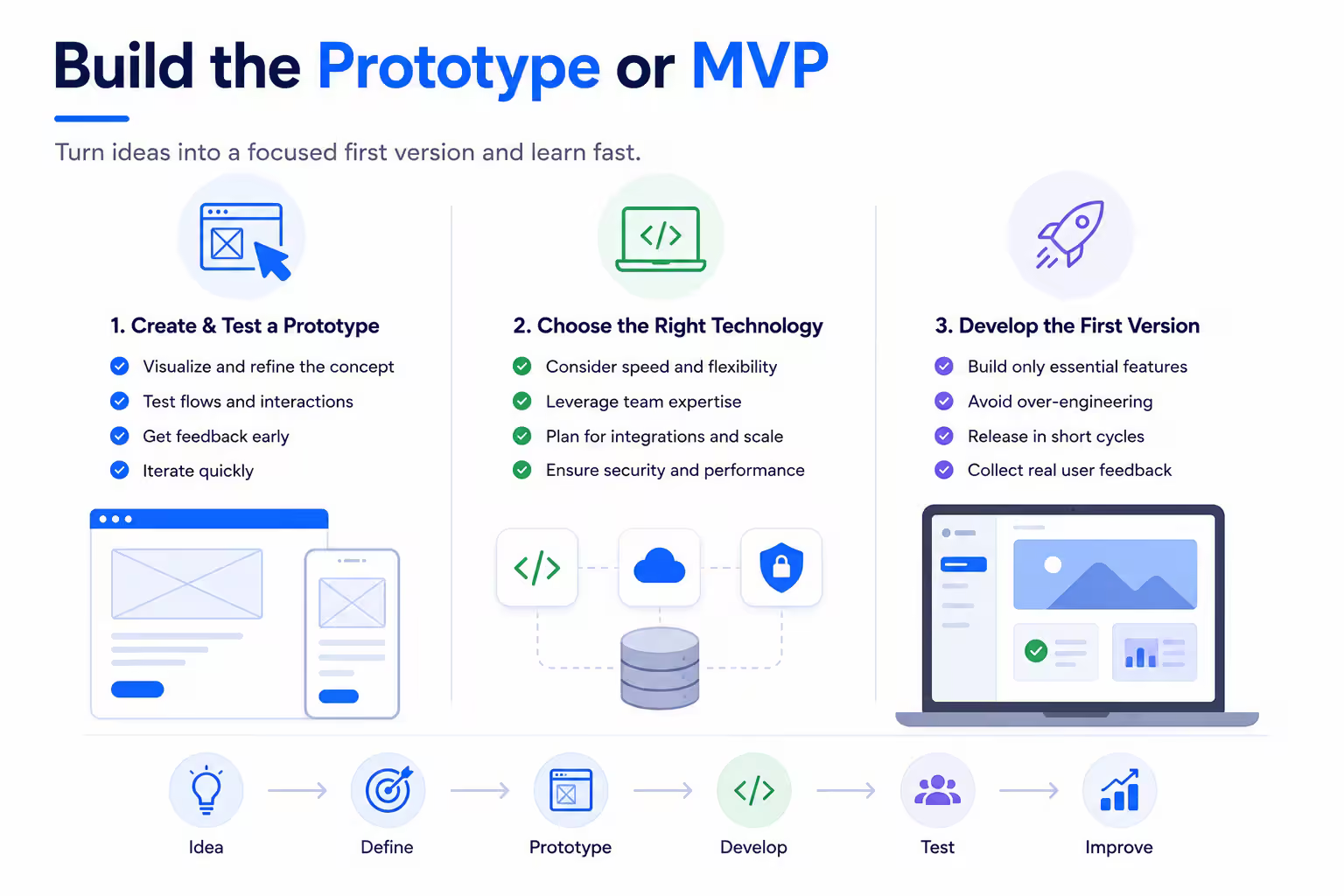
Prototype or MVP
The goal is not to build a perfect product from day one. Whether you're creating a prototype or an MVP, the objective is to deliver a focused first version while minimizing unnecessary complexity.
Create and Test a Prototype
Prototypes allow teams to visualize and refine a product before committing to full-scale development. Depending on the questions that need to be answered, they can take different forms.
The earliest versions are often simple wireframes that outline the structure of the product and the main user flows. As the concept evolves, teams may create more detailed mockups or interactive prototypes that simulate real interactions and provide a clearer sense of the final experience.
According to the GOV.UK guidance on prototyping, the level of fidelity should depend on what the team is trying to learn. In some cases, a sketch is enough to validate a workflow. In others, stakeholders and users may need a clickable prototype to provide meaningful feedback.
Testing prototypes early offers several advantages:
- identifying usability issues before development begins;
- validating assumptions about user behavior;
- aligning designers, developers, and stakeholders;
- reducing the risk of costly changes later in the process.
The key is to gather feedback quickly and iterate often. A prototype is not meant to answer every question, it simply helps teams move from assumptions to evidence.
Choose the Right Technology
Technology decisions made at the beginning of a project can significantly influence development speed, future scalability, and long-term maintenance. However, selecting the right stack is rarely about choosing the newest or most sophisticated solution.
As the GOV.UK technology guidelines emphasize, early technology choices should support learning and leave room for change. Products evolve rapidly in their first stages, and teams should avoid locking themselves into rigid architectures too soon.
When evaluating technologies, several factors deserve attention:
- development speed and time to market;
- the team's existing expertise;
- compatibility with third-party integrations;
- scalability and future growth;
- security, compliance, and performance requirements.
A startup building its first MVP will often prioritize speed and flexibility, while a larger organization may need to consider integration with existing systems and stricter security standards.
Technology choices, feature scope, and team composition all influence the overall cost of building an MVP. For a more detailed breakdown of timelines, budgets, and development factors, see Higroup's MVP Development Cost guide.
Develop the First Working Version
At some point, research and planning must give way to execution. This is where teams transform prototypes into the first functional version of the product.
One of the most common mistakes during this phase is over-engineering: building infrastructure, features, and workflows that may never be needed. While scalability is important, an MVP is not intended to support millions of users from day one. Its purpose is to validate assumptions and prove that the product delivers value.
Successful teams focus on shipping a small but reliable product that users can actually interact with. That often means:
- building only the features identified as essential;
- avoiding unnecessary technical complexity;
- releasing in short development cycles;
- collecting feedback as early as possible.
The first version does not need to be perfect. It simply needs to solve a meaningful problem well enough to generate insights. Once real users begin interacting with the product, the development process shifts from planning what might work to improving what demonstrably does.
Test, Measure, and Iterate
Launching a prototype or MVP is not the finish line, it's the beginning of the learning process. No matter how much research and planning happens beforehand, the real test starts when users interact with the product in their everyday lives.
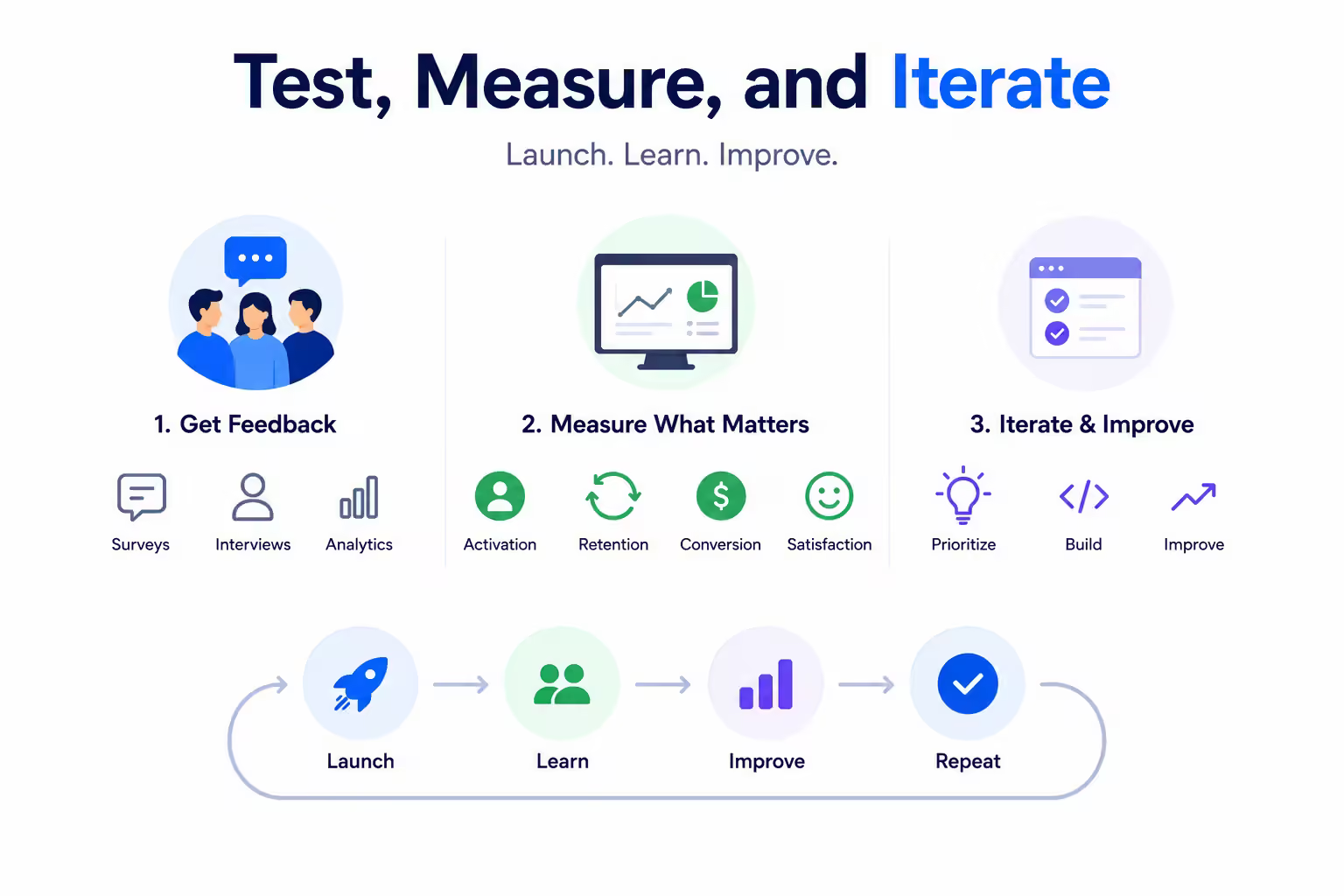
Test and Iterate
Successful teams don't treat the first release as a final version. Instead, they use it as an opportunity to gather insights, validate assumptions, and identify the improvements that will create the most value over time.
Collect Feedback from Real Users
Once the product is available, the priority shifts from internal discussions to real-world feedback. While prototypes help teams validate ideas internally, an MVP provides access to the opinions and behaviors of actual users.
There are several ways to collect feedback:
- user interviews and surveys;
- usability testing sessions;
- product analytics and usage data;
- customer support conversations;
- direct observation of user behavior.
The goal is not simply to ask users what they think, but to understand how they interact with the product. A feature that seemed essential during development may go unused, while unexpected behaviors can reveal opportunities for improvement.
As highlighted in Harvard Business Review's article on lean startups, early-stage products benefit from treating assumptions as hypotheses that need to be tested and refined through customer feedback rather than relying solely on internal planning.
Measure What Matters
Collecting data is only useful if teams focus on the right metrics. Vanity metrics, such as website visits or app downloads, rarely provide enough information to guide product decisions.
Instead, teams should prioritize indicators that reflect whether the product is delivering value, such as:
- Activation: Are users successfully completing the key actions that define the product experience?
- Retention: Do users continue to return after their first interaction?
- Conversion: Are users willing to subscribe, purchase, or upgrade?
- Satisfaction: Would users recommend the product to others?
Tracking these metrics helps teams identify what is working, what needs improvement, and where future development efforts should be focused.
Improve Through Iteration
Building a successful product is rarely a linear process. The first release will inevitably reveal flaws, unexpected use cases, and new opportunities.
Rather than waiting for major updates, effective teams work in short cycles: they collect feedback, prioritize changes, release improvements, and measure the impact of those decisions. Over time, these small adjustments compound into significant product improvements.
Iteration is not about constantly adding features. It is about continuously refining the product based on evidence, ensuring that each new version solves users' problems more effectively than the last.
From MVP to a Scalable Product
An MVP is designed to validate assumptions, not to serve as the final version of a product. Once users begin adopting the solution and the core value proposition has been proven, new priorities emerge. The challenge is no longer to determine whether the product should exist, but to ensure that it can support growth over time.
At this stage, teams often revisit the technical decisions that made rapid development possible in the first place. Architecture may need to be strengthened, infrastructure upgraded, and workflows optimized to support larger numbers of users. Features that were intentionally postponed during the MVP phase can now be evaluated and prioritized based on real customer needs rather than assumptions.
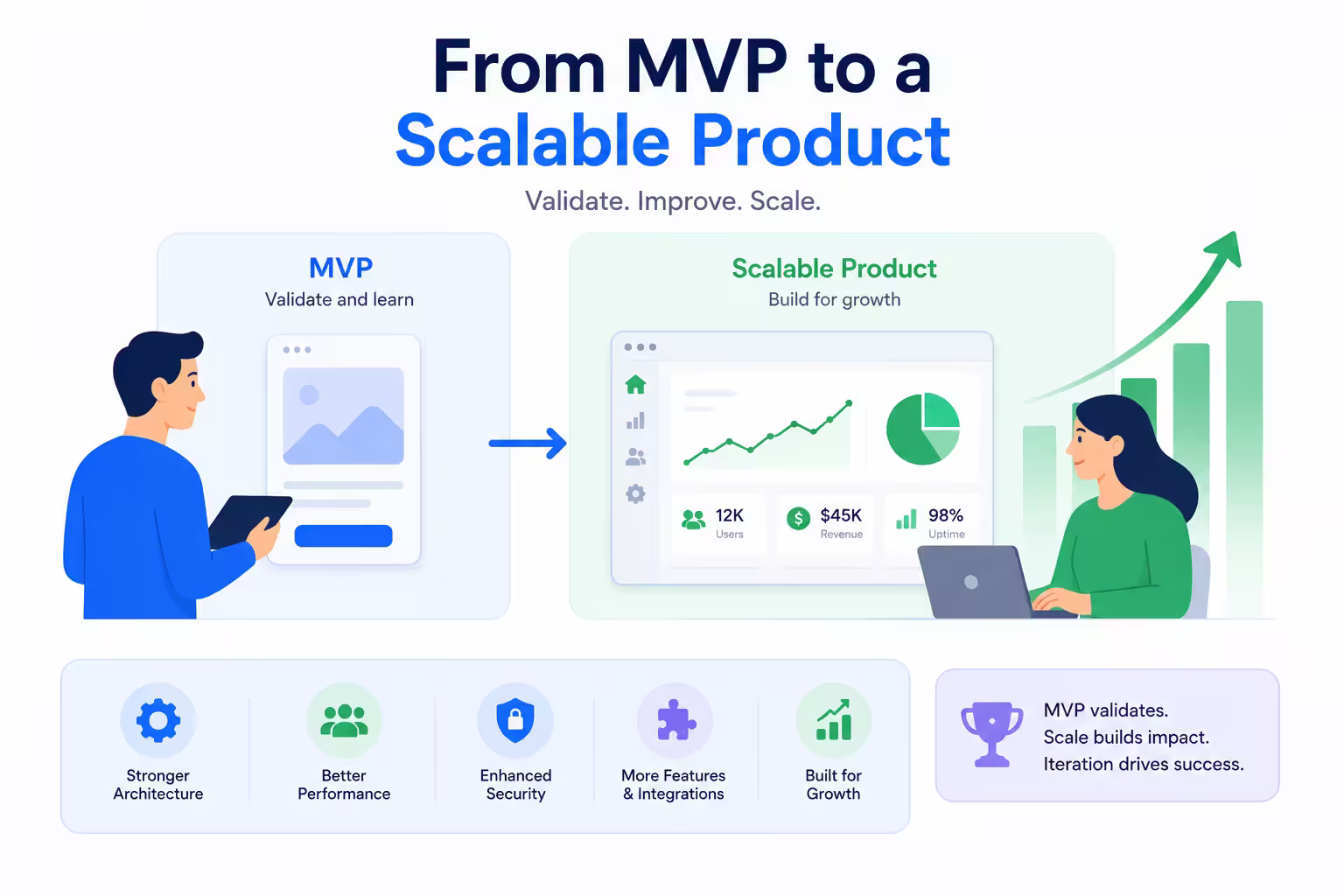
MVP to Scale
Performance also becomes increasingly important. Faster load times, stronger security measures, improved reliability, and better integrations all contribute to a more mature product experience. As the product evolves, maintaining quality while introducing new functionality becomes a critical balance.
Growth usually affects the team as well. A small group focused on validating an idea may gradually expand to include additional developers, designers, product managers, and specialists responsible for maintaining and improving the platform.
Once the first version proves its value, the focus shifts from validation to long-term product engineering. Learn more about Higroup's Product Engineering services.
Scaling successfully does not mean abandoning the principles that guided the MVP. The most resilient products continue to learn from users, iterate continuously, and evolve one improvement at a time.
Build Small, Learn Fast, Scale with Confidence
Transforming an idea into a successful product is rarely a straight line. Before writing code or launching features, teams need to understand the problem they want to solve, define their target audience, and identify the value their product brings. From there, prototypes help validate assumptions and refine user experiences, while MVPs make it possible to test those ideas in the real world.
Although they serve different purposes, prototypes and MVPs share the same goal: reducing uncertainty and helping teams make better decisions. A prototype explores whether a solution makes sense, while an MVP validates whether people actually want it.
The products that succeed are not necessarily those that launch with the most features or the largest budgets. They are the ones built through continuous learning, rapid iteration, and a clear focus on user needs.
By starting small, testing early, and improving over time, businesses can move from an initial concept to a scalable product with greater confidence and far less risk.
Whether you're still validating an early concept or preparing to launch your first product, higroup helps teams move from strategy to execution with confidence. Explore our services or get in touch to discuss your project.